Why Choose Bodyweight Bicep Exercises in 2026?
The Benefits of No-Equipment Training for Biceps
Bodyweight bicep exercises let you build strong arms without needing dumbbells or machines. Training with just your body saves money, is easy to start at home, and saves time traveling to the gym. You work other muscles too, making your workout efficient and balanced. Bodyweight moves are safe and easy to change for your level.
Who Should Use Bodyweight Bicep Workouts?
Anyone can benefit. Bodyweight bicep exercises are perfect for teenagers, busy students, people with a small workout space, and even advanced athletes. No matter your fitness level, you can make progress with these exercises.
Science-Backed Results: Can You Really Grow Biceps With Bodyweight?
Studies show that muscle growth happens when you challenge your muscles, not because of special equipment. Many people have used bodyweight bicep exercises to add size and strength. As long as you train hard, use the right technique, and stay consistent, your biceps will grow!
Essential Tips for Effective Bodyweight Bicep Training
Anatomy of the Biceps and Supporting Muscles
The biceps are found at the front of your upper arm. These muscles bend your elbow and help you lift and pull. Other muscles like the forearms, shoulders, and back work together during bodyweight bicep exercises.
Form, Tempo, and Muscle Activation Secrets
Good form is key. Move slowly and feel your biceps work. Squeeze your muscles at the top of each movement. Do not swing or use fast momentum. Focus on quality, not just quantity, to get the best results from bodyweight bicep exercises.
Warm-Up and Injury Prevention for Bicep Exercises
Before starting, always warm up with arm swings, light stretches, and some easy push-ups. This gets blood flowing and prevents injury. Cooling down with gentle stretching helps your muscles recover and grow stronger.
The 8 Best Bodyweight Bicep Exercises and How to Master Them
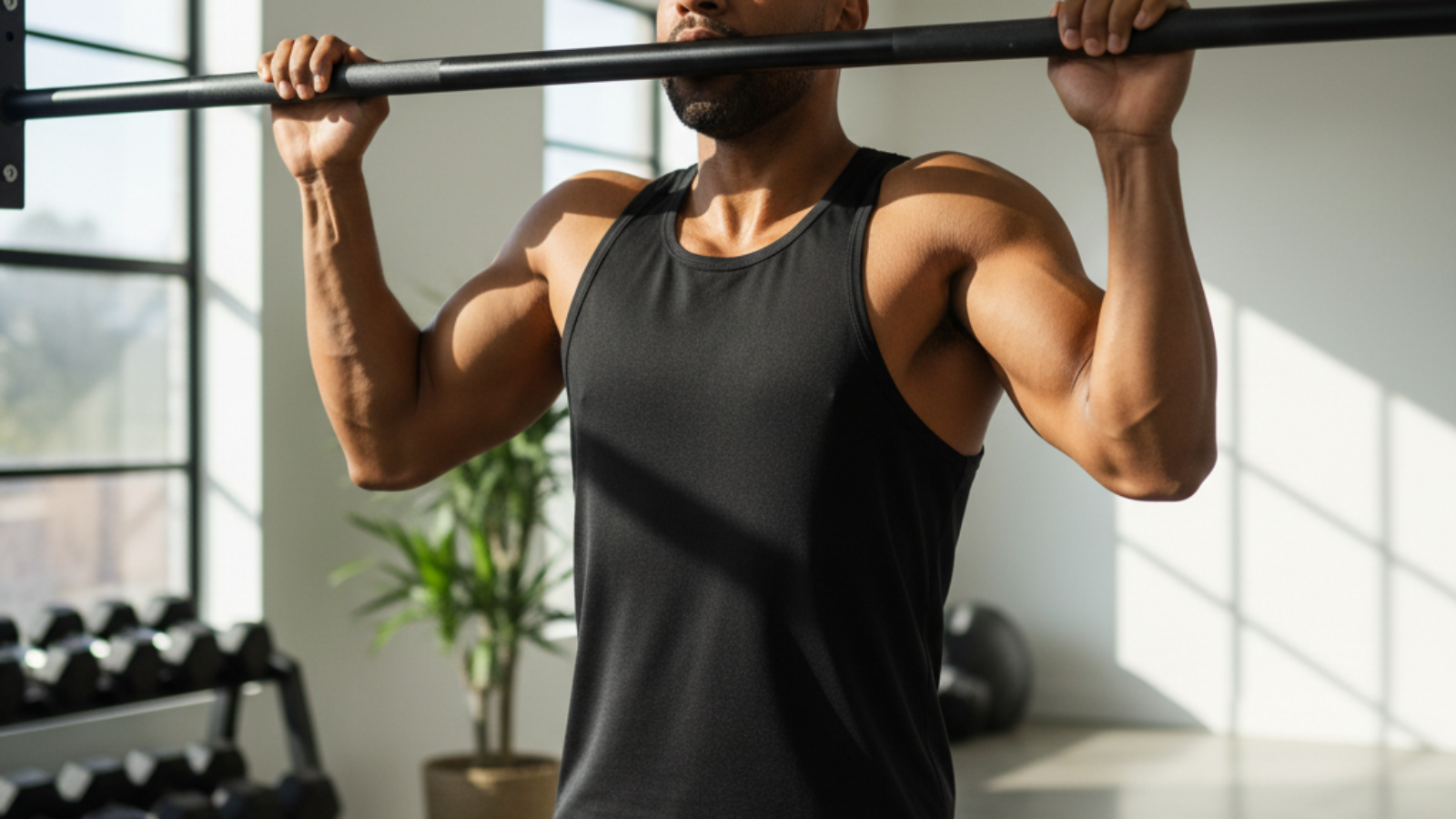
Chin-Ups (With Progressions for Every Level)
- Find a sturdy bar, door frame, or playground structure.
- Grab the bar with palms facing you (shoulder-width apart).
- Hang with straight arms, then pull your chin above the bar, squeezing your biceps.
- Lower slowly. If too hard, use a chair for support or try jumping up and lowering yourself down slowly.
Inverted Rows (Table, Rings, and Doorway Variations)
- Lie under a strong table or set up gymnastic rings in a doorway.
- Grip the surface above you, lie on your back, and extend legs.
- Pull your chest toward the table edge or rings, using your biceps.
- Lower down with control. Bend your knees to make it easier.
Bodyweight Bicep Curls (Towel, Sheet, and Backpack Techniques)
- Loop a towel or sheet around a pole or closed door.
- Hold each end, lean back, and pull yourself forward, mimicking a curl.
- Keep elbows close to your body and tighten your biceps at the top.
- For extra challenge, add weight to a backpack and perform curls with the straps.
Isometric Bicep Holds (Plank Cambered Curls, Static Flex)
- Get into a plank position on your hands.
- Bend one or both elbows slightly and hold, flexing your biceps hard for 10–30 seconds.
- Switch arms or rest between sets.
- Alternatively, flex your arms at 90 degrees (as if holding something heavy) and hold for as long as possible.
Archer Pull-Ups & Single-Arm Progressions
- Use a bar or sturdy surface.
- Pull up with most of your weight on one arm while the other arm guides and supports.
- Switch sides to challenge both arms. To progress, use less support from the helping arm.
Advanced Calisthenics Moves (Hephesto, Tiger Bend)
- For the Hephesto: Hang from a bar, pull your chest upwards and rotate your body so your legs come in front during the pull.
- Tiger Bend: Start in a push-up position, move your hands closer, lower onto your forearms, and powerfully push back up to hands.
- Start slow, use support, and practice often. These moves require patience and progression.
Wrist-Friendly Alternatives for Those with Joint Concerns
- Use neutral-grip bars or thick towels to reduce wrist strain.
- Try standing isometric contractions (flexing biceps) with no equipment for safe training if joints are sensitive.
No-Bar Hacks: Creative Solutions for Every Home
- Use a strong door with a towel or bedsheet as a handle.
- A low table works for inverted rows and some curl moves.
- A sturdy broomstick laid across two chairs can act as a pull-up bar for lightweight users.
Build Your Perfect Bodyweight Bicep Routine (Beginner to Advanced)
Sample Workouts for Every Fitness Level
| Level | Exercises | Sets | Reps/Time |
|---|---|---|---|
| Beginner | Inverted Rows, Towel Curls | 3 | 8-12 |
| Intermediate | Chin-Ups, Isometric Holds, Bodyweight Curls | 4 | 6-10 (30 sec holds) |
| Advanced | Archer Pull-Ups, Hephesto, Tiger Bend | 5 | 4-8 |
Customizing Sets, Reps, and Rest for Maximum Growth
- Start with 3 sets per exercise if new. Go up to 5 sets as you get stronger.
- Use 8–12 reps per set for growth. When you can do more, make it harder.
- Rest 60–90 seconds between sets to recover.
Weekly Planning for Balanced Arm and Upper Body Gains
- Train bodyweight bicep exercises 2–3 times a week.
- Work your back, shoulders, and chest on other days for balance.
- Include rest or light stretching to help your muscles grow.
Overcoming Common Challenges in Bodyweight Bicep Training
No Equipment? Minimalist Adaptations You Can Try Today
- Use towels, sheets, backpacks, or furniture for resistance.
- Try isometric holds and slow, controlled movements to make any exercise harder.
Stalled Progress? Keys to Better Gains in 2026
- Increase the difficulty: add reps, slow down, or try one-arm variations.
- Change the angle or range of motion.
- Review your nutrition and get enough sleep for muscle growth.
Avoiding Wrist and Elbow Pain: Safety and Recovery Tips
- Warm up before and stretch after each session.
- Use wrist-friendly grips or supports.
- If you feel pain, rest and recover. Focus on quality, not only on doing more.
Expert Insights: Trainer Advice and Real-World Results
Pro Tips for Faster Biceps Growth
- Keep palms facing up or towards you during exercises for the most bicep activation.
- Squeeze the biceps hard at the top for a better workout.
- Track your sets, reps, and progress every week.
Mistakes to Avoid and Plateau Breakers
- Avoid rushing through movements.
- Do not rely only on one exercise or get stuck in an easy routine.
- Mix in new challenges often to keep building muscle.
Case Studies: Real Transformations With Bodyweight Only
Many students and home athletes have used bodyweight bicep exercises to build bigger, stronger arms. Teens who started with just a bar and a towel shared their progress online, showing noticeable bicep growth in just a few months.
Visual Guide: Step-by-Step Exercise Animations and Troubleshooting
Correcting Common Mistakes With Visual Cues
- Avoid swinging legs or arching your back during chin-ups.
- Keep elbows close to your sides in curls and rows.
- Use slow, smooth movements for maximum muscle work.
Progression Paths Illustrated
- Start with simpler movements (like inverted rows).
- Move to full chin-ups as you get stronger.
- Add advanced moves (like archer pull-ups) once ready.
Downloadable Infographic and Routines
Look for downloadable charts online with bodyweight bicep exercise routines, progress trackers, and step-by-step graphics for every move mentioned.
Frequently Asked Questions About Bodyweight Bicep Exercises
- Do I need a pull-up bar? No, you can use a towel, tree branch, or table.
- How often should I train? Two to three times weekly is enough for most teens.
- Will my arms really grow? Yes, if you follow good form, make exercises harder over time, eat well, and rest.
- What if I can’t do a chin-up? Start with easier moves like rows or negatives, and you’ll improve quickly.
References and Further Reading
- Calisthenics Science and Muscle Growth Studies (2025–2026)
- Youth Strength Training Guidelines
- Home Fitness Expert Videos and Recommendations
- Online Tutorials and Infographics on Bodyweight Bicep Exercises