
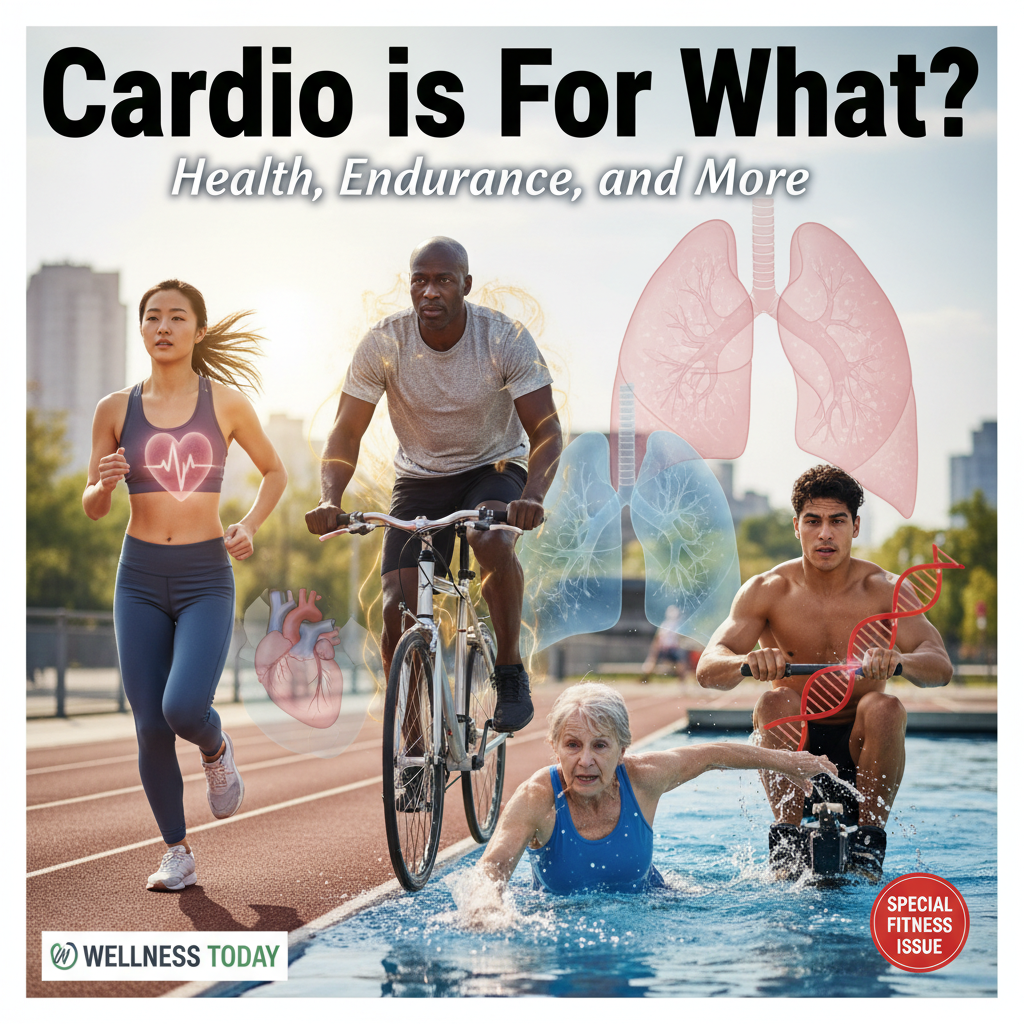
Cardio, short for cardiovascular exercise, is any activity that raises your heart rate and keeps it up for a period of time. Cardio can be walking, running, cycling, swimming, jumping rope, or dancing. Cardio exercise helps your heart, lungs, and muscles work better together. In 2026, cardio is still important for health, weight loss, and performance.
When you do cardio, your heart pumps faster to deliver more oxygen to your muscles. This makes your heart and lungs stronger over time. Cardio also helps use stored fat for energy, which supports weight loss. Doing cardio regularly can help lower blood pressure and reduce risk of many diseases.
Many think cardio is only for burning fat. That’s not true. Cardio does help burn calories, but it also keeps your heart strong, improves mood, and boosts overall health. Cardio has many benefits beyond weight loss.
Some say you should only do one type of exercise—cardio or strength training. That’s a myth. Doing both gives you better results. Cardio and strength training work together to build a healthy body.
New studies show that even short bursts of cardio can be effective. Mixing different types of exercise, like interval training and moderate intensity, may work better than long sessions alone. Cardio also helps your brain and immune system.
LISS means doing easy to moderate cardio, like walking or biking, at a steady pace for a longer time. It’s gentle, good for beginners, and helps burn fat without lots of stress on the body.
HIIT is doing short bursts of hard effort followed by rest. For example, sprint for 30 seconds, then walk for 1 minute, and repeat. HIIT saves time and boosts fitness quickly but is tougher on the body.
Functional cardio uses moves you might do in sports or daily life, like skipping, jumping, or circuit workouts. Hybrid cardio mixes moves from both cardio and strength, like rowing with push-ups or cycling with squats.