
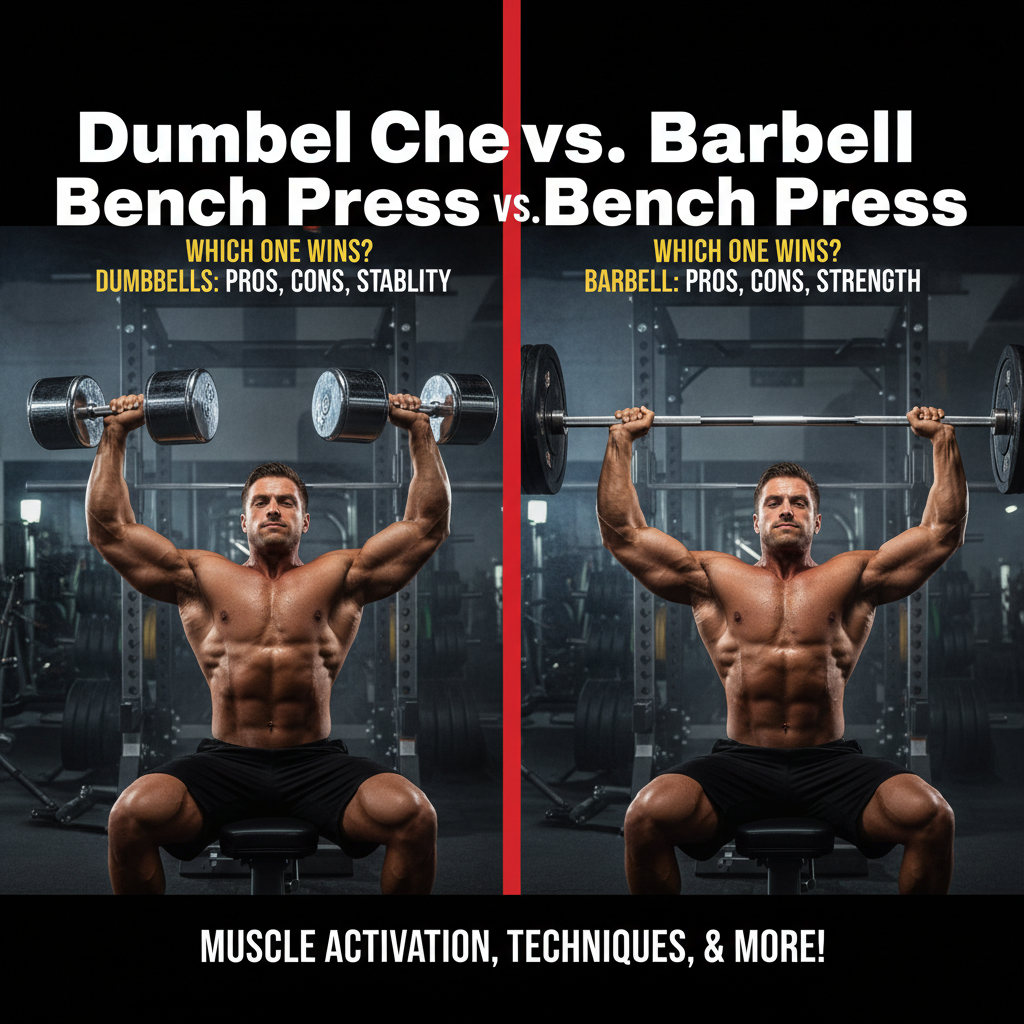
Chest training has changed rapidly by 2026, driven by data, technology, and shifting fitness goals. Modern lifters prioritize muscle balance, injury prevention, and data-backed gains. Comparing dumbbell chest press vs barbell bench press is vital for optimal programming.
Recent strength science merges EMG (electromyography), biomechanics, and machine learning to determine which lifts produce measurable outcomes in strength and muscle growth.
Dumbbell presses score higher for pectoral activation; barbell presses engage triceps more, per 2026 EMG reports.
EMG and mobility tracking show dumbbells offer a 20% greater range of motion, reducing joint stress. Barbell allows higher peak load for strength but may increase shoulder strain if mobility is poor.
Wearable studies confirm dumbbell chest press recruits 40% more stabilizer activity, aiding functional strength. Barbell press, however, provides max overload for primary movers.
Barbell bench press allows lifting on average 20-30% more weight, making it king for pure strength.
Dumbbell presses improve muscular symmetry and target minor imbalances. Barbell presses are best for rapid mass increase. Combining both yields superior chest development (source: 2026 meta-analysis).
Dumbbell training translates better to sports with unilateral or rotational patterns. Barbell builds maximal pushing strength for power athletes.