
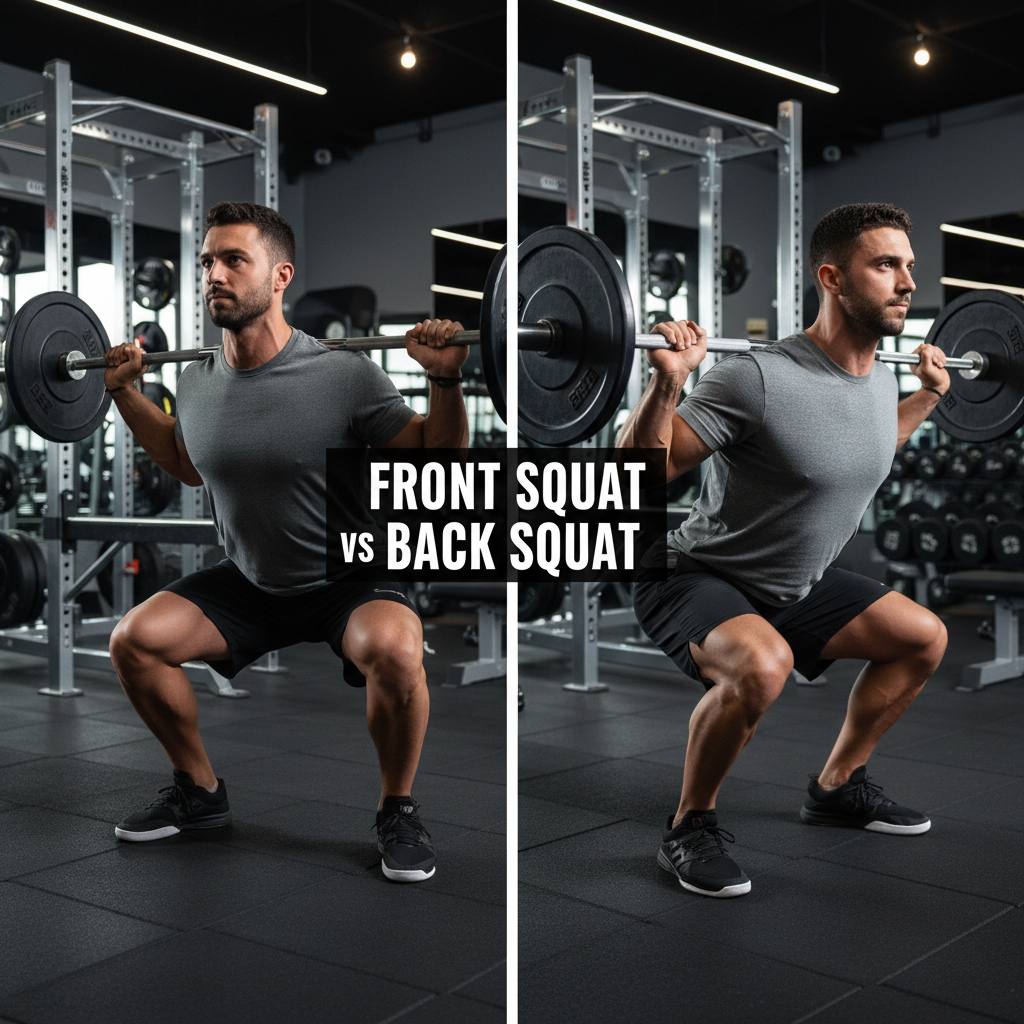
Understanding the bar position, grip, and setup is key to mastering front squats and back squats. In a front squat, the barbell rests on the front of your shoulders, just above your collarbone. Your elbows point forward, and your hands lightly grip the bar. In a back squat, the barbell rests on your upper back, not on your neck. Your hands grip the bar wider, and your elbows point down. These positions change how you balance and move during each squat.
Front squats mainly work your quadriceps, or the front of your thighs. They also challenge your core and upper back. Back squats use your glutes and hamstrings, or the back of your legs, as well as your lower back. If you want to build leg size or strength, both are great. The front squat is often better for improving posture and keeping your back upright. The back squat lets you lift heavier weights for total power.
Most people can lift more weight with a back squat than a front squat. The back squat’s bar position allows for greater stability. In the front squat, you must keep the bar from falling forward by staying upright and engaging your core. The movement in a front squat is often deeper, while the back squat may allow a wider stance and more hip movement. Both require good form for safety.
If your goal is pure leg strength and lifting heavy, back squats may be best. If you want to improve posture, core stability, or have knee issues, front squats may suit you more. Those needing to improve mobility or coming back from an injury often start with front squats. Both movements help build muscle and strength.
Watching a video helps you see both squats in action. Look for clear examples on official fitness or sports channels. Notice the bar position, depth, and form. Comparing movements will help you master both squats safely and effectively.
This page is presented for general information and careful reading. It preserves the original article path from the old site.