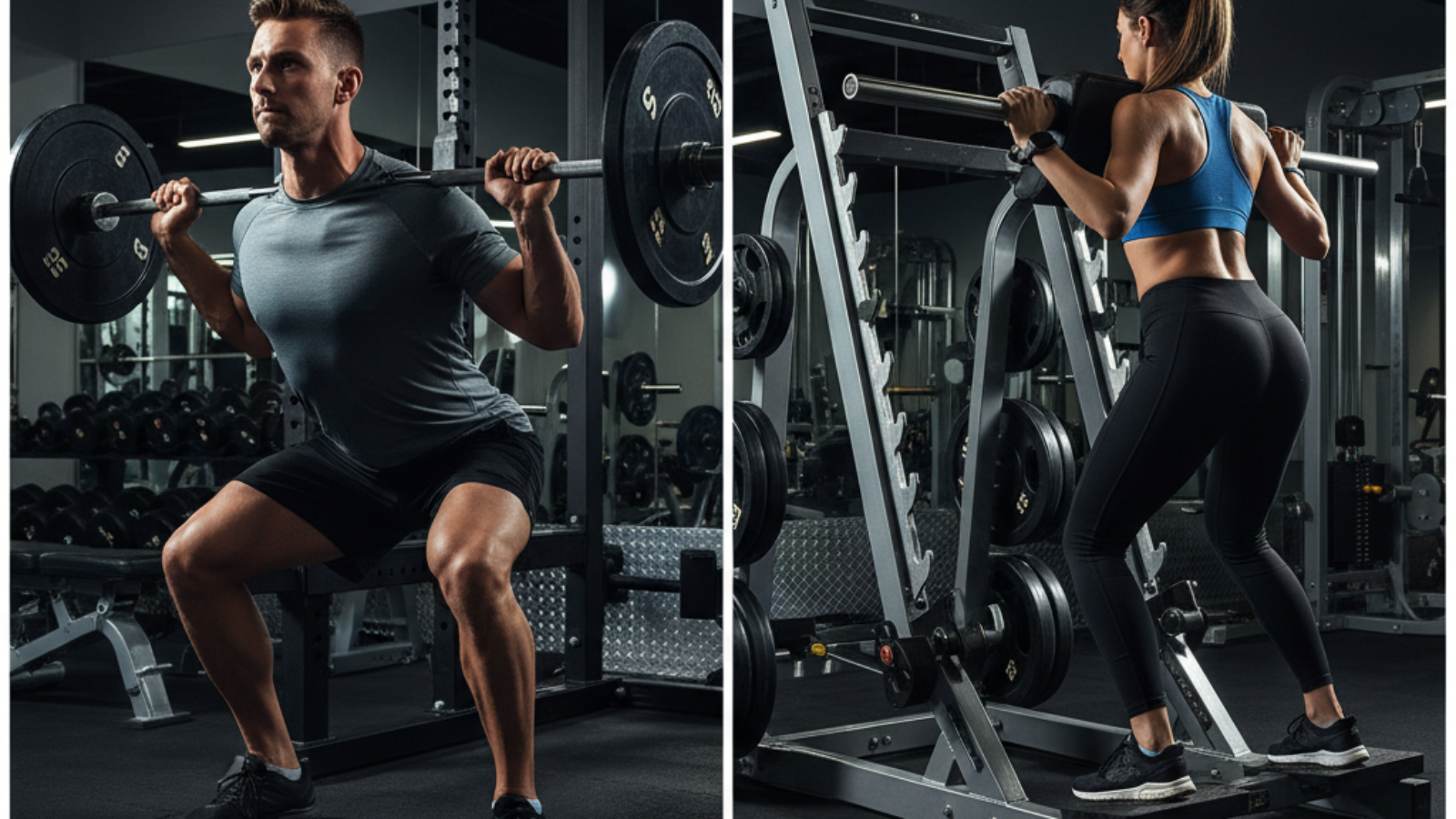
Hack Squat vs Squat – Quick Comparison and Choosing the Right Exercise
Key Differences Between Hack Squat and Squat
Hack squats and squats are both powerful exercises for building lower body strength. However, they are not the same. The squat is a classic move done with a barbell or bodyweight. The hack squat is a machine exercise. The squat uses more balance and core strength. The hack squat helps you focus on your legs with extra support from the machine.
- Squats use free weights or bodyweight. Hack squats use a special machine.
- Squats need balance and control. Hack squats guide your movement for you.
- Squats train your glutes, quads, hamstrings, and core. Hack squats focus more on your quads.
At-a-Glance Pros and Cons for 2026 Trainees
| Exercise | Pros | Cons |
|---|---|---|
| Squat |
|
|
| Hack Squat |
|
|
Who Should Use Hack Squats vs Squats? (Profiles by Age, Gender, Fitness Goals)
- Teens and Students: Squats help improve sports performance and balance. Start light and focus on form.
- Adults: For general strength, combine both exercises. Hack squats help if you want bigger leg muscles.
- Seniors: Hack squats are safer for weaker joints. Always use supervision and start gently.
- Men & Women: Both can benefit. Women may prefer hack squats if worried about back stress. Men may focus on barbell squats to build strength.
- Athletes: Use both for best performance and injury prevention.
Understanding Muscle Engagement: Hack Squat vs Squat
Target Muscles and Biomechanics of Each Lift
- Squat: Works the glutes, quadriceps, hamstrings, calves, and core. Requires hip, knee, and ankle movement.
- Hack Squat: Focuses mostly on quadriceps. Less work for the core. Movement is guided by the machine, keeping you upright.
Quadriceps, Glutes, Core – What Changes Based on Technique?
Foot placement and body angle can shift which muscles work harder. In squats, a wider stance hits the glutes more. In hack squats, putting your feet higher on the platform also targets the glutes. Keeping your feet low focuses on the quads.
Science Update 2026: EMG Studies and New Insights
- Recent studies use EMG (electromyography) to measure muscle activity.
- Research in 2026 shows hack squats activate quadriceps slightly more than traditional squats, especially in beginners.
- Squats still win for overall core and balance training!
Step-by-Step How-To: Perfecting Your Squat Technique
Traditional Barbell Back Squat: Detailed Cues & Common Mistakes
- Set Up: Stand with feet shoulder-width apart. Barbell rests on your upper back, hands gripping the bar outside your shoulders.
- Brace: Pull your shoulder blades together. Brace your core. Look straight ahead.
- Descend: Push your hips back and bend your knees, keeping your chest up and core tight.
- Depth: Lower down until your thighs are parallel to the floor or lower, if possible.
- Return: Press through your heels to stand up, keeping your back straight.
- Common Mistakes: Rounding the lower back, letting knees cave in, and lifting heels off the floor.
Equipment Upgrades in 2026: Bars, Racks, and Trackers
- Smart bars and racks now track your rep speed and form in real-time.
- Safety racks have improved grips and emergency stops for safety.
- Wearable trackers provide feedback on your squat depth and alignment.
Video/Visual: Form Breakdown for Beginners
- Picture Step 1: Standing tall with bar across shoulders, feet flat and spaced shoulder-width.
- Picture Step 2: Lowering down, knees tracking over toes, chest up, back straight.
- Picture Step 3: Driving up, pushing through heels, hips rising with shoulders at the same time.
Step-by-Step How-To: Perfecting Your Hack Squat Technique
Setting Up Safely on Hack Squat Machines (2026 Models)
- Enter the Machine: Step onto the platform. Place your back and shoulders against the pads.
- Foot Position: Place your feet shoulder-width apart on the platform. To target quads, keep them low. For glutes, move feet higher.
- Unlock & Start: Release the safety handles. Grip the side handles to stabilize.
- Descend: Lower yourself by bending knees and hips, keeping your back flat against the pad.
- Depth: Go until your thighs are parallel or just below.
- Return: Push through your heels to lift the weight. Lock the handles to finish.
Advanced Tips: Feet Position, Range of Motion, and Quad Focus
- Wider feet activate glutes. Narrow feet focus on quads.
- Do not lift your heels. Keep entire foot on platform for safety and power.
- Full range of motion gives best muscle growth but start with a smaller range if you are new.
Video/Visual: Hack Squat Technique Mistakes & Fixes
- Picture: Hips coming off the pad (Incorrect) – Solution: Keep back and hips flat.
- Picture: Knees caving in (Incorrect) – Solution: Push knees out during movement.
- Picture: Feet placed too high or low (Incorrect) – Solution: Adjust to find what feels safest for your knees.
Safety and Injury Prevention: Hack Squat vs Squat
Joint Stress and Injury Risks: What the Latest Research Shows
- Squats: Risk to knees and lower back if performed with poor form or too much weight.
- Hack Squats: Safer for lower back but can stress knees if not careful with depth or foot position.
- 2026 research: Most injuries happen from poor form—prioritize learning good technique!
Modifications for Seniors, Youth, and Post-Injury Training
- Use lighter weights or just your body for squats.
- For hack squats, adjust the machine to a higher seat angle to limit range.
- Focus on slow and controlled reps.
- Ask a coach or physical therapist for help if you’re recovering from injury.
Real Expert Tips: Coaches Weigh In (2026)
- “Start light. Master technique, then progress.” – Coach Lin, CPT
- “Use both squats and hack squats for best results, but listen to your body.” – Coach Michael, Strength Expert
- “Warming up with bodyweight squats saves knees in the long run.” – Coach Sarah, Youth Trainer
Integrating Hack Squat and Squat into Training Programs
Which to Use for Strength, Hypertrophy, or Athletic Performance?
- Strength: Traditional squats are best for total body power.
- Muscle Size (Hypertrophy): Hack squats allow you to safely overload your legs, boosting growth.
- Athletics: Squats improve speed, jumping, and coordination. Use both exercises for variety.
Sample Weekly Programs for Different Goals
| Goal | Day | Exercise | Reps | Sets |
|---|---|---|---|---|
| Strength | Monday | Barbell Squat | 5 | 5 |
| Strength | Friday | Hack Squat | 8 | 3 |
| Muscle Growth | Tuesday | Hack Squat | 10-12 | 4 |
| Muscle Growth | Thursday | Barbell Squat | 8-10 | 3 |
| Athletics | Wednesday | Jump Squat | 6 | 3 |
| Athletics | Saturday | Hack Squat | 8-10 | 2 |
Real-Life Case Study: Customizing for Individuals
- Case 1: Alex, age 16, wants to join his school’s basketball team. He trains squats twice a week and adds hack squats on Saturday. His jumping and sprinting improve after 8 weeks.
- Case 2: Maria, age 45, recovering from a knee injury, starts with hack squats using light weights. After four weeks, she adds goblet squats for extra core strength.
FAQ: Common Questions About Hack Squat vs Squat in 2026
What If I Don’t Have Access to Machines?
If you don’t have a hack squat machine, use bodyweight squats, split squats, or goblet squats. These also build leg strength at home or in small gyms.
Can I Replace One with the Other?
The squat and hack squat are not true replacements. Each targets muscles differently. Try to include both over time. If you can only do one, choose based on your goals and injury history.
When Should I Progress or Switch Exercises?
Progress when you can complete your reps and sets with good form. Add a little more weight, more sets, or try new squat types. If you feel pain (not just muscle work!) or get bored, switch exercises or adjust intensity.
References & Further Reading (2026 Fitness Evidence)
- International Journal of Sports Science (2026): Lower Body EMG Comparison of Squats and Hack Squats
- American Council on Exercise (2025-2026 Research Reviews)
- Strength and Conditioning Journal: Guide to Safe Resistance Training for Adolescents and Adults (2026 Edition)
- Ask your gym coach or certified trainer for more up-to-date information.