
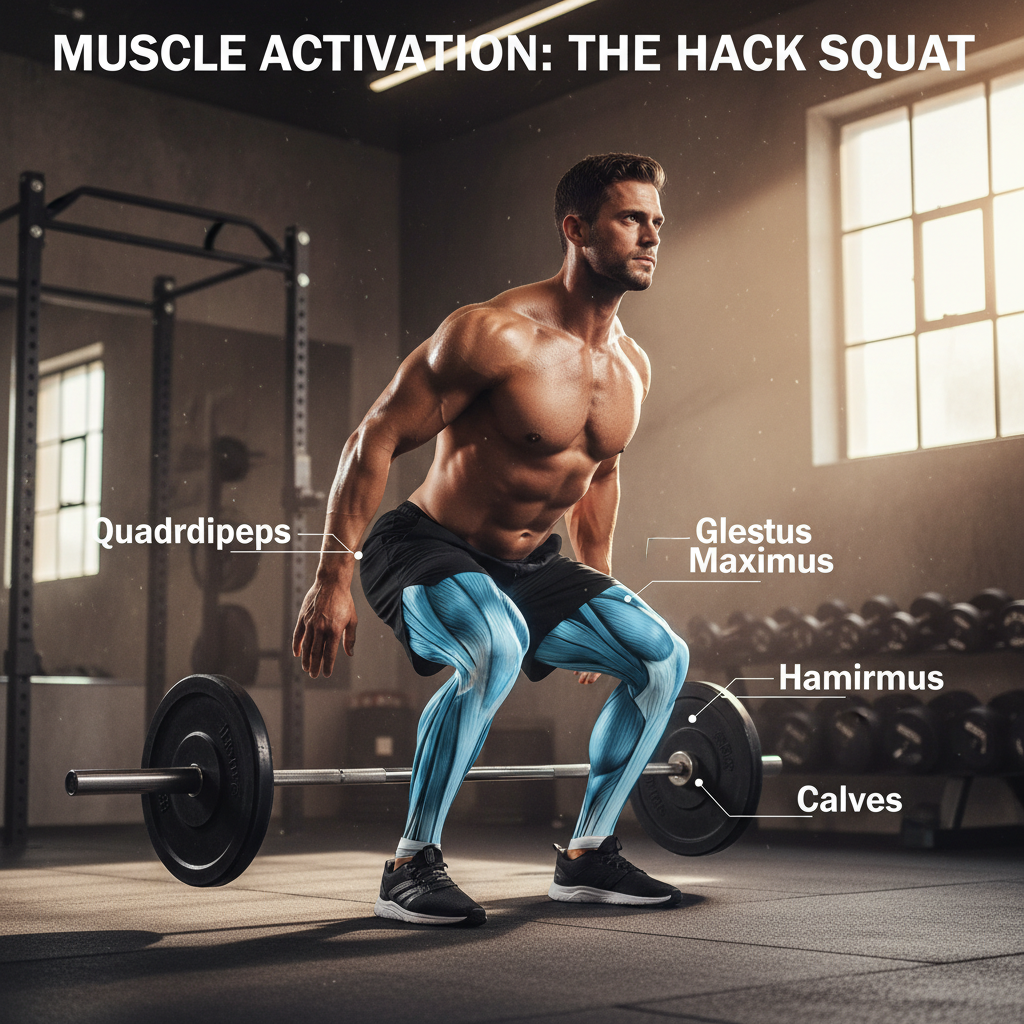
Hack squats primarily target the quadriceps. The unique trajectory of the hack squat machine forces the quads to bear most of the load, especially the rectus femoris, vastus lateralis, vastus medialis, and vastus intermedius. Because your torso remains upright and the feet are placed forward, the stress shifts away from the hips and lower back toward the front of the thigh.
Though dominated by the quads, hack squats also activate several supporting muscles:
Note: Percentages based on EMG studies 2022–2024. Source: J Physiol Appl Sci, NSCA reports.
EMG analyses consistently show hack squats produce superior quadriceps activation compared to back squats. A 2023 meta-analysis indicates an average 10-15% greater quad engagement (p<0.05). Such isolation leads to increased hypertrophy (muscle growth) for athletes focused on leg development, bodybuilding, or sport-specific strength.
The machine path and backrest reduce spinal loading and lower injury risk versus traditional squats. A 2024 European Sports Trauma study reported hack squats reduced lumbar compression forces by 25-30% in comparison to barbell back squats. This makes hack squats a favorite for lifters with low-back concerns.
While hack squats isolate the quads, they also contribute to functional leg strength relevant for jumping, running, and sport. Studies show athletes integrating hack squats improved 15m sprint times (+5%), vertical jump (+7%), and single-leg balance (+10%) after an 8-week regimen (n=54, university teams, 2024).
Face the pad, chest supported, to convert the movement into more of a glute/hamstring dominant squat. EMG readings show glute activation increases by up to 20% in this variation.
Powerlifters and bodybuilders commonly report “targeted quad soreness” and visible size gains within 6–8 weeks. Many athletes find hack squats easier to recover from compared to free weight squats, allowing higher training volumes.