
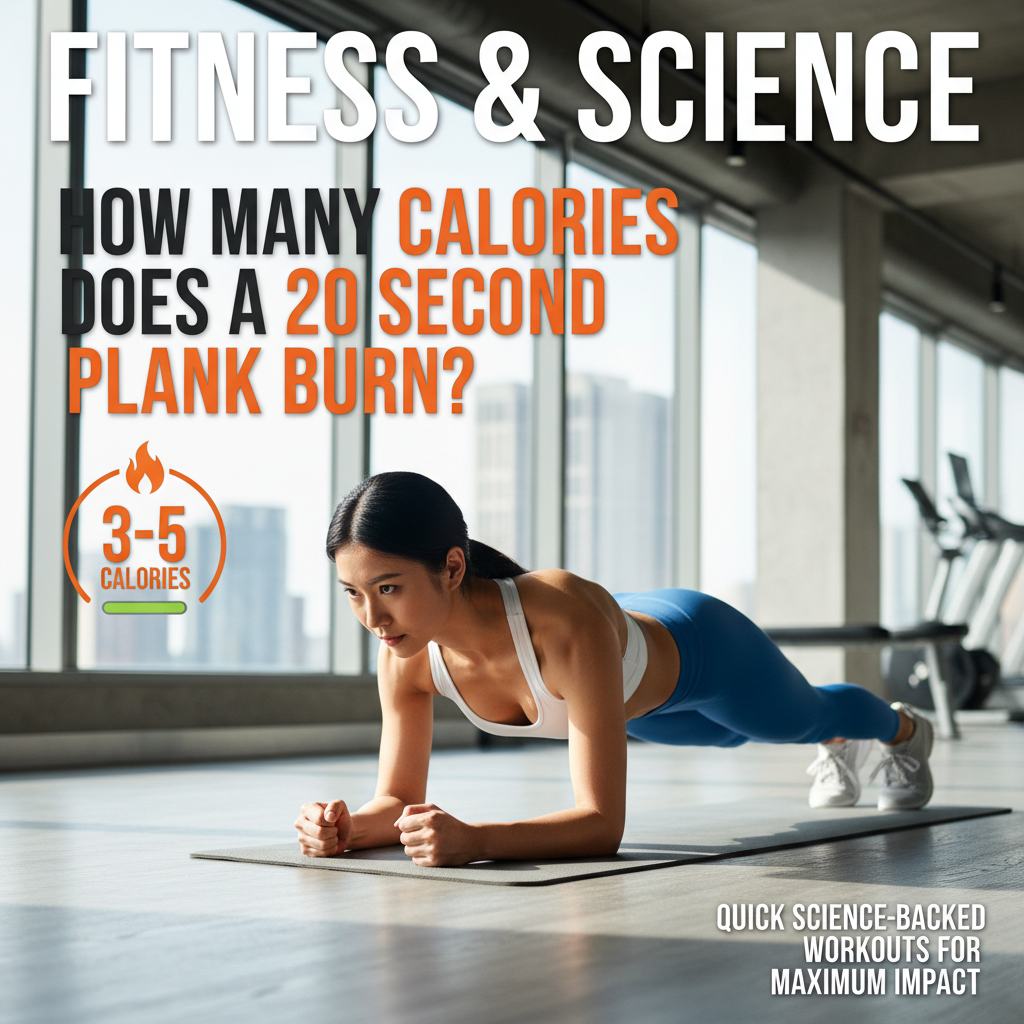
When you do a plank, many muscles in your body activate at the same time. Your arms, shoulders, chest, core, glutes, and legs all work hard to hold your body up. This muscle activity uses energy, which comes from burning calories. In just 20 seconds, you may not sweat much, but your body is still using fuel.
Calorie burn happens when your body moves or keeps a position. Even short exercises like a 20-second plank use energy. The main factors are your weight, age, gender, and how hard you work. Planks are isometric exercises, meaning your muscles are working without moving. While this burns fewer calories per minute than running, it is still important for building strength.
Researchers use the “MET” (Metabolic Equivalent Task) system to estimate calories. Planking is about 3-4 METs. The calorie formula is:
Short, intense workouts are great for busy people. One 20-second plank may not burn much, but doing several a day adds up. Micro-workouts improve strength and burn calories in short bursts. They are easier to fit into your schedule than one long session.
To lose fat, you need to burn more calories than you eat. Planks help by building muscle, which burns more calories even at rest. Short planks still improve your core strength, posture, and stability. For fat loss, combine planks with other exercise and healthy eating.
Planks help strengthen your core but do not directly burn belly fat. Burning fat happens when your whole body uses more calories than you eat. Strong core muscles from planks will show as you lose body fat over time.
Yes. Even 20 seconds can make your muscles stronger. Do multiple short planks each day and you’ll see improvements. Over weeks and months, you can increase the time for more benefits.
Fitness trackers give estimates, but they are not perfect. For short exercises like planks, the number may be too low or too high. Use tracker data as a guide, but focus on how your body feels and your progress.