How Many Calories In A Gram Of Protein
A practical step-by-step guide to how many calories in a gram of protein, including preparation, instructions, common issues, tips, and next steps.
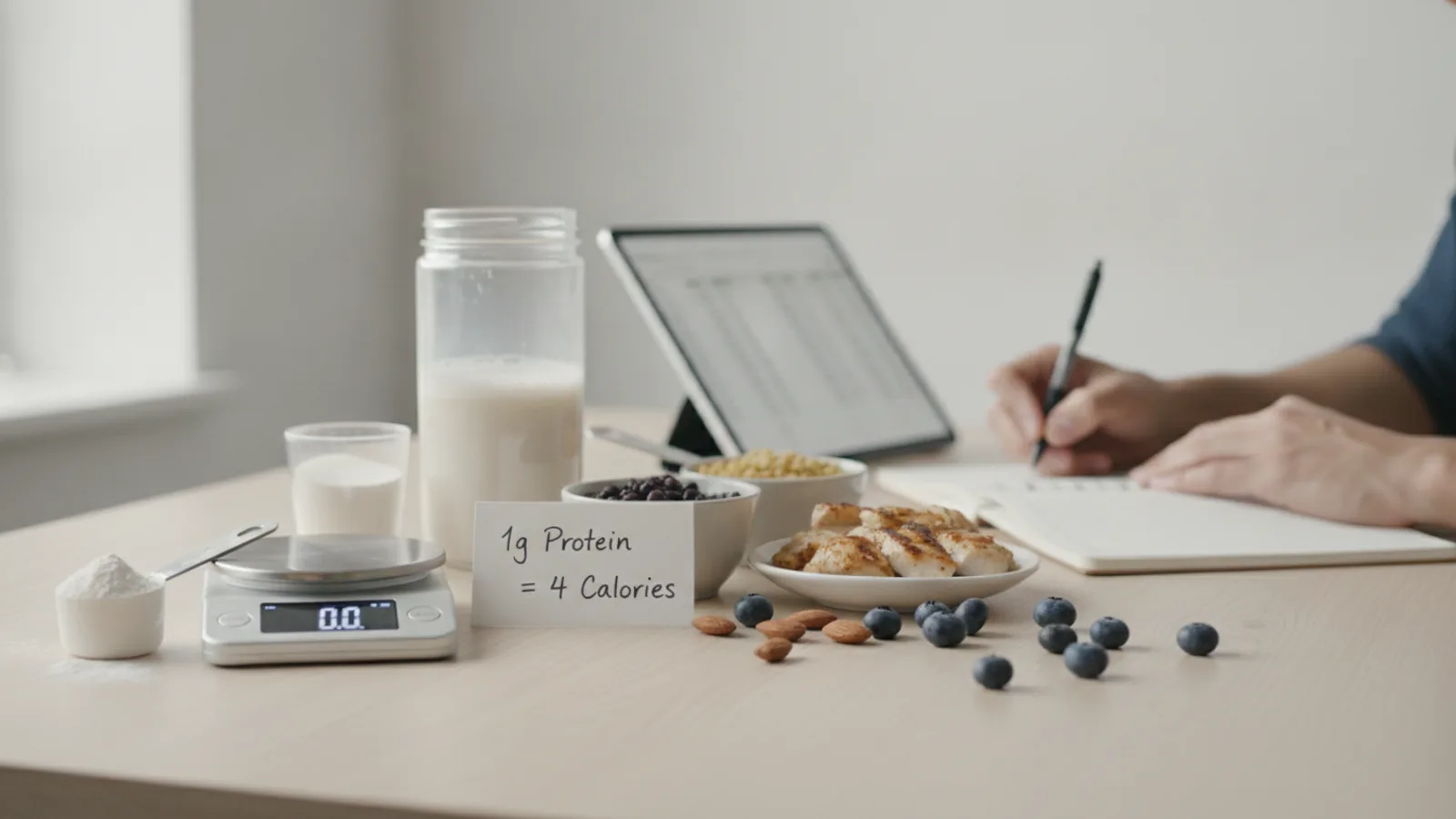
How Many Calories In A Gram Of Protein
Understanding the number of calories in a gram of protein is a cornerstone of nutrition, whether your goal is to build muscle, manage your weight, or simply eat a healthier diet. This guide gives you the clear, simple answer and shows you how to use this knowledge to read food labels accurately and make informed choices about what you eat. We'll walk through the basic calculation, compare protein to other macronutrients, and give you practical steps for applying this to your daily meals.
Fast Answer
- Calories per gram: 4 kilocalories (kcal)
Before You Start
To get the most out of this guide, it helps to have a few things ready. This isn't about complex science; it's about practical application. You'll need:
- Basic nutrition knowledge: A general idea of what calories, protein, fats, and carbohydrates are.
- Access to food labels: Grab a few packaged food items from your cupboard to practise with, or be ready to look up nutrition information online.
- A calculator: Your phone's calculator is perfect for doing the simple multiplication we'll cover.
Step-by-Step Instructions
Understand the Standard Number: 4 Calories per Gram
The first and most important thing to know is the standard, universally accepted value: one gram of protein provides 4 calories. Technically, these are kilocalories (kcal), which is the standard unit of energy used in food nutrition, and the term you'll see on all UK and European food labels.
This number isn't just a guess; it's a carefully calculated average known as an "Atwater factor." In the late 19th century, scientist Wilbur Olin Atwater determined the energy values of the three main macronutrients—protein, carbohydrates, and fats—that our bodies can use. These values are still the foundation of nutritional science and food labelling today.
So, whenever you see the protein content of a food, you can quickly estimate its energy contribution by multiplying the grams by four.
Compare Protein to Other Macronutrients
To fully appreciate what "4 calories per gram" means, it's essential to see how it stacks up against the other two energy-providing macronutrients. This context is key to balancing your diet.
- Protein: 4 calories per gram.
- Carbohydrates: 4 calories per gram.
- Fat: 9 calories per gram.
As you can see, protein and carbohydrates provide the same amount of energy per gram. Fat, however, is more than twice as energy-dense. This is why high-fat foods have a much higher calorie count for the same weight compared to high-protein or high-carb foods. Understanding this trio helps you see how the composition of your food affects its total calorie count.
Learn to Read a Nutrition Information Panel
Now, let's put this knowledge into practice. Grab a packaged food item and find the nutrition label. In the UK, this is usually a table on the back or side of the packaging. You'll typically see two columns: "Per 100g" and "Per serving".
The "Per 100g" column is the most useful for making direct comparisons between different products. The "Per serving" column is useful for understanding what you're actually consuming if you eat the manufacturer's suggested portion size.
In this table, find the row labelled "Protein." This will tell you how many grams of protein are in the food. For example, a pot of Greek yoghurt might say it has 10g of protein per 100g.
Calculate the Protein Calories in Your Food
With the information from the nutrition label, you can now do the simple calculation. Let's use our Greek yoghurt example, which has 10g of protein per 100g.
The formula is:
Grams of Protein × 4 = Calories from Protein
So, for the yoghurt:
10g × 4 = 40 calories
This tells you that in a 100g portion of that yoghurt, 40 of its total calories come directly from protein. The remaining calories will come from carbohydrates and fat, which are also listed on the label. This simple skill empowers you to look beyond the total calorie count and understand where the energy in your food is coming from.
Apply the Calculation to a Full Meal
Let's take it a step further and analyse a simple meal: a grilled chicken breast (150g), a serving of quinoa (50g dry weight), and a side of steamed broccoli (100g).
- Find the protein content for each item. You might need to look this up online using a reliable source like the NHS website or a trusted nutrition database.
- Grilled chicken breast (150g): approximately 45g protein
- Quinoa (50g dry): approximately 7g protein
- Steamed broccoli (100g): approximately 3g protein
- Calculate the protein calories for each component.
- Chicken: 45g × 4 = 180 calories from protein
- Quinoa: 7g × 4 = 28 calories from protein
- Broccoli: 3g × 4 = 12 calories from protein
- Add them together for the meal's total.
- 180 + 28 + 12 = 220 calories from protein in the entire meal.
This process shows you how to account for the protein in all parts of your meal, not just the main protein source. It gives you a much clearer picture of your overall macronutrient intake.
Consider the Thermic Effect of Food (TEF)
Here's a slightly more advanced concept: your body actually uses energy to digest, absorb, and process the nutrients in your food. This is called the Thermic Effect of Food (TEF). Interestingly, protein has a much higher TEF than carbs and fats.
- Protein TEF: 20-30%
- Carbohydrate TEF: 5-10%
- Fat TEF: 0-3%
What does this mean? If you consume 100 calories from protein, your body uses 20-30 of those calories just to process it. So, you're left with a "net" of 70-80 calories. While food labels will always use the standard 4 calories per gram figure, understanding TEF helps explain why high-protein diets can be effective for weight management—your body works harder, and burns more calories, breaking down protein.
Common Problems When Calculating Protein Calories
While the maths is simple, a few common pitfalls can lead to inaccurate tracking. Here’s what to watch out for.
- Confusing "Per Serving" with "Per 100g": A common mistake is to only look at the "per serving" calories, but then eat a portion that is much larger than the manufacturer's suggestion. Always check the serving size and adjust your calculations accordingly. Using the "per 100g" value and weighing your food is the most accurate method.
- Ignoring How Cooking Changes Weight: Meat, for example, loses water and fat when cooked, so its weight decreases. A 150g raw chicken breast might weigh only 110g after grilling. For the most accurate tracking, it's best to use the nutritional information for the food in the state you weighed it (e.g., use "raw chicken breast" data if you weighed it raw).
- Relying on Unverified App Data: Calorie-tracking apps are incredibly useful, but their databases often contain user-submitted entries that can be inaccurate. Whenever possible, choose "verified" entries (often marked with a green tick) or double-check the information against the product's official packaging.
- Forgetting "Hidden" Protein Sources: Don't just focus on meat, fish, and dairy. Many other foods contain protein that adds up over the day. Foods like bread, pasta, oats, and peas all contribute to your total protein intake. Acknowledging these sources gives you a more complete picture of your diet.
Advanced Tips for Protein Understanding
Once you've mastered the basics, you can explore some deeper concepts to optimise your nutrition.
- Focus on Protein Quality: Not all protein is created equal. Proteins are made of building blocks called amino acids. "Complete proteins" (found in meat, dairy, eggs, soy, and quinoa) contain all nine essential amino acids your body can't make itself. "Incomplete proteins" (most plant sources like beans and lentils) are missing one or more. It’s important, especially for those on a plant-based diet, to combine different protein sources to ensure a complete amino acid profile.
- Protein Timing for Muscle Growth: If your goal is to build muscle, research suggests that spreading your protein intake evenly throughout the day (e.g., 20-30g per meal) is more effective for muscle protein synthesis than eating most of it in one large meal.
- Calculate Your Personal Protein Needs: While general guidelines are helpful, your ideal protein intake depends on factors like your age, weight, activity level, and goals. The general recommendation for a sedentary adult is around 0.8 grams of protein per kilogram of body weight. However, for active individuals or those looking to build muscle, this can increase to 1.2-2.0 grams per kilogram. Consulting a nutrition professional can help you determine your specific needs.
Quick Reference
| Situation | Use This Method | Why It Works |
|---|---|---|
| Doing a quick calorie check | Grams of protein × 4 | This is the standard, accurate Atwater value used on all food labels. |
| Comparing two different foods | Look at the 'per 100g' column | It provides a fair, like-for-like comparison, ignoring different serving sizes. |
| Planning your daily diet | Aim for 10-35% of total calories from protein | This is the recommended Acceptable Macronutrient Distribution Range (AMDR) for healthy adults. |
| Choosing foods for weight management | Prioritise lean protein sources | Protein has a high thermic effect and promotes satiety, helping you feel fuller for longer. |
How Many Calories In A Gram Of Protein FAQ
Do protein and carbohydrates have the exact same number of calories?
Yes, for all practical purposes and according to food labelling standards, both protein and carbohydrates are calculated as providing 4 calories per gram. While in a laboratory setting their exact energy values can differ slightly, the Atwater system averages these for simplicity and accuracy in real-world nutrition.
Does protein powder have more calories per gram?
No, the protein in protein powder still provides 4 calories per gram. A scoop of whey or plant-based protein powder might have around 25 grams of protein, which would contribute 100 calories (25 x 4). The total calorie count for the scoop will be slightly higher due to small amounts of fats and carbohydrates also present in the powder.
Why is the calorie count on my food label not adding up perfectly?
Sometimes, if you multiply the grams of protein, carbs, and fat by 4, 4, and 9 respectively, the total might be slightly different from the total calories listed on the label. This is usually due to rounding by the manufacturer, as they are allowed a certain margin of error. It can also be influenced by the way fibre is calculated, as some types of fibre contribute fewer calories than other carbohydrates.
Do animal and plant proteins have the same number of calories?
A gram of protein is a gram of protein, regardless of its source, so it always provides 4 calories. However, the whole foods that contain these proteins have very different nutritional profiles. For example, a steak (animal protein) will come with a higher amount of saturated fat compared to lentils (plant protein), which come packaged with fibre and carbohydrates. The protein itself is the same calorically, but the food source matters.
Final Checklist for Protein Calories
You've learned the fundamentals. Before you go, run through this final checklist to make sure you've got the key concepts down.
- You know that one gram of protein contains 4 calories (kcal).
- You can confidently locate the protein content on a standard UK food nutrition label.
- You can use the simple formula (grams × 4) to calculate the calories from protein in any food or meal.
- You understand that fat is more than twice as calorie-dense (9 kcal/g) as protein and carbs.
- You are aware that the body uses more energy to digest protein (the Thermic Effect of Food).
- You know to check serving sizes and use the "per 100g" value for accurate comparisons.