
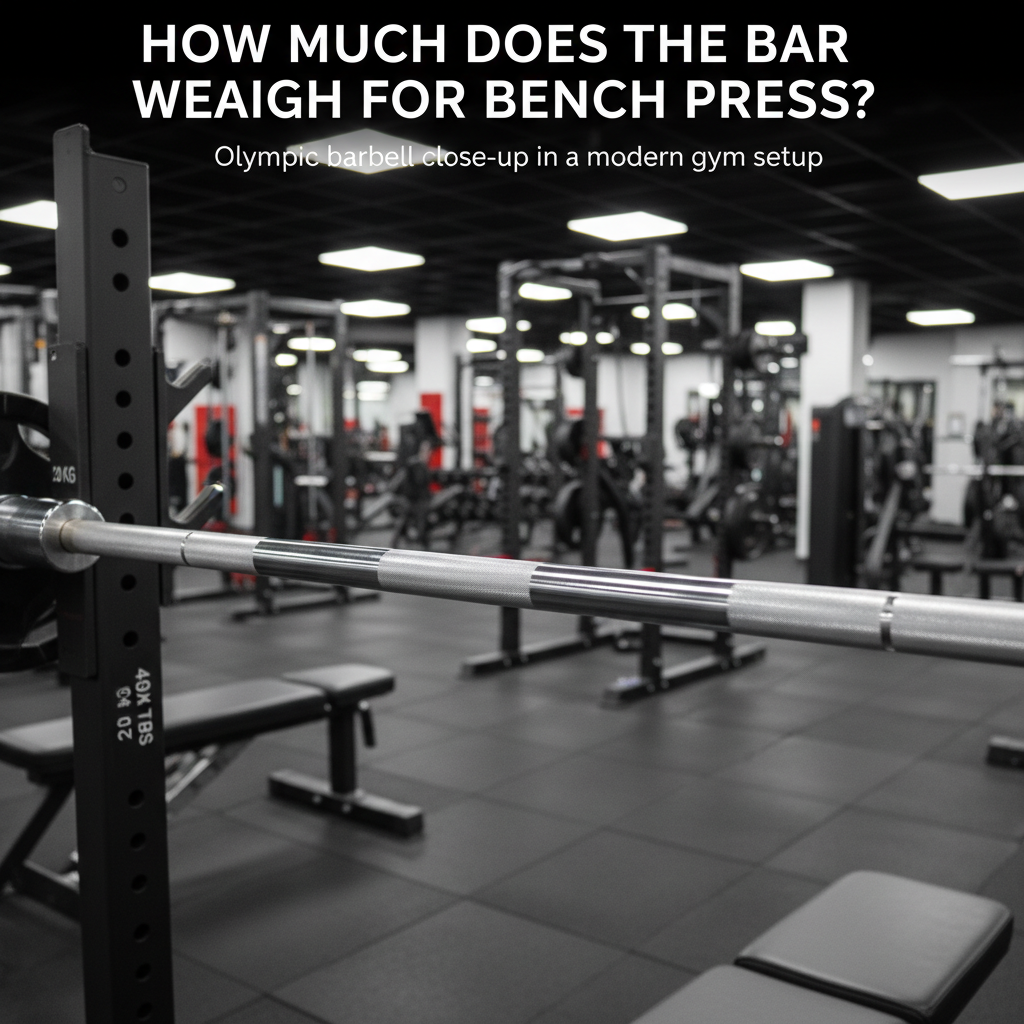
The most common bar used for bench press is the Olympic barbell. In 2026, just like before, this bar usually weighs 45 pounds (20.4 kg) . Most gyms and competitions use this type of bar for bench press, squats, and deadlifts.
Powerlifting bars are also often 45 pounds, but sometimes they are more rigid. Some specialty bars like the “safety squat bar” or “multi-grip bar” can weigh between 35 and 65 pounds depending on their design.
Home gym bars might be lighter—sometimes 33 pounds (15 kg) or even less. In commercial gyms, bars are more standardized. Always check what type of bar you are using before you start your bench press workout.
It is important to always count the weight of the bar when you track your lifts. If you only add up the plates, you’re underestimating how much you are actually lifting. For example, two 25 lbs plates on each side of a 45 lbs bar is really 145 lbs , not 100 lbs.
If you do not know the bar’s weight, your training progress will be off. You may think you are getting stronger or weaker than you actually are. This could lead to confusion, slower progress, or even frustration.
Lifting more weight than planned can be dangerous. If you guess the bar’s weight and it’s heavier, you may injure yourself. Always make sure you know exactly how much the bar weighs before you start lifting.
Olympic barbells are used in most gyms worldwide. They are 7 feet long, weigh 45 lbs, and the ends spin to make lifting smoother for your wrists. They are ideal for both beginners and advanced lifters.
Powerlifting bars are also usually 45 lbs, but they are stiffer and have special “knurling” (grip markings) to help with heavy lifts. These bars are made to avoid bending under large weights.