
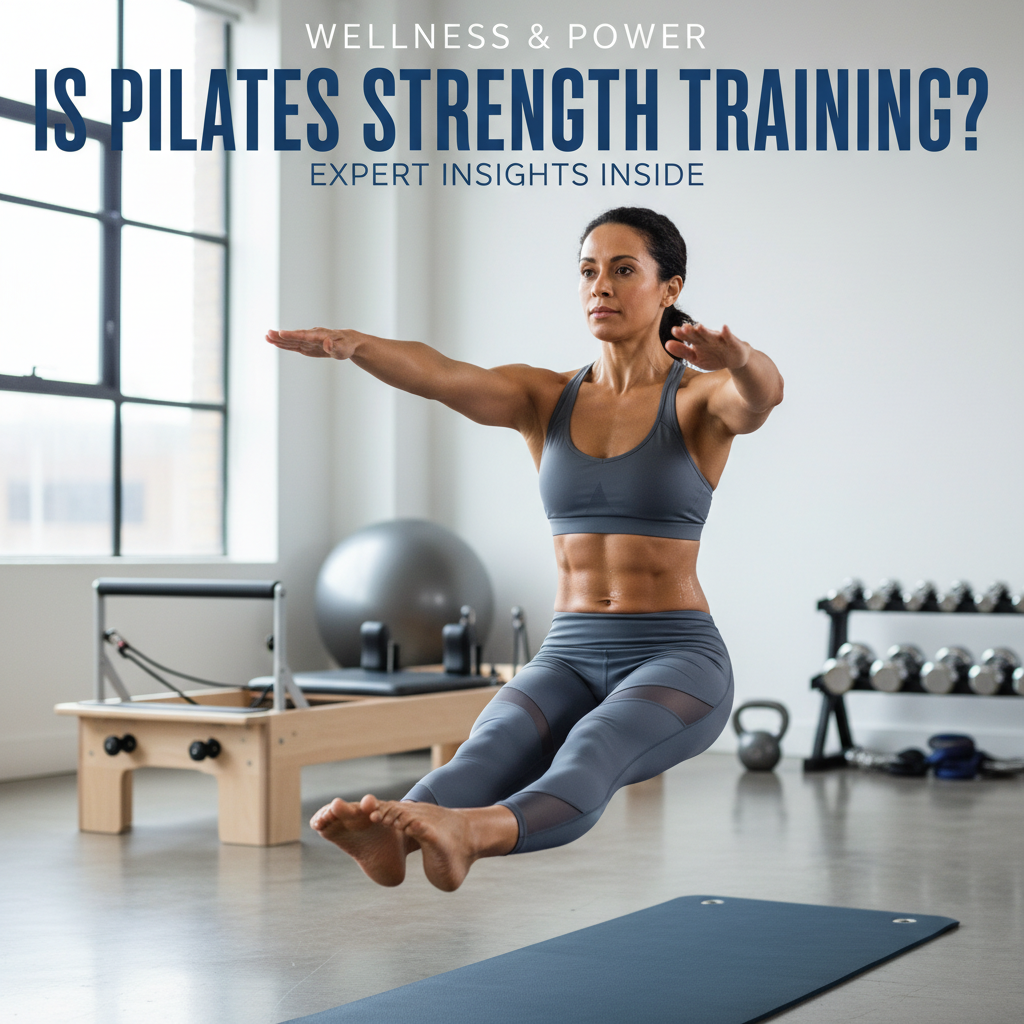
Pilates is a holistic exercise method developed by Joseph Pilates in the early 20th century. Its philosophy centers on mindful movement, controlled breathing, and precise alignment. Originally called “Contrology,” Pilates aimed to create a balance between the mind and body, emphasizing core stability above all.
Mat Pilates uses only body weight and simple props like rings or balls. It focuses on developing foundational strength, flexibility, and control. Reformer Pilates involves a specialized machine with springs and pulleys, providing variable resistance and support. Research shows that Reformer Pilates increases muscle engagement and offers greater load potential compared to mat work, making it suitable for progressive strength gains.
Contemporary Pilates incorporates elements from yoga, physiotherapy, and strength training. Hybrids like Power Pilates, HIIT-Pilates, and Pilates-Strength Fusion target both stability and muscle hypertrophy. According to 2025 survey data, 42% of studio classes now integrate resistance bands or weights, enhancing strength-focused outcomes.
Current EMG studies (2025-2026) demonstrate that Pilates activates core stabilizers—transverse abdominis, multifidus, and gluteus medius—at levels comparable to light-to-moderate resistance training. A peer-reviewed 2026 meta-analysis (n=1,730) showed mat Pilates produced significant core strength increases (12-18% gains in trunk flexion strength), while Reformer Pilates achieved broader activation and 21% mean strength gains in both upper and lower body muscles over 12 weeks.
Pilates outperforms traditional strength routines in flexibility and dynamic balance. Studies report 23% improvement in sit-and-reach scores and a 15% gain in single-leg stance duration after 8 weeks. Strength training shows modest but complementary mobility increases when integrated with Pilates methods.
The injury rate in Pilates is remarkably low: just 0.31 per 1,000 hours according to a large 2025 cohort study, compared to 1.4 for weight training. Pilates instructors are trained to modify exercises, making it accessible for seniors, post-rehab clients, and those with chronic pain.
2025 expert consensus highlights that Pilates delivers functional strength, particularly for the trunk and pelvic girdle. However, for maximal hypertrophy, trainers recommend supplementing Pilates with higher-resistance or weighted protocols.
Ready to start your strength journey? Join Pilates Anytime or visit your local PMA-approved studio to experience expert-led Pilates and strength classes. Make 2026 the year you unlock your full potential.