
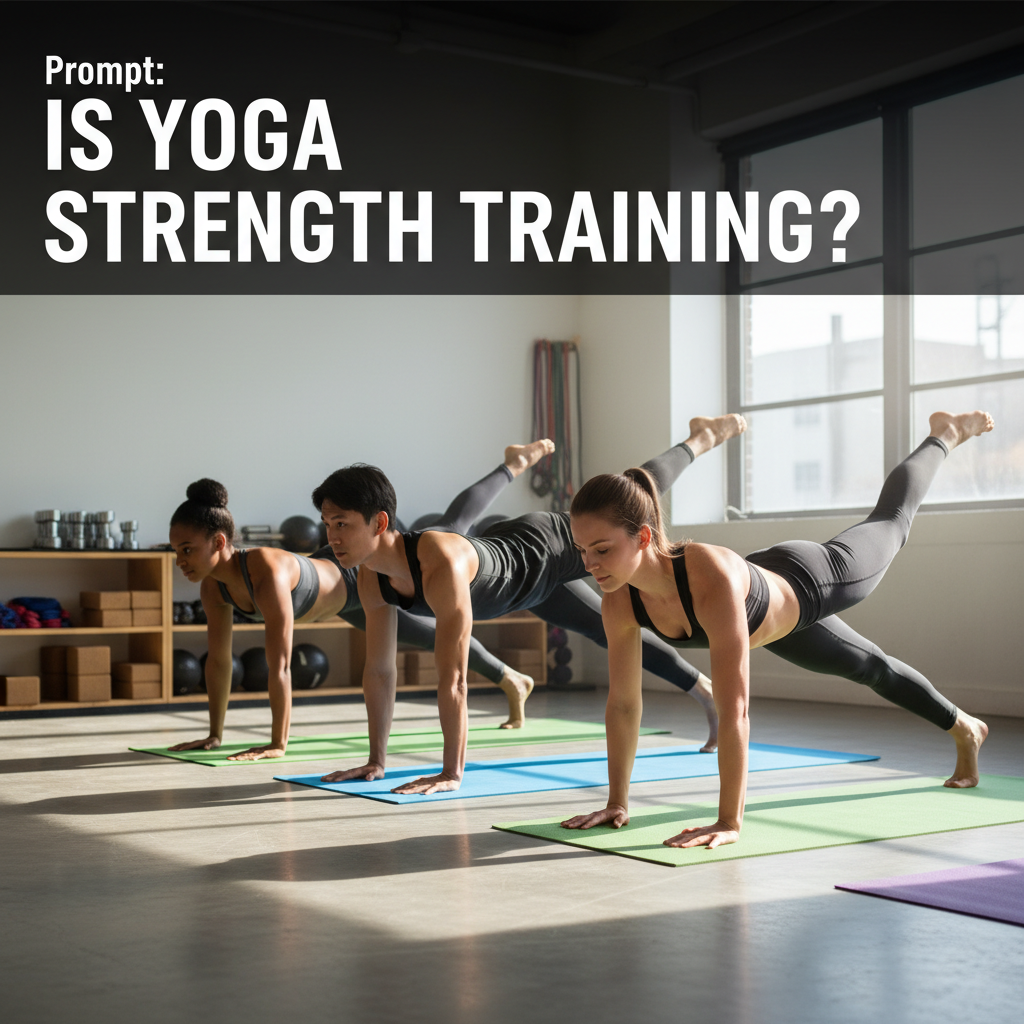
Are you wondering if yoga can actually help build strength or if it’s just for flexibility and relaxation? This guide will answer your questions about yoga strength training. If you’re a student at grade 9 level or just starting out, this complete tutorial will help you understand what strength training really means, how yoga fits in, and how you can use yoga to build real functional strength safely.
Strength training means using resistance to make your muscles work harder and get stronger. It’s not just about lifting weights at the gym. Bodyweight exercises like push-ups, squats, and even yoga poses count as strength training if they challenge your muscles.
Both bodyweight and external weights (like dumbbells) help you build strength. Yoga uses your own bodyweight for resistance, while gym training usually uses external weights. Both methods have benefits and can support your fitness goals.
Studies show that regular yoga practice can increase muscle strength, especially in beginners. Research from the past few years proves that yoga builds strength in the arms, legs, and core.
Many yoga poses require holding your body in one position (called isometric holds), like Plank or Warrior. These moves make your muscles work hard to keep you steady. Yoga also activates deep muscles that aren’t used much in other workouts.
Yoga can help you get stronger, but it might not build big, bulky muscles (hypertrophy) like heavy weightlifting. Yoga is better for functional strength, balance, and muscle endurance.
Yoga can replace gym strength training for people wanting functional strength, balance, and flexibility. If you want maximum muscle size (hypertrophy) or plan to compete in weightlifting, combining both yoga and weights is best.
Yoga is much more than stretching. Many poses are bodyweight strength moves, helping you get stronger with every session.