
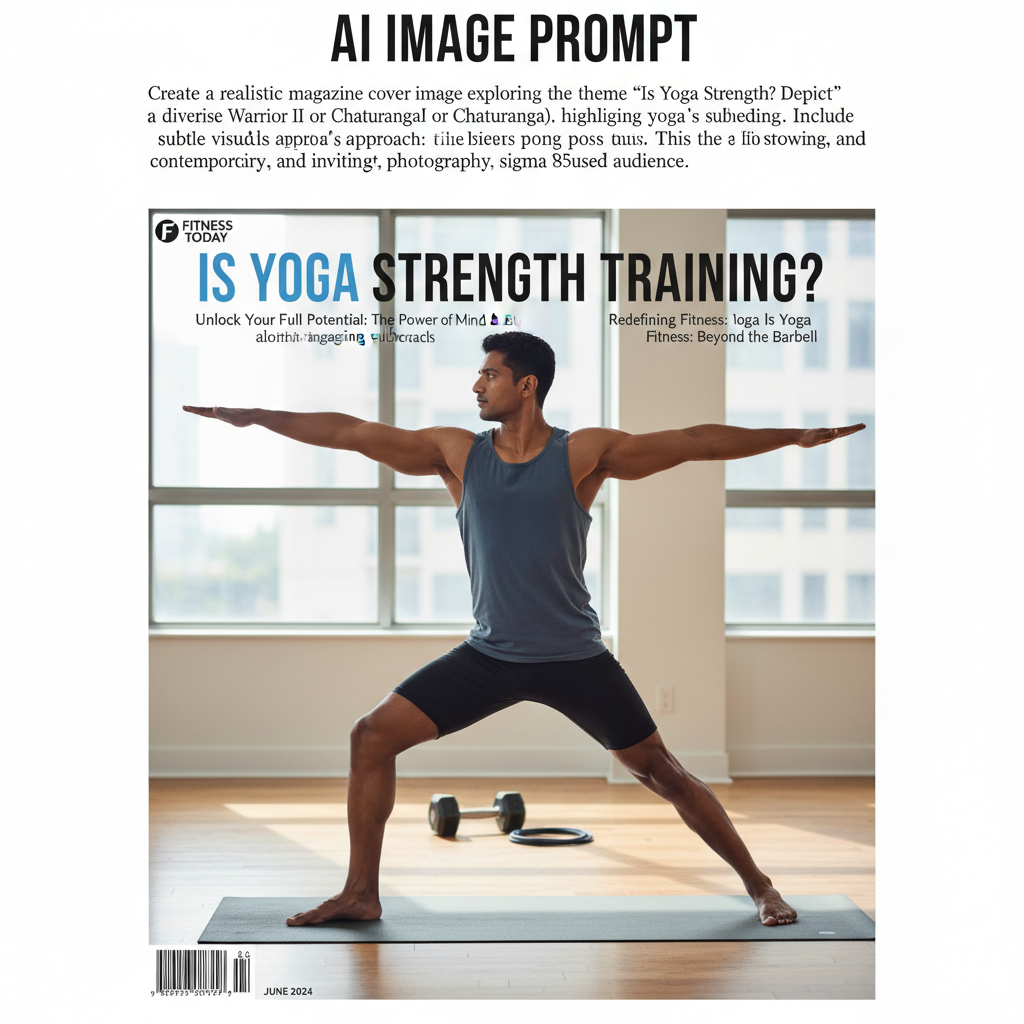
Strength training means working your muscles so they grow stronger. Usually, people lift weights for this. But yoga can also build strength. In yoga, you use your body weight instead of dumbbells or machines. Poses force your muscles to push, hold, and balance. This counts as strength training, especially for beginners and teens.
Research shows yoga builds strength through isometric holds (staying in a pose) and dynamic movement (flowing between poses). Muscles work to keep your body stable. Over time, they become stronger and more toned. Yoga also challenges tiny stabilizing muscles missed in normal workouts. All these help develop real strength.
Weightlifting makes muscles bigger and stronger fast. Yoga creates lean, toned muscles. Both increase muscle endurance but in different ways. Yoga uses whole groups of muscles, not just one at a time.
Progressive overload means making exercises harder over time. In yoga, you do this by holding poses longer, trying harder variations, or adding props. While you may not get as strong as with heavy lifting, yoga offers a steady way to grow stronger.
Yoga also boosts flexibility and mobility. This means your muscles and joints move easier and hurt less. Weightlifting sometimes ignores this. Yoga’s mix of stretching and strength work helps your whole body perform better.
Yoga balances hard workouts with stretching and mindful movement. This helps muscles recover, reduces soreness, and prevents injuries. Deep breathing in yoga also lowers stress and speeds healing.
Set clear goals like balance duration (hold Tree Pose for 60 seconds), deeper squats in Chair Pose, or smoother transitions between yoga flows. Track improvements in your main sport—notice faster sprints or smoother moves.
Many physiotherapists say yoga improves core strength, balance, and postural muscles. Trainers confirm yoga can be an entry point to strength training, especially for young athletes or beginners.