
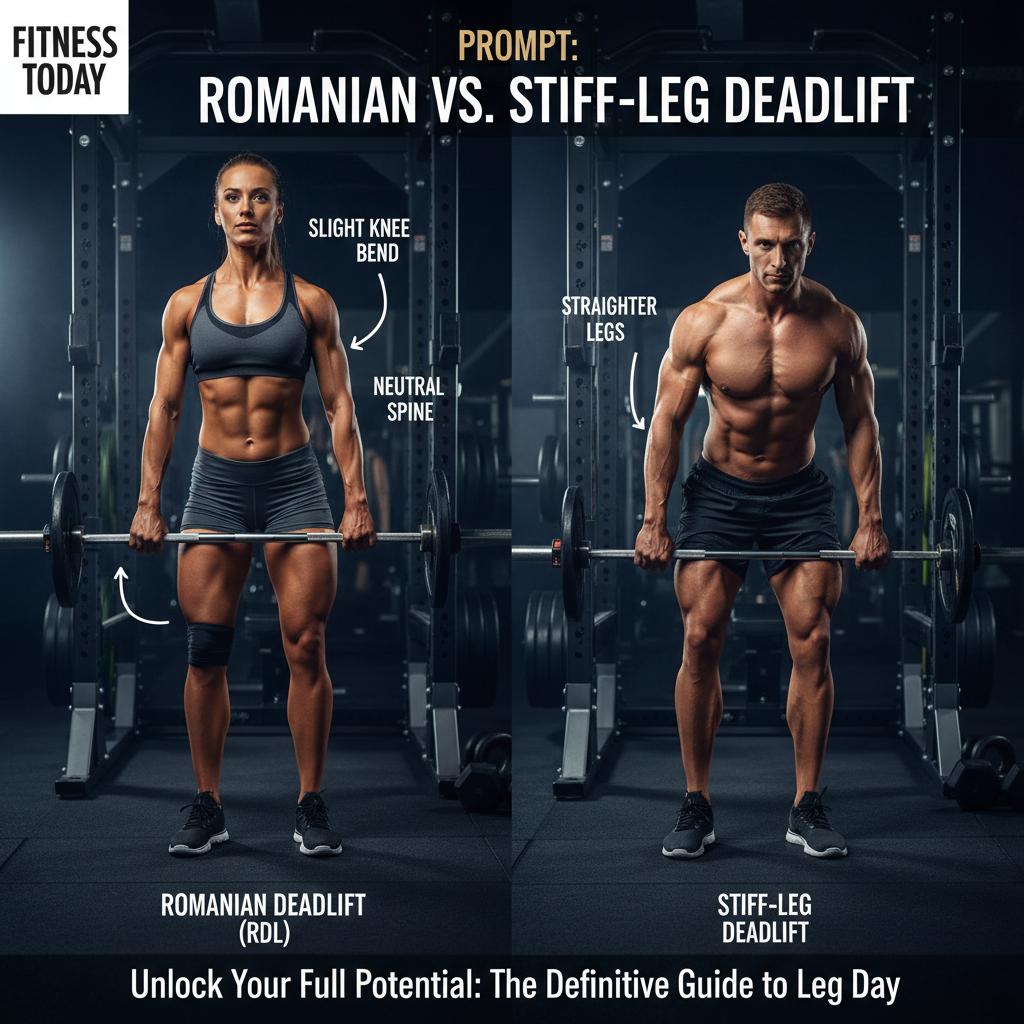
The Romanian Deadlift (RDL) and Stiff Leg Deadlift are two popular hip hinge exercises. Both target the posterior chain but differ in technique and muscle focus. RDLs emphasize slight knee bend and hip hinge, keeping the barbell close. Stiff leg deadlifts use less knee flexion, creating more stretch through hamstrings.
In 2026, evidence-based training is crucial. Choosing between RDL and stiff leg deadlift affects muscle gains, injury prevention, and performance. As more athletes and lifters pursue targeted posterior chain strength, understanding these differences supports smarter training.
RDLs use more hip flexion, load the glutes and hamstrings evenly. Stiff leg deadlifts increase hamstring tension, with less glute drive and greater lumbar activation. Stiff leg variation increases range of motion, while RDLs protect joints with controlled knee bend.
RDLs are generally safer for most due to built-in knee softness and controlled load. They are suitable for all levels, including beginners.
RDLs are common in powerlifting for lockout strength and technique. Stiff leg deadlifts, while heavy, are less prevalent due to injury risk.
Stiff leg deadlifts offer more stretch, helping flexibility. RDLs improve functional hip strength and mobility, beneficial for athletes.
Tall, long-limbed lifters often benefit from RDL mechanics. Hypermobile users should avoid locking out stiff leg, and those with limited mobility excel with RDL’s safer range.
2026 studies highlight that RDLs activate both hamstring and glute fibers efficiently, while stiff leg deadlifts drive isolated hamstring hypertrophy. EMG data reveals 8–20% higher peak load on hamstrings in stiff leg lifts, but with increased mechanical stress.