
Reverse lunges are a popular exercise for building lower body strength, improving balance, and supporting joint health. This guide will help you understand exactly what muscles reverse lunges work, why they matter, and how you can master this move whether you are new to fitness or looking for advanced variations. You will learn step-by-step instructions, benefits, common mistakes, and how to use them in your workout routines.
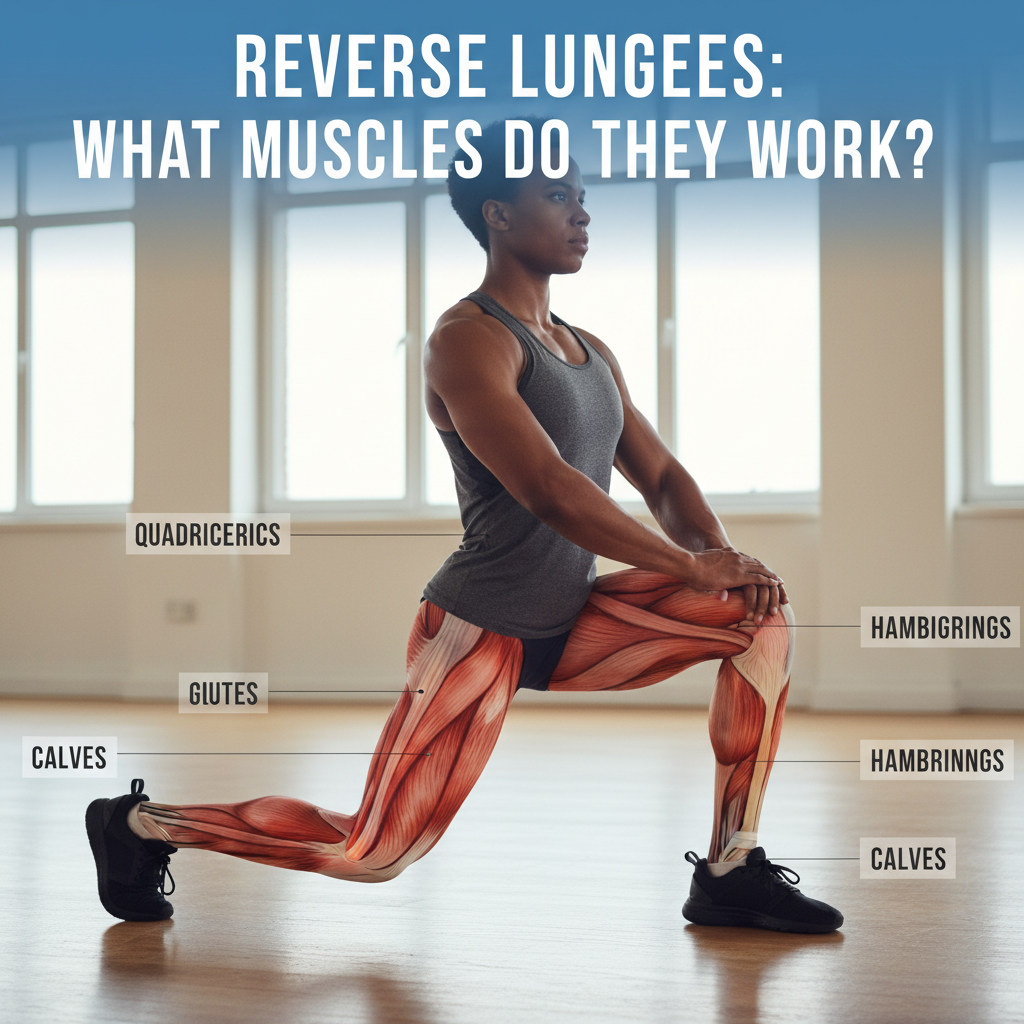
When you perform a reverse lunge, the main muscles at work are your gluteus maximus (your largest butt muscle), quadriceps (front thighs), and hamstrings (back of thighs). These muscles help you lower down with control and push back up to standing. The glutes and quads do most of the work, giving you strength and power for daily movement and sports.
Your calves support your ankle and push through the back foot, while your core muscles keep your upper body steady so you do not tip over. Hip stabilizers at the sides of your hips help balance your entire body during the movement. These secondary muscles prevent wobbling and make the movement safer and more effective.
Unlike forward lunges, reverse lunges put less pressure on your front knee and shift the focus more towards your glutes and hamstrings. Forward lunges can sometimes stress the knees, especially if you overstride. Because you step back during a reverse lunge, your body stays more upright, making it easier to keep good balance and form while working the muscles at the back of your lower body.
The gluteus maximus is the strongest hip extensor and works hardest during reverse lunges. The gluteus medius, on the side of your hip, acts to stabilize your pelvis and prevents your knee from wobbling side to side.
Your quadriceps are a group of four muscles at the front of your thigh. The rectus femoris helps to straighten your knee, while the vastus medialis and other quad muscles support your knee joint and thigh during movement. Reverse lunges also encourage the vastus medialis (the teardrop-shaped lower inner thigh muscle) to fire strongly to control your descent and ascent.
The hamstrings at the back of your thighs, including the biceps femoris, semitendinosus, and semimembranosus, work to steady your body and help extend your hip. This is especially important when you push yourself back up from the bottom of the lunge.
Your core muscles, including your abs and lower back, keep your upper body steady and upright. The adductors (inner thigh muscles) help control your leg position. The calf muscles, especially the gastrocnemius and soleus, help you balance as you move your foot and support your body on the way back up.