
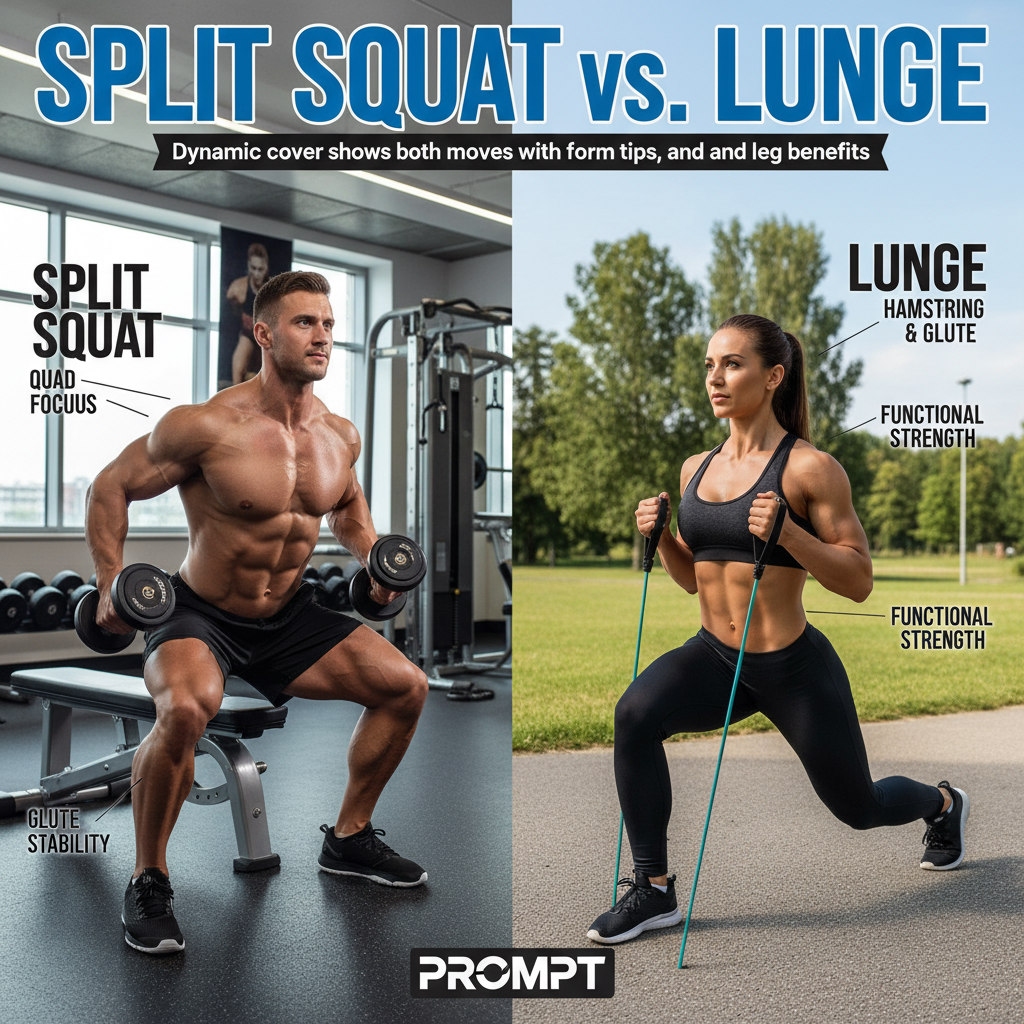
The split squat is a unilateral lower-body exercise where you step one foot forward and keep it planted while lowering your body. The back foot stays in place for balance. There is no stepping motion during repetitions. Split squats focus on strength, stability, and muscle activation in the lead leg.
The lunge is also a unilateral exercise, but it involves active stepping. You step forward, backward, or sideways into each rep, lowering your body before returning to standing. This movement engages mobility, momentum, and dynamic balance.
Both exercises emphasize lower body muscle groups but split squats isolate the leading leg more, while lunges recruit more supporting muscles due to the stepping action.
Research shows split squats produce lower anterior knee force compared to forward lunges, making them preferable for those with knee discomfort (Behm et al., 2024).
Split squats create more tension on the working leg, aiding in muscle growth and maximal strength, especially with added weights. Lunges distribute load, delivering moderate hypertrophy and adding endurance benefits.
Lunges replicate sport-specific movement patterns (e.g., sprint starts, cuts), supporting agility and directional strength. Split squats develop unilateral power needed for step-ups, jumps, and sprints.
Lunges increase hip flexor and hamstring mobility due to the deeper range of motion. Split squats, by isolating the movement, are useful for correcting muscular imbalances—a key for injury prevention.
Ready to upgrade your lower body routine? Shop Top-Rated Fitness Leg Equipment and take your training to the next level!