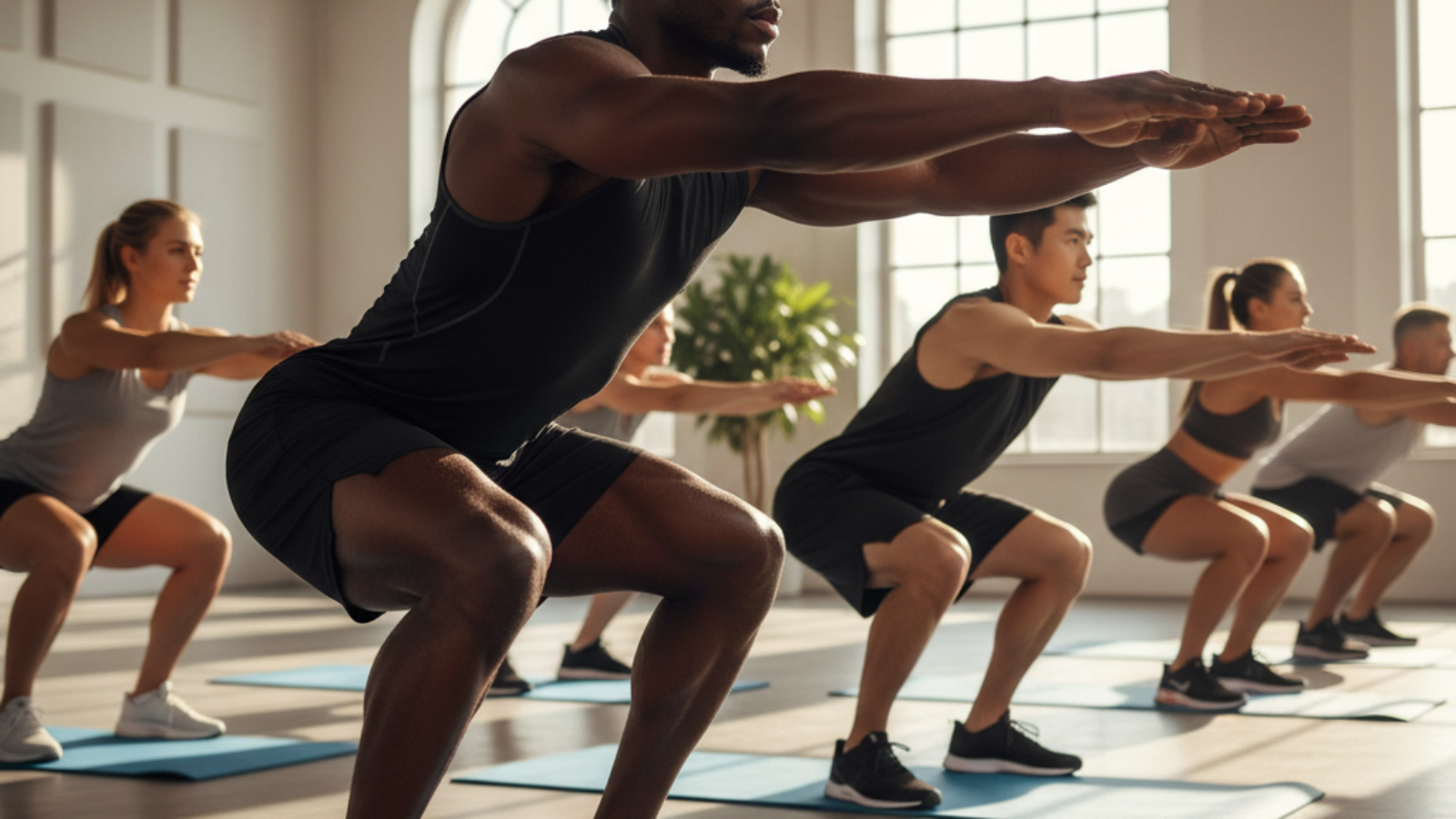
Why Squat Bodyweight Exercises Belong in Every Fitness Routine
Benefits of Squat Bodyweight Exercises for Strength and Mobility
Squat bodyweight exercises are simple but powerful. They help build strong legs, glutes, and core without any equipment. Regular squatting also improves your balance, flexibility, and overall mobility. Many professional trainers agree: if you want to grow stronger and stay healthy, bodyweight squats are a must.
Functional Everyday Uses of Squatting Movements
Squats train your body for daily tasks. Sitting down, picking things up, or getting out of bed—all these movements use squatting muscles. Mastering squat bodyweight exercises makes these activities easier and keeps you safe from injuries.
Getting Started: Essential Warm-Ups Before Squat Bodyweight Exercises
Dynamic Mobility Drills to Prepare Joints and Muscles
- Leg Swings: Stand tall and swing each leg forward and back 10 times to loosen hips.
- Hip Circles: Place hands on hips and make gentle circles with your hips, 10 times per side to increase mobility.
- Ankle Rolls: Slowly roll each foot in circles 10 times each direction for joint readiness.
Activation Techniques for Glutes, Core, and Quads
- Glute Bridge: Lie on your back with knees bent, feet flat. Lift your hips and squeeze your glutes for 10 reps.
- Plank Hold: Hold a plank position for 20-30 seconds to fire up your core.
- Bodyweight March: Stand and lift knees high one at a time. March for 30 seconds to activate quads and core.
How to Perform the Perfect Bodyweight Squat
Step-By-Step Instructions for Correct Squat Technique
- Stand with your feet shoulder-width apart and toes slightly turned out.
- Keep your chest up and look straight ahead. Pull your shoulders back gently.
- Bend your knees and push your hips back, as if sitting in an invisible chair.
- Go down until your thighs are at least parallel to the floor (or as low as comfortable).
- Keep your heels flat on the ground. Don’t let your knees go past your toes.
- Push through your heels to stand up, squeezing your glutes at the top.
Visual Guide: Proper Alignment and Posture
- Head: Neutral, looking forward
- Back: Keep a natural curve, not rounded
- Knees: Aligned with toes, do not cave inward
- Heels: Always touching the floor
Breathing Tips During Squat Bodyweight Exercises
Breathe in as you lower your body. Breathe out as you stand back up. This keeps your core engaged and helps you avoid feeling dizzy.
Common Mistakes in Squat Bodyweight Exercises and How to Fix Them
Knee Collapse, Rounding Back, and Other Form Errors
- Knee Collapse: If your knees fall inwards, focus on pushing them out as you squat.
- Rounding Back: Keep your chest up and shoulders back to avoid rounding.
- Lifting Heels: Make sure to press through your heels and keep them on the floor.
Self-Assessment: Video and Mirror Checks
- Practice squats in front of a mirror to watch your form.
- Record a short video from the side and front to check your posture and movement.
- If unsure, compare with online tutorials or ask for feedback from a coach or friend.
Progressing Your Squat Bodyweight Exercises: Variation by Skill Level
Beginner Variations: Box Squats, Supported Squats
- Box Squats: Use a bench or sturdy chair. Sit down and stand up for control and safety.
- Supported Squats: Hold onto a table or door frame for support as you squat.
Intermediate Variations: Jump Squats, Sumo Squats
- Jump Squats: Squat down and explode up as you jump, then land softly.
- Sumo Squats: Take a wide stance with toes out. Lower down to target inner thighs.
Advanced Variations: Pistol Squats, Single-Leg Progressions
- Pistol Squats: Lower all the way down on one leg, keeping the other leg in front. Use a support if needed.
- Single-Leg Progressions: Try mini single-leg squats to build up balance and strength.
Calendar-Based Progression Plan for Consistent Improvement
| Week | Beginner | Intermediate | Advanced |
|---|---|---|---|
| 1-2 | Box Squats x 10, 3 sets | Bodyweight Squats x 15, 3 sets | Pistol Progression x 5 per leg, 3 sets |
| 3-4 | Supported Squats x 15, 3 sets | Jump Squats x 10, 3 sets | Pistol Squats x 3 per leg, 3 sets |
| 5-6 | Bodyweight Squats x 20, 3 sets | Sumo Squats x 15, 3 sets | Single-Leg Squats x 5 per leg, 3 sets |
Injury Prevention and Safety in Squat Bodyweight Exercises
Protecting Knees and Lower Back
Focus on proper form and always warm up. Do not let your knees go inward or forward past your toes. Keep your back in a natural curve. If you feel pain, stop immediately.
When to Stop: Listening to Body Signals
- If you feel sharp pain in knees or back, stop and rest.
- Muscle soreness is normal, but joint pain is a warning sign.
- Take a break or lower intensity if you feel tired or unsteady.
Recovery Tips and Stretching Post-Workout
- Cool down with light walking for 3-5 minutes.
- Stretch your quads, hamstrings, glutes, and calves gently.
- Drink water and eat a healthy snack to speed up recovery.
Modifications for Different Fitness Levels and Abilities
Squat Bodyweight Exercises for Seniors and Limited Mobility
- Sit-to-Stand: From a chair, stand up and sit down slowly for 10-15 reps.
- Partial Squats: Go down only halfway, using a table or wall for balance.
Accessible Options: Chair-Assisted and Wall Squats
- Chair-Assisted Squats: Hold a chair in front of you for extra support during squats.
- Wall Squats: Slide your back down a wall and hold the squat position for as long as comfortable.
Sample Full-Body Workout Incorporating Squat Bodyweight Exercises
HIIT and Circuit Templates for Home or Gym
- 20 Bodyweight Squats
- 15 Push-Ups
- 20 Jumping Jacks
- 15 Sumo Squats
- Rest 1 minute, repeat 3 times
Combining Upper and Lower Body Movements
- Compound Moves: Add arm reaches or shoulder taps while holding a squat.
- Squat to Press (using a book or water bottle): Squat down, stand up, and press the object overhead.
FAQs About Squat Bodyweight Exercises
- How many squats should I do each day? Start with 2-3 sets of 10-20 reps, adding more as you get stronger.
- Can I do squats every day? Yes, but give your muscles a rest if they feel too sore.
- Why do my knees hurt during squats? Check your form, and avoid letting your knees fall inward or forward past toes.
- Is it normal to feel pressure in my lower back? No. Make sure to keep your back straight and avoid leaning forward too much.
References and Further Reading for Squat Bodyweight Exercises Techniques (2026)
- American Council on Exercise. “How to Squat Properly.”
- Harvard Health Publishing. “The Benefits of Bodyweight Exercises.”
- National Academy of Sports Medicine. “Bodyweight Training: Tips and Techniques.”
- Further tips and squat bodyweight exercises guides can be found by searching for “bodyweight squats beginner,” “safe squat technique,” or “squat exercise progression.”