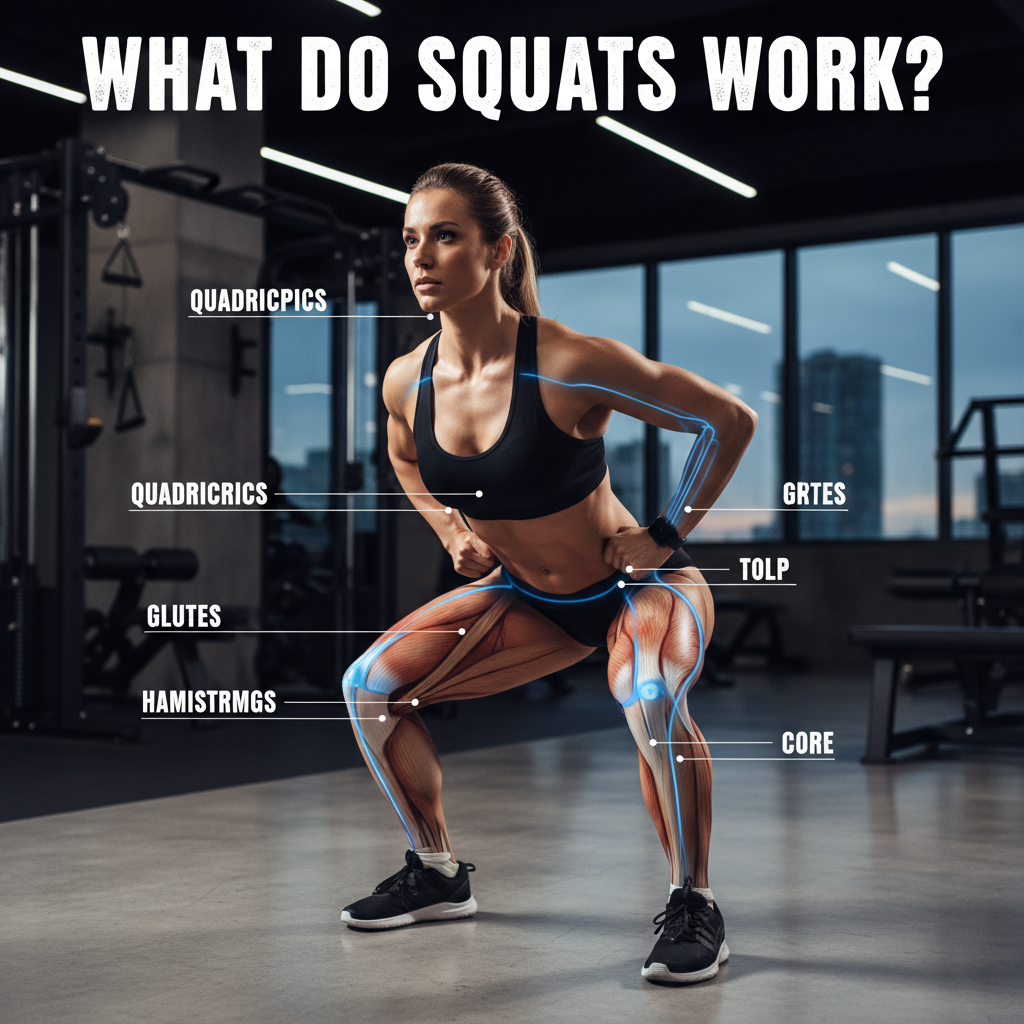
Squats are a powerful exercise that works many muscles. The main muscles used are the quadriceps (front of your thigh), glutes (your buttocks), and hamstrings (back of your thigh). The calves, lower back, and core muscles also support the movement.
Squatting uses both big and small muscles. When you lower your body, your muscles stretch and control the movement. When you stand up, your muscles work hard to push you up. This is called “eccentric” (lowering) and “concentric” (lifting) muscle action. Your body also uses stabilizers—small muscles that keep you balanced as you move.
Squat stance and depth matter. A wider stance uses more inner thigh muscles, while a narrow stance works the front of your thigh more. How deep you squat changes which muscles work the hardest—deeper squats use your glutes more. Bar position also matters: a high bar position (bar on upper back) targets the front of your legs, while a low bar (bar lower on your back) uses your hips and glutes more.
Squats build strength for daily movements like standing up, jumping, or running. Athletes use squats to jump higher, run faster, and tackle stronger. This “functional strength” helps you in sports and everyday life.
Because squats activate big muscle groups, they help your body release hormones that build muscle and burn fat. Doing squats regularly can speed up your metabolism and help you manage a healthy weight, which can lead to a longer, healthier life.
Squats make your bones stronger because the movement puts healthy stress on them. Stronger bones mean less risk of fractures. The movement also helps your joints stay healthy by keeping them flexible and lubricated.
Squats make daily tasks easier, like getting out of a chair or carrying shopping bags. They also help older people stay strong and independent, which is key for healthy aging.
Squats and lunges both work your legs and glutes, but lunges also train your balance and coordination more because you work one side at a time. Squats are better for building strength in both legs at once.