
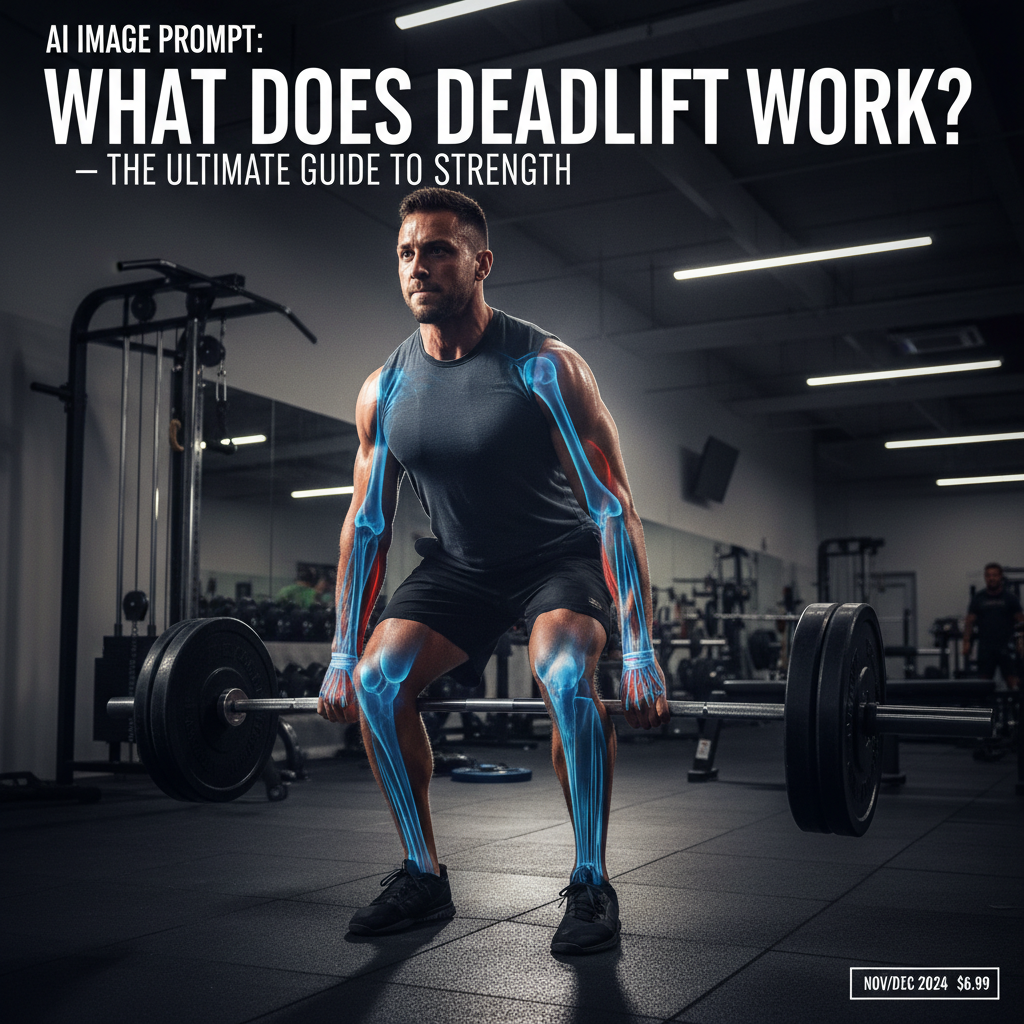
The deadlift is one of the most effective full-body exercises in fitness. If you want to get stronger, build muscle, or improve your athletic performance, understanding what the deadlift works is essential. In this guide, you’ll learn exactly which muscles deadlifts train, how to perform them safely, how to avoid common mistakes, and how to get the best results. Whether you’re a beginner, an athlete, or want to improve your workouts, this article covers all you need to know about deadlifts.
The main muscles that deadlifts work are your glutes (butt muscles) and hamstrings (back of the thighs). These muscles help you stand up and straighten your hips when you lift the bar. Strong glutes and hamstrings make you faster and more powerful in many sports.
Your erector spinae are the muscles along your lower back. Deadlifts work these muscles hard to keep your spine straight. A strong lower back protects you from injuries and helps you lift heavier safely.
The deadlift forces your core muscles (your abs and obliques) to work. They help stabilize your body so you don’t fall forward or backward. Good core strength keeps your back safe and improves your posture.
Your lats, the big muscles on your back, work during the deadlift to hold the bar close to your body. Your grip strength also gets challenged, as you have to hold on tight to the heavy bar throughout the exercise.
The deadlift works many smaller muscles for support. Your traps (upper back), forearms, and calves all help to lift and stabilize the bar. These muscles improve as you get better at the deadlift.
Different types of deadlifts target different muscles. For example, Romanian deadlifts put more work on your hamstrings. Sumo deadlifts use your inner thighs more. Each variation helps you grow stronger in new ways.
Do not round your back while lifting, as this can cause injury. Keep your chest up and your back flat. Practice deadlifting with light weights until you have perfect form.