
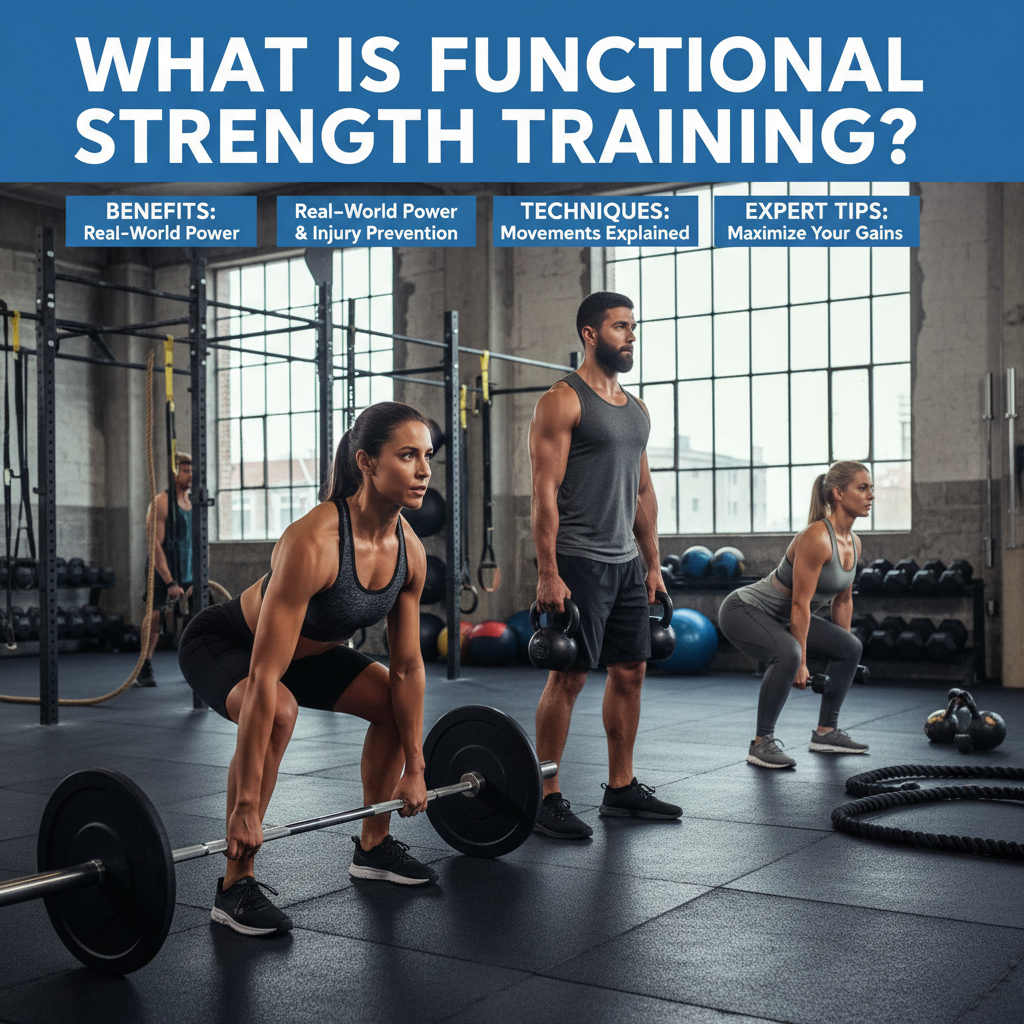
Functional strength training focuses on building strength for activities you do every day. These exercises use movements that mimic real-life activities, like lifting groceries or climbing stairs. Unlike other workouts, functional training trains your muscles to work together, making you stronger for modern life.
Traditional strength training often targets one muscle group at a time, like bicep curls. Functional training uses movements that combine several joints and muscles at once. For example, a squat with a shoulder press mimics standing up while lifting an object overhead. Functional training improves overall movement, balance, and coordination, while traditional training mainly increases muscle size and strength.
Functional strength training prepares you for everyday actions. It can help you carry heavy backpacks, play sports, and move more easily. This training boosts your performance in and out of the gym by improving endurance, agility, and strength for real tasks.
Because functional exercises mimic daily movements, they make your body more resilient. This helps prevent injuries by teaching your muscles and joints to move safely. If you’re recovering from an injury, functional training can help restore strength and stability, making recovery faster and smarter.
Functional strength training includes exercises that challenge your balance and coordination. It also helps improve flexibility and range of motion. These benefits make it easier to move confidently, especially as you age or take on new sports and activities.
Functional strength training is for everyone—young, old, athletes, and people who just want to stay active. Athletes use it to boost performance, while seniors find it helps maintain independence. People with busy lives enjoy greater energy and less risk of injuries.
Exercises can be modified for all fitness levels. Beginners can start with simple movements, while advanced users add weights or complex patterns. Young people, adults, and seniors can adapt training to suit their needs and goals, keeping workouts safe and effective.
People with disabilities, chronic conditions, or unique health needs can also benefit. With the help of smart technology and expert guidance, training plans can be tailored to support rehabilitation, mobility, and everyday activities safely in 2026.