Squats Explained – What Muscles Do Squats Work?
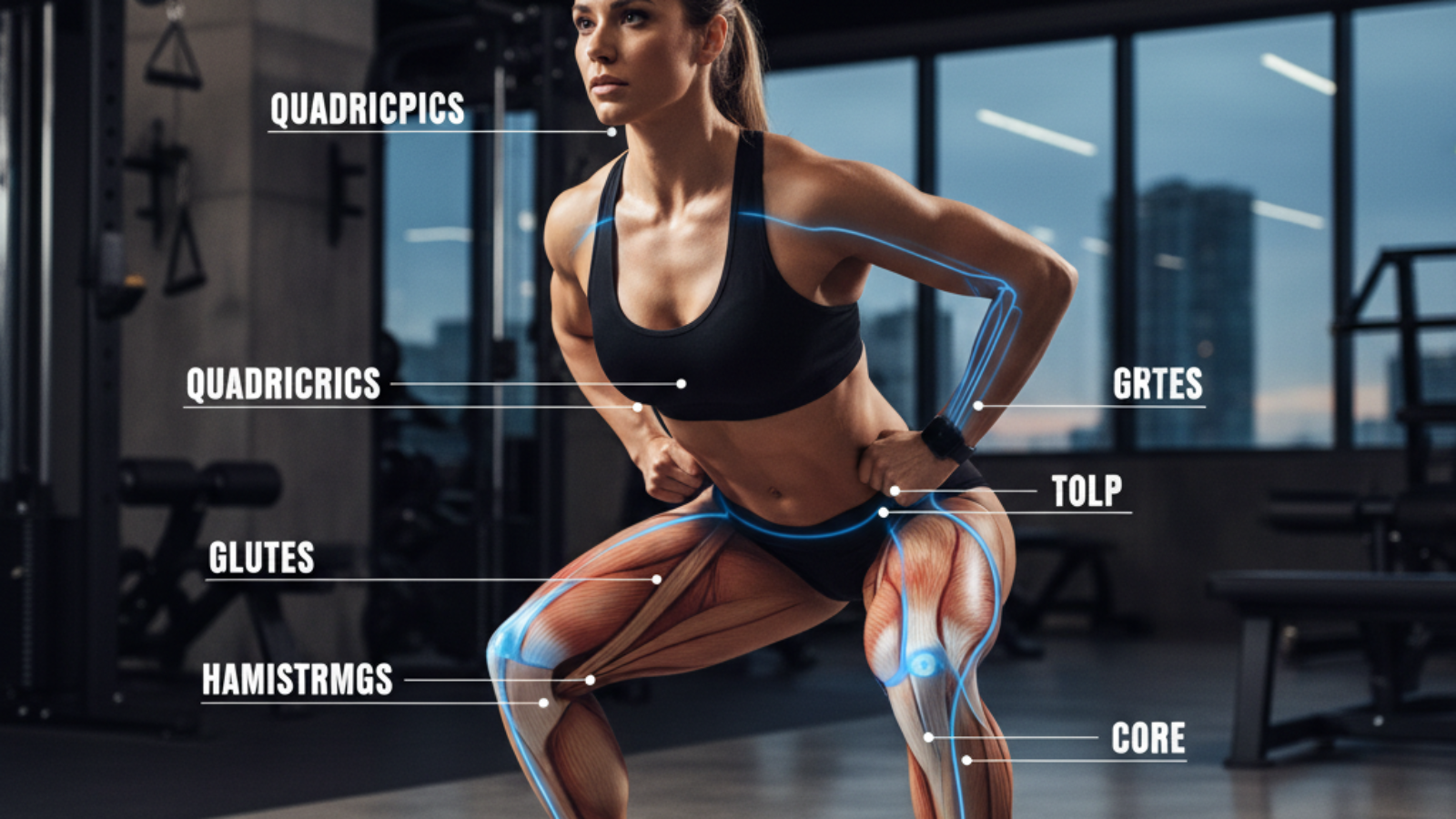
Major Muscle Groups Activated by Squats (Illustrated)
Squats are a powerful exercise that works many muscles. The main muscles used are the quadriceps (front of your thigh), glutes (your buttocks), and hamstrings (back of your thigh). The calves, lower back, and core muscles also support the movement.
- Quadriceps: These help straighten your knee as you stand up.
- Glutes: They push your hips forward and give power to your movement.
- Hamstrings: They help control the movement, especially as you lower down.
- Core: Your abs and lower back keep your body stable and safe.
- Calves: They support the ankle to keep you balanced.
The Science Behind Squat Muscle Engagement
Squatting uses both big and small muscles. When you lower your body, your muscles stretch and control the movement. When you stand up, your muscles work hard to push you up. This is called “eccentric” (lowering) and “concentric” (lifting) muscle action. Your body also uses stabilizers—small muscles that keep you balanced as you move.
How Stance, Depth & Bar Position Change Muscle Activation
Squat stance and depth matter. A wider stance uses more inner thigh muscles, while a narrow stance works the front of your thigh more. How deep you squat changes which muscles work the hardest—deeper squats use your glutes more. Bar position also matters: a high bar position (bar on upper back) targets the front of your legs, while a low bar (bar lower on your back) uses your hips and glutes more.
Key Benefits of Squats for Strength and Health
Functional Strength & Athletic Performance
Squats build strength for daily movements like standing up, jumping, or running. Athletes use squats to jump higher, run faster, and tackle stronger. This “functional strength” helps you in sports and everyday life.
Hormonal Effects, Fat Loss, and Longevity
Because squats activate big muscle groups, they help your body release hormones that build muscle and burn fat. Doing squats regularly can speed up your metabolism and help you manage a healthy weight, which can lead to a longer, healthier life.
Bone Density and Joint Health
Squats make your bones stronger because the movement puts healthy stress on them. Stronger bones mean less risk of fractures. The movement also helps your joints stay healthy by keeping them flexible and lubricated.
Real-World Benefits: Daily Living & Aging Well
Squats make daily tasks easier, like getting out of a chair or carrying shopping bags. They also help older people stay strong and independent, which is key for healthy aging.
Mastering Squat Form – Step-by-Step Technique Guide
Essential Cues for Safe and Effective Squats
- Stand with your feet shoulder-width apart, toes slightly out.
- Keep your chest up and look straight ahead.
- Bend your knees and hips to lower your body as if sitting in a chair.
- Keep your back straight and core tight as you go down.
- Lower until your thighs are parallel to the ground or a little lower if you can.
- Push your feet into the floor and stand up tall.
Common Squat Mistakes (and How to Fix Them)
- Knees caving in: Push your knees out and control the movement.
- Heels lifting off the ground: Keep your weight on your heels, not your toes.
- Round back: Keep your chest up and look forward, not down.
- Shallow squats: Try to squat lower while keeping good form, but don’t force it.
Visual Guide: Proper Squat vs. Common Errors
| Proper Squat | Common Error | Correction |
|---|---|---|
| Knees track over toes | Knees collapse inward | Push knees out, keep feet flat |
| Back straight, core engaged | Back rounded, chest drops | Keep chest up, brace your core |
| Weight on heels/midfoot | Heels rise off the floor | Focus weight towards heels |
Squats vs Other Lower-Body Exercises: Which Is Best?
Squats vs. Lunges – Muscle Activation and Function
Squats and lunges both work your legs and glutes, but lunges also train your balance and coordination more because you work one side at a time. Squats are better for building strength in both legs at once.
Squats vs. Deadlifts – Complementarity or Competition?
Deadlifts focus more on your back and hamstrings, while squats focus more on your quads and glutes. Both exercises are great and can be used together for a strong lower body.
When to Choose Each Exercise
- Choose squats to build general leg and hip strength.
- Pick lunges for balance and single-leg training.
- Use deadlifts for back strength and powerful hamstrings.
Variations of the Squat for All Fitness Levels
Bodyweight, Goblet, and Barbell Squats
- Bodyweight Squat: Great for beginners; no equipment needed.
- Goblet Squat: Hold a dumbbell or kettlebell at your chest for extra resistance.
- Barbell Squat: Adds a barbell across your shoulders; best for building strength.
Front, Back, Overhead, and Sumo Variations
- Front Squat: Barbell rests in front, challenging your core.
- Back Squat: Barbell on your upper back; classic strength move.
- Overhead Squat: Barbell held overhead; tough on balance and core.
- Sumo Squat: Feet wide, toes out; targets inner thighs more.
Advanced Options: Pause, Tempo, and Plyometric Squats
- Pause Squat: Stop and hold at the bottom for 1–3 seconds to build control.
- Tempo Squat: Slow down or speed up parts of the movement to increase difficulty.
- Plyometric Squat: Add a jump for explosive power and athleticism.
Programming Squats: How Often, How Many, and For Whom?
Beginner, Intermediate, and Advanced Sample Routines
| Level | Sets | Reps | Frequency |
|---|---|---|---|
| Beginner | 2-3 | 10-15 | 2x per week |
| Intermediate | 3-4 | 8-12 | 2-3x per week |
| Advanced | 4-6 | 4-8 | 2-4x per week |
Squat Progression for Muscle Gain, Fat Loss, or Sports
- For muscle gain: Lift heavier weights and lower reps as you get stronger.
- For fat loss: Use higher reps and short rest between sets.
- For sports: Mix heavy squats with explosive jump squats.
How to Add Squats Safely to Any Fitness Program
- Start light and learn proper form.
- Add weight slowly over time.
- Mix squats with other exercises for full-body balance.
- Rest at least one day between hard squat workouts.
Adapting Squats: Special Considerations and Modifications
Squatting with Mobility Limitations or Injuries
If you find it hard to squat, try using a chair behind you or hold onto a stable surface. Don’t squat so deep if your knees or hips hurt. Use slow, controlled movement.
Pregnancy, Aging, and Adaptive Squat Techniques
Pregnant people may need a wider stance for comfort. Older adults should focus on control, and may use support as needed. It’s okay to do partial squats if needed.
Sport-Specific Tweaks (e.g., Vertical Jump, Sprint Power)
To jump higher, try explosive squat jumps. For running power, add single-leg or split squats to improve balance and strength.
Squat Myths Debunked and FAQs
“Are Squats Bad for Your Knees?”
No, squats are safe if you use good form and don’t go too heavy. Studies show that squats can help make your knees and legs stronger.
“Can Squats Stunt Growth?”
No, there is no evidence that squats stop you from growing. When done right, squats help teens build strong bones and muscles.
“Should I Squat Past Parallel?”
If you can squat lower without pain and keep good form, it’s okay to go past parallel. But stop if you feel discomfort.
Quick Answers to Common Questions
- How much should I squat? Start light and build up.
- How often? 2-3 times a week is enough for most people.
- What if I can’t squat deep? Go as low as you can. Flexibility will improve over time.
References and Resources for Further Learning
- Books: “Starting Strength” by Mark Rippetoe, “Strength Training Anatomy” by Frédéric Delavier
- Websites: American Council on Exercise, National Strength and Conditioning Association
- Videos: Search for “squat guide” on YouTube for examples and tips
- Ask a certified fitness coach for personal guidance if possible