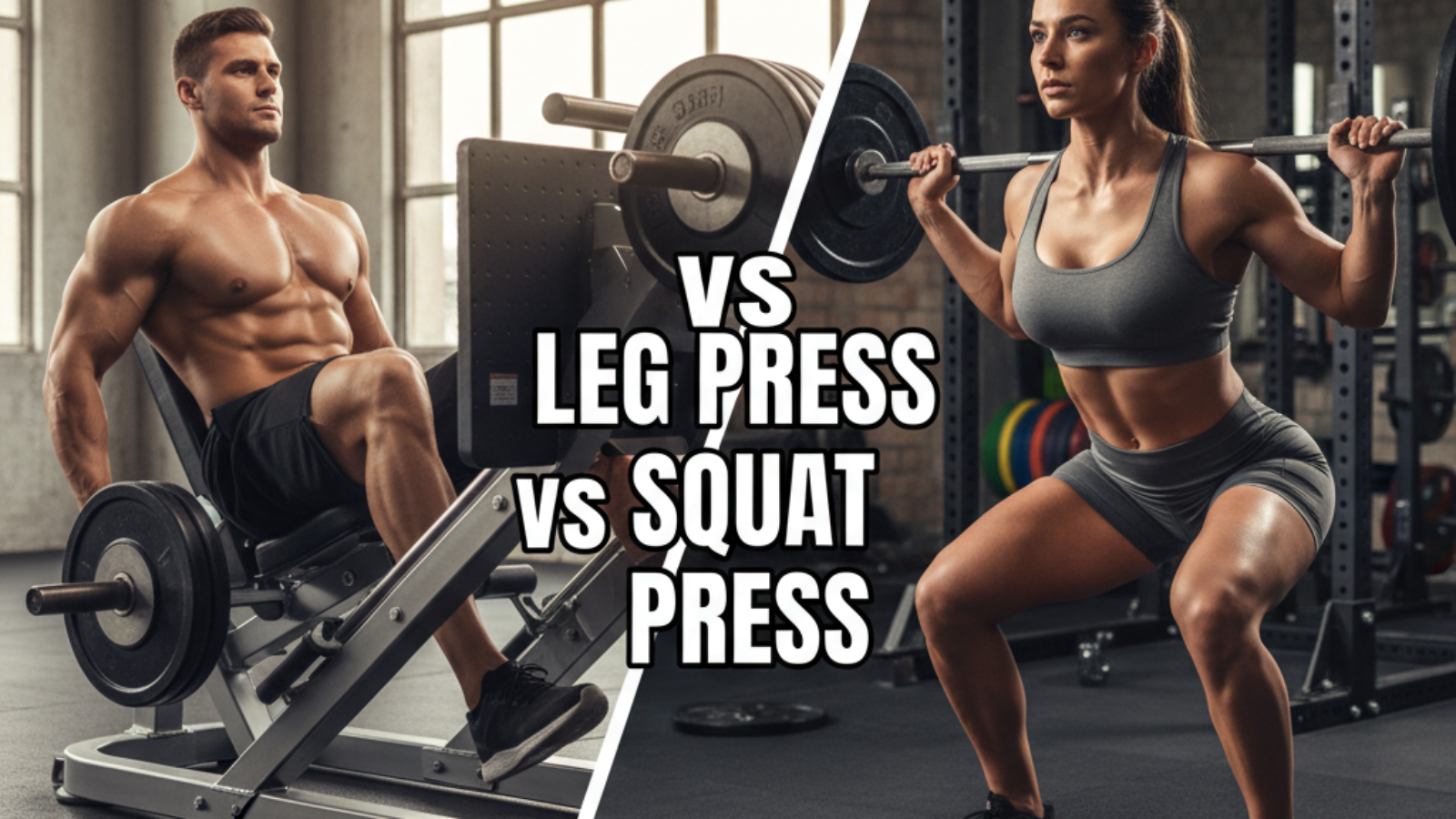
Leg Press vs Squat Press: Key Differences and Why the Comparison Matters
1.1 Muscle Activation and Functional Strength
Both the leg press and squat press are powerful exercises for building lower body strength. The squat press works multiple muscle groups at once, including the quadriceps, hamstrings, glutes, and lower back. It closely mimics real-life movements, helping you gain functional strength for sports and daily activities. The leg press mainly works the quadriceps and glutes, but fewer stabilizing muscles are used compared to the squat press.
1.2 Equipment, Setup, and Accessibility
The squat press often uses a barbell and squat rack, which you can find in most gyms but may not have at home. The leg press uses a special machine, making it easier to isolate your legs and control the movement. If you have mobility issues or are new to resistance training, the leg press is generally safer and easier to learn.
1.3 Common Misconceptions and Safety Considerations
Some think the leg press is always safer, but poor form can still cause injuries, especially to the knees or lower back. Others believe the squat press is only for advanced lifters, but beginners can safely perform it with the right technique. Always start light, learn the basics, and focus on your form.
How to Perform the Squat Press Correctly
2.1 Step-by-Step Squat Press Technique for All Levels
- Stand with your feet shoulder-width apart under the barbell.
- Rest the barbell across your upper back, grip it with both hands wider than shoulder-width.
- Unrack the bar and step back slowly.
- Bend your knees and hips to lower your body like sitting into a chair. Keep your chest up and back straight.
- Stop when your thighs are at least parallel to the floor.
- Push through your heels to stand up, locking your knees and hips at the top.
- Repeat for the desired number of reps.
2.2 Essential Form Cues and Common Errors to Avoid
- Look forward, not down, to keep your back straight.
- Keep your knees in line with your toes, not caving in or going too far out.
- Don’t let your heels lift off the ground.
- Start with light weights. It is better to master form before adding more weight.
2.3 Variation Tips for Different Goals (Strength, Hypertrophy, Rehab)
- Strength: Use heavier weights for 4–6 repetitions per set.
- Muscle growth (hypertrophy): Use moderate weights for 8–12 reps per set.
- Rehabilitation: Use just your body weight or a light bar. Perform slow, controlled reps and stop if you feel pain.
2.4 Troubleshooting: Fixing Depth, Knee Tracking, and Balance Issues
- If it’s hard to squat deep, try squatting to a box. Lower the height as you improve.
- If your knees collapse inward, focus on pushing them outward as you squat.
- If you lose balance, spread your toes and use a wider stance.
How to Use the Leg Press Safely and Effectively
3.1 Proper Leg Press Setup and Body Alignment
- Adjust the seat so your knees are bent at 90 degrees when your feet are on the platform.
- Place your feet flat, shoulder-width apart, in the middle of the platform.
- Grip the handles for support, not to pull yourself up.
3.2 Step-by-Step Leg Press Exercise Guide
- Press the platform away by extending your legs, but don’t lock your knees.
- Slowly lower the platform until your knees are bent to around 90 degrees.
- Ensure your lower back stays in contact with the seat. Don’t let your hips lift or your back round.
- Repeat for the desired number of reps.
3.3 Preventing Lower Back and Knee Injuries
- Never round your back or let your hips leave the seat during the exercise.
- Don’t bring your knees in too close or let them point inward.
- Start with a manageable weight and add more as you get stronger.
3.4 Leg Press Variations for Progressive Overload
- Narrow or wide stance to hit different muscles.
- Single-leg press to correct imbalances.
- Pause at the bottom for a few seconds to increase time under tension.
- Add more weight or reps to challenge yourself over time.
Integrating Leg Press and Squat Press into Your Training Program
4.1 Programming for Beginners, Intermediates, and Advanced Lifters
- Beginners: 1–2 sets of 10–12 reps each, 2–3 times a week.
- Intermediates: 3–4 sets of 8–10 reps, 2–3 times per week.
- Advanced: 4–5 sets of 5–8 reps, focus on increasing intensity.
4.2 Combining Both Exercises for Maximum Results
- Alternate between squat press and leg press on different workout days.
- Start your workout with the compound exercise (usually squat press), then use the leg press as a finisher.
4.3 Sample Weekly Lower Body Workout Plans (With Reps/Sets)
| Day | Exercise | Sets | Reps |
|---|---|---|---|
| Monday | Squat Press | 3 | 10 |
| Wednesday | Leg Press | 3 | 12 |
| Friday | Squat Press | 4 | 8 |
4.4 Warm-Up, Mobility, and Recovery Strategies
- Start every session with 5–10 minutes of light cardio (jump rope, biking)
- Dynamic stretches for hips, ankles, and knees.
- Post-workout static stretching and foam rolling for recovery.
- Take at least 48 hours between lower body sessions.
How to Choose Between Leg Press and Squat Press for Your Goals
5.1 Strength, Size, Athletic Performance, or Rehabilitation
- For Strength: The squat press builds whole-body strength.
- For Muscle Size: Both help, but leg press allows for more volume and focus.
- Athletic Performance: Squat press develops functional skills.
- Rehab: Leg press offers control and safety as you recover.
5.2 Practical Decision-Making Flowchart
- If you want total body strength and athletic skills: Choose squat press.
- If you want easy setup, isolation, or are in rehab: Choose leg press.
- If you have access to both: Include both in your routine.
5.3 Adapting for Home vs. Commercial Gym Settings
- At home, you may only have space or equipment for squats (use bodyweight or dumbbells/barbells).
- In a gym, you can use both with machines and heavy weights.
- Make the best choice with what you have; form matters more than equipment.
Frequently Asked Questions About Leg Press vs Squat Press
6.1 Addressing Common Programming and Injury Concerns
- Q: Can I squat or use the leg press if I have knee pain?
A: Yes, but start light and check your form. If pain remains, see a health professional. - Q: How often should I train my lower body?
A: Most people should target legs 2–3 times weekly for the best results.
6.2 Myths About Strength Ratios and Progression
- You can usually lift more weight with a leg press than with a squat press. This is normal and doesn’t mean your squat is weak.
- Progression is about adding weight, reps, or better form, not just lifting more on one exercise.
Expert Tips and Advanced Hacks for Safe Progression (2026)
7.1 Plateau-Busting Techniques
- Change your rep range every 4–6 weeks.
- Use paused reps or slow negatives to keep making progress.
7.2 Integrating Unilateral Variations
- Single-leg press or split squats balance both sides of the body.
- These exercises can prevent injuries and correct weaknesses early.
7.3 Accessory Exercises to Support Press Strength
- Include hamstring curls, calf raises, glute bridges, and core strengthening.
- A strong core and balanced legs boost both your squat press and leg press results.
Summary: Key Takeaways and Next Steps
- Squat press and leg press are both top choices for building lower body strength.
- Each has unique benefits. Choose based on your goals, experience, and what equipment you have.
- Start light, focus on perfect form, and use progressions to keep improving safely.
- Integrate leg press and squat press into a well-rounded lower body program for the best results.
- Always warm up, stretch, and allow for recovery to avoid injuries.
- If you’re not sure where to start, follow the sample plans and adjust over time as you get stronger.