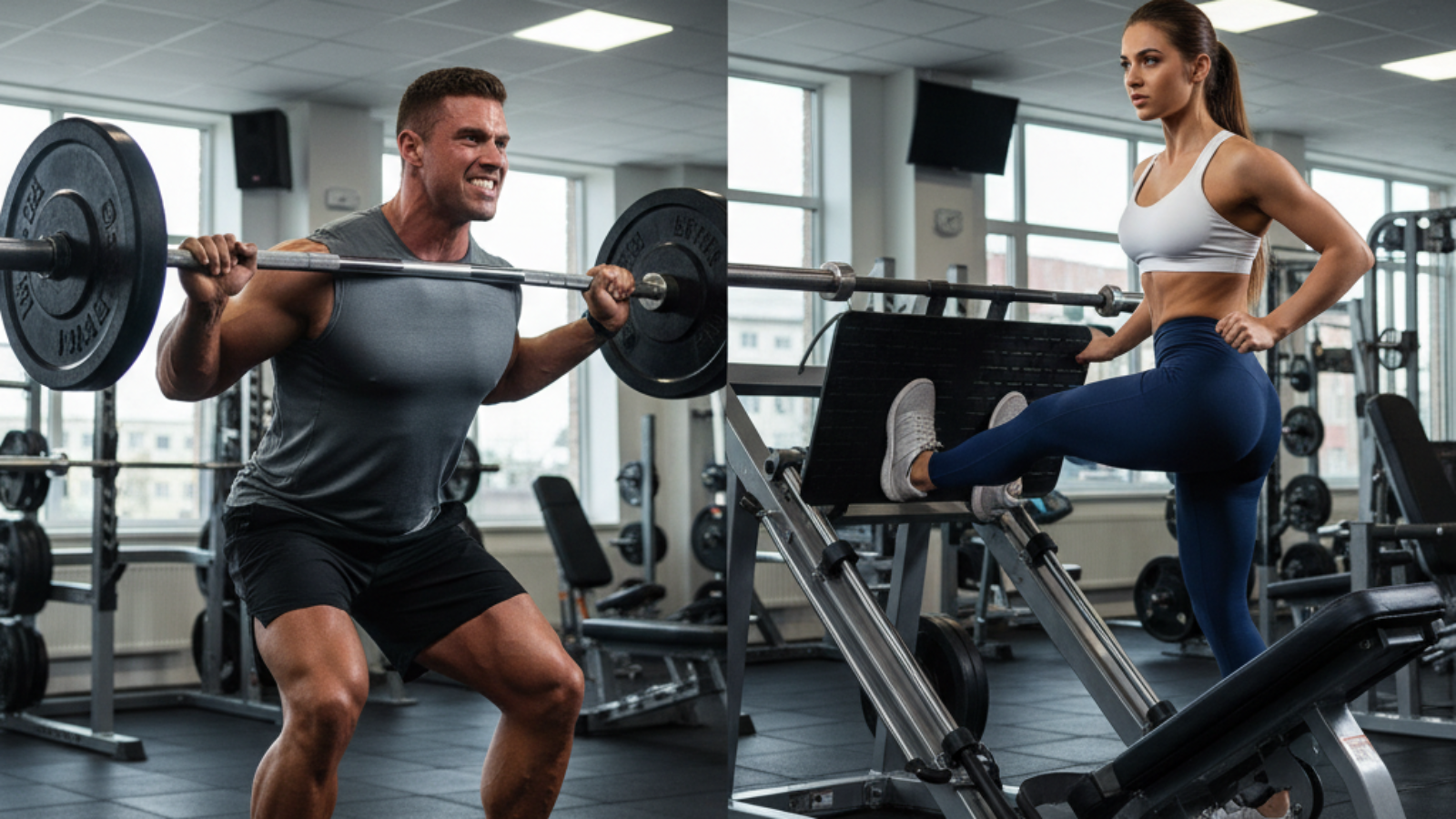
Are you looking to build strong, powerful legs? Not sure whether to choose squats or the leg press machine? This guide will help you understand the benefits of both squats and leg presses, and how to master each for your fitness goals. Whether you’re a total beginner or want to optimize your leg training, read on for clear, step-by-step advice and tips from expert coaches.
Squatting vs Leg Press – Quick Comparison Table
Main Differences at a Glance
| Feature | Squat | Leg Press |
|---|---|---|
| Equipment Needed | Barbell or bodyweight | Leg press machine |
| Muscles Targeted | Quads, hamstrings, glutes, core | Quads, hamstrings, glutes |
| Balance Required | High | Low |
| Risk of Injury | Medium if done wrong | Low (with proper setup) |
| Customizability | Many variations | Adjust foot placement and weight |
Pros and Cons Side-by-Side
- Squat – Pros: Builds functional strength, improves balance, trains core. Can be done anywhere.
- Squat – Cons: Difficult to master, higher injury risk, needs proper form.
- Leg Press – Pros: Easier for beginners, isolates leg muscles, safer if supervised.
- Leg Press – Cons: Does not train core, can limit athletic benefits, machine needed.
Which One Fits Your Goal? (Strength, Size, Rehab, Beginner)
- For strength: Both work, but squats are better for total body power.
- For muscle size: Use both for best results.
- For rehab or injury: Leg press can be safer if joints are weak.
- For beginners: Start with leg press to learn the movement, then add squats.
How to Perform a Perfect Squat
Correct Technique Step-by-Step
- Stand with your feet shoulder-width apart, toes pointed slightly out.
- Keep your chest up and back straight.
- Bend your knees and hips to lower your body, as if sitting on an invisible chair.
- Lower down until your thighs are parallel to the floor (or as low as you can comfortably go).
- Push through your heels to return to the starting position. Keep your knees in line with your toes.
Common Mistakes and How to Fix Them
- Knees caving inward – Focus on pushing your knees outward.
- Heels lifting off the ground – Keep weight on your heels.
- Rounding your lower back – Keep your back neutral and chest up.
- Not squatting deep enough – Go as low as you can without pain, and improve mobility over time.
Squat Variations for Different Experience Levels
- Beginner: Bodyweight squat, box squat.
- Intermediate: Goblet squat (holding a dumbbell), barbell back squat.
- Advanced: Front squat, pause squat, jump squat.
Squat Safety and Injury Prevention Tips
- Always warm up before squatting (5-10 minutes of light cardio and dynamic stretching).
- Use a spotter or safety bars when lifting heavy.
- Do not add weight until your form is correct.
- Stop if you feel sharp pain.
How to Use the Leg Press Effectively
Proper Leg Press Setup and Execution
- Adjust the seat so your knees are bent at about 90 degrees when your feet are on the platform.
- Place your feet shoulder-width apart, flat on the platform.
- Keep your back and head against the seat at all times.
- Push the platform away by extending your legs, but don’t lock your knees at the top.
- Lower the weight slowly, keeping control, until your knees are back to 90 degrees.
Key Leg Press Mistakes to Avoid
- Pushing with your toes – Always drive through your heels to protect your knees.
- Locking your knees – Stop just before your legs fully straighten.
- Rounding your back – Keep your back flat against the seat.
- Placing feet too high or too low – Middle of platform is safest for starters.
Leg Press Variations (Foot Position, Angles, Weight)
- High foot placement: Emphasizes hamstrings and glutes.
- Low foot placement: Focuses on quadriceps.
- Wide stance: Works inner thighs.
- Single-leg press: Trains each leg individually.
Leg Press Safety Essentials
- Start with light weights to learn the movement.
- Never let your knees collapse inward.
- Don’t go so deep that your lower back rounds.
- Use the safety stops on the machine.
Squatting vs Leg Press for Different Training Goals
Building Muscle Size (Hypertrophy)
To build bigger muscles, use both exercises with moderate weights and higher reps (8-15 per set). Squats work your core and legs at once, while the leg press allows you to focus on maximizing your leg muscles safely.
Developing Maximal Strength
For pure strength, heavy squats are the top choice because they use more muscles and require full-body power. Leg press can help add extra leg work after squats, or serve as a safe alternative when tired.
Training for Athletic Performance
Athletes need balance, power, and coordination. Squats are better for teaching these skills since you must balance the weight while moving. Leg press is less useful for sports performance, but can build muscle safely.
Lower Body Training in Rehab or Injury Prevention
If you are recovering from an injury, the leg press is usually safer. You can use lighter weights and there is no need to balance. Ask your doctor or physiotherapist which exercise is best for you.
Combining Squats and Leg Press – Sample Workouts
Beginner Workout Routines
- Warm up: 5-10 minutes of cardio.
- Bodyweight squats: 3 sets of 12 reps.
- Leg press: 3 sets of 10 reps with light weight.
- Stretch your legs after training.
Advanced Training Templates (Bodybuilding, Powerlifting, Athletes)
- Bodybuilding: Barbell squat 4×8, Leg press 4×12, Leg extensions 3×15.
- Powerlifting: Heavy back squat 5×5, Leg press 3×8 for assistance work.
- Athletes: Jump squats 3×10, Barbell squats 3×6, Single-leg press 3×12.
Weekly Programming Examples
- Monday: Squats (main lift), Leg press (accessory)
- Thursday: Leg press (main lift), Bodyweight or jump squats
- Adjust intensity and rest to fit your schedule.
Expert Tips for Brighter Results
Advice from Top Coaches and Physiotherapists
- Master your form before adding weight to squats or leg press.
- Listen to your body – It’s ok to swap exercises if something hurts.
- Consistency is more important than perfection.
When to Switch from One to the Other
- If you hit a training plateau, change your main leg exercise.
- Use leg press when recovering from small injuries.
- Add squats to build balance and functional strength.
Tracking Progress and Setting Realistic Goals
- Write down weights and reps for each workout.
- Increase weight slowly, only when you can perform the correct form.
- Set small weekly goals: One more rep, 2.5kg extra, better posture.
Real-World FAQs on Squatting vs Leg Press
Is Leg Press as Good as Squat for Strength?
Both build strong legs, but squats are better for full-body strength because they also train your core and balance skills.
Who Should Avoid Squats or Leg Press?
Squats may not be safe if you have severe knee, hip, or back problems. Always check with a health professional. Leg press is usually safer, especially with lighter weights.
How Much Should I Lift Relative to My Squat/Leg Press?
Most people can leg press 1.5 to 2 times more than their squat, because the machine supports your body and balances the weight. Always focus on form, not just numbers.
References and Further Reading (2026 Update)
- National Strength and Conditioning Association: Squat technique guidelines
- American Council on Exercise: Leg press safety tips
- Recent scientific studies on squat vs leg press for muscle growth (2024–2026)
- Recommended books: “Strength Training Anatomy” by Frederic Delavier