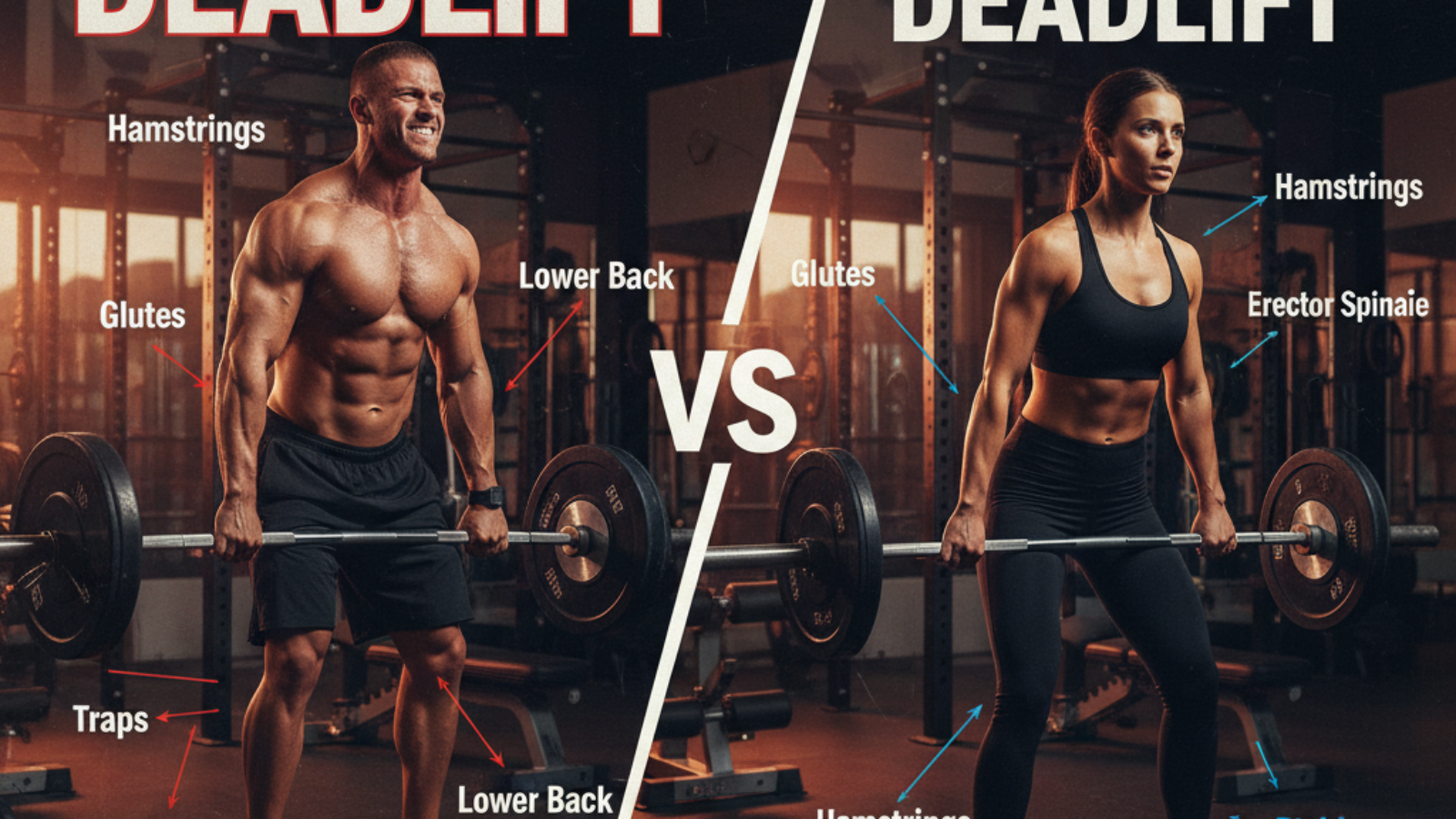
Deadlift vs Romanian Deadlift at a Glance
Quick Comparison Table: Key Differences & Similarities
| Aspect | Deadlift | Romanian Deadlift (RDL) |
|---|---|---|
| Main Muscles Worked | Glutes, Hamstrings, Quads, Back | Hamstrings, Glutes, Lower Back |
| Range of Motion | Floor to Lockout | Knee to Hip Extension |
| Bar Path | Vertical, starts from floor | Vertical, does not touch floor each rep |
| Primary Use | Strength, Powerlifting | Hamstring Strength, Hypertrophy |
| Load Potential | Higher | Moderate |
| Skill Requirement | Moderate | Moderate |
| Injury Risk | Higher with poor form | Lower (controlled) |
What Sets Each Lift Apart?
The deadlift is the king of full-body strength, starting from the ground and using multiple joints. The Romanian deadlift (RDL) is a hip-hinge movement focused on hamstring and glute activation, performed with a slight knee bend and the bar lowered to mid-shin—never quite touching the floor between reps.
Biomechanics Deep Dive: How Deadlifts and Romanian Deadlifts Differ
Joint Actions and Range of Motion
The classic deadlift involves simultaneous knee and hip extension. The Romanian deadlift keeps knees nearly static, maximizing hip flexion and extension while keeping tension on the posterior chain. RDLs allow greater stretch in the hamstrings due to the increased hip hinge and fixed knees.
Force Production and Muscle Activation Patterns
Deadlifts recruit more quadriceps and back at lift-off, generating peak force from the floor. EMG studies show RDLs activate the hamstrings and glutes more intensely in the eccentric (lowering) phase, making them ideal for muscle building in the posterior chain.
Common Technical Pitfalls
- Deadlift: Rounded back, hips rising too fast, jerking the bar.
- RDL: Too much knee bend, losing tension in hamstrings, lowering too far and risking lumbar flexion.
Muscles Worked: Deadlift vs Romanian Deadlift Breakdown
Deadlift Muscle Recruitment
The deadlift targets the glutes, hamstrings, quads, spinal erectors, traps, and forearms. Studies show strong activation of both lower and upper body muscle groups, with overall load potential higher than any other lift.
Romanian Deadlift Muscle Focus
RDLs predominantly work the hamstrings, gluteus maximus, and lower back stabilizers. The movement isolates the hip hinge, limiting quad involvement and placing greater eccentric stress on the posterior chain.
Targeting the Posterior Chain: Quads, Hamstrings & Glutes
Deadlifts offer a more balanced approach for overall posterior and anterior chain development. RDLs are superior when the goal is stretch, tension, and direct work for the hamstrings and glutes, critical for performance and hamstring injury prevention.
Who Should Use Each Lift? Specific Goals and Athlete Applications
Powerlifting, CrossFit & Strength Athletes
Powerlifters prioritize deadlifts for maximal strength and competition. CrossFit athletes benefit from both but often see better posterior chain development and recovery with RDLs. Strength athletes program both, with deadlifts as the main lift and RDLs as an accessory.
Sport-Specific Training (e.g., Running, Jumping, Field Sports)
Athletes in sprinting, jumping, or field sports use RDLs to enhance hamstring strength, explosive hip extension, and injury resistance. Deadlifts support overall strength but may not be sport-specific enough for all performance needs.
Physique/Hypertrophy: Building Muscle with Each Lift
If targeting pure muscle growth, RDLs are leveraged for hamstring and glute hypertrophy with less spinal load. Deadlifts contribute to thickness and density in the entire back and legs, but recovery demands are higher.
Injury Prevention & Rehab: Choosing the Right Lift for You
Deadlift and Lower Back Considerations
Poor deadlift technique frequently results in lower back strain. Proper bracing and hip engagement minimize injury risk, but heavy loading demands caution.
Romanian Deadlift for Hamstring Health & Posture
RDLs, with controlled loads, improve hamstring extensibility, posterior chain strength, and spinal posture, reducing hamstring strains and lower back pain.
Prehab & Rehab Scenarios: Which Lift Fits Best?
Rehabilitation programs use RDLs for safe, progressive loading and motor pattern retraining. Deadlifts may be reintroduced as strength returns and technique is mastered.
Programming Scenarios: How to Integrate Deadlifts and Romanian Deadlifts
Periodization and Split Examples (Strength, Power, Hypertrophy)
- Strength Phase: Deadlifts 1–2x/week, RDLs as accessory 1x/week.
- Hypertrophy Phase: RDLs 2–3x/week at moderate loads, higher reps.
- Power Phase: Focus on deadlift variations (speed pulls), integrate RDLs for support.
Accessory vs Main Movement: Sample Weekly Plans
- Main: Deadlift, Accessory: RDLs after main lifts
- Main: RDLs (physique focus), Accessory: Light deadlift or variations
Combining Both for Maximum Performance
Integrate both lifts for balanced development. Deadlifts build absolute strength; RDLs enhance muscle length, hypertrophy, and resilience. Scheduling them on separate days improves recovery and results.
Technique Masterclass: Step-by-Step Set Up and Execution
Proper Form Guidelines for Deadlift and RDL
- Deadlift: Feet hip-width, grip outside knees, neutral spine, drive hips forward to lockout.
- RDL: Soft knees, flat back, hinge hips back, lower bar to mid-shin, return to standing using hamstrings.
Advanced Cues & Corrections
- Stay tight through core and lats.
- Keep bar close to shins.
- Push floor away for deadlift, pull hips through for RDL.
Common Mistakes and How to Fix Them
- Deadlift rounding? Practice lighter loads, reset brace each rep.
- Overextending in RDL? Reduce range, focus on tension, record form for feedback.
Deadlift vs Romanian Deadlift: FAQ & Troubleshooting
Which Lift Is Safer for Beginners?
RDLs are safer for most beginners due to lower load and slower tempo. Deadlifts require more monitoring of spinal alignment and body awareness.
Can Both Be Used in the Same Workout?
Yes, but typically start with deadlifts, followed by RDLs at lighter weights for hypertrophy and injury prevention. Avoid excessive fatigue and watch volume.
How to Progress Safely Over Time
- Start light, master technique, increase load by 2.5–5% monthly.
- Log every session for progress and adjust as needed.
- Prioritize recovery, nutrition, and mobility.
Final Thoughts: Making the Best Choice for Your Goals
Both the deadlift and Romanian deadlift are powerful tools for strength, muscle growth, and performance. Your ideal choice depends on your sport, goals, and injury history. For complete development and resilience, program both with correct form and progressive overload.
- Ready to get started? Find trusted deadlift and RDL equipment on Rogue Fitness or Amazon.
- Want expert programming or a customized plan? Contact a certified coach today and reach your potential faster.