How Many Kilocalories In A Gram Of Protein
A practical step-by-step guide to how many kilocalories in a gram of protein, including preparation, instructions, common issues, tips, and next steps.
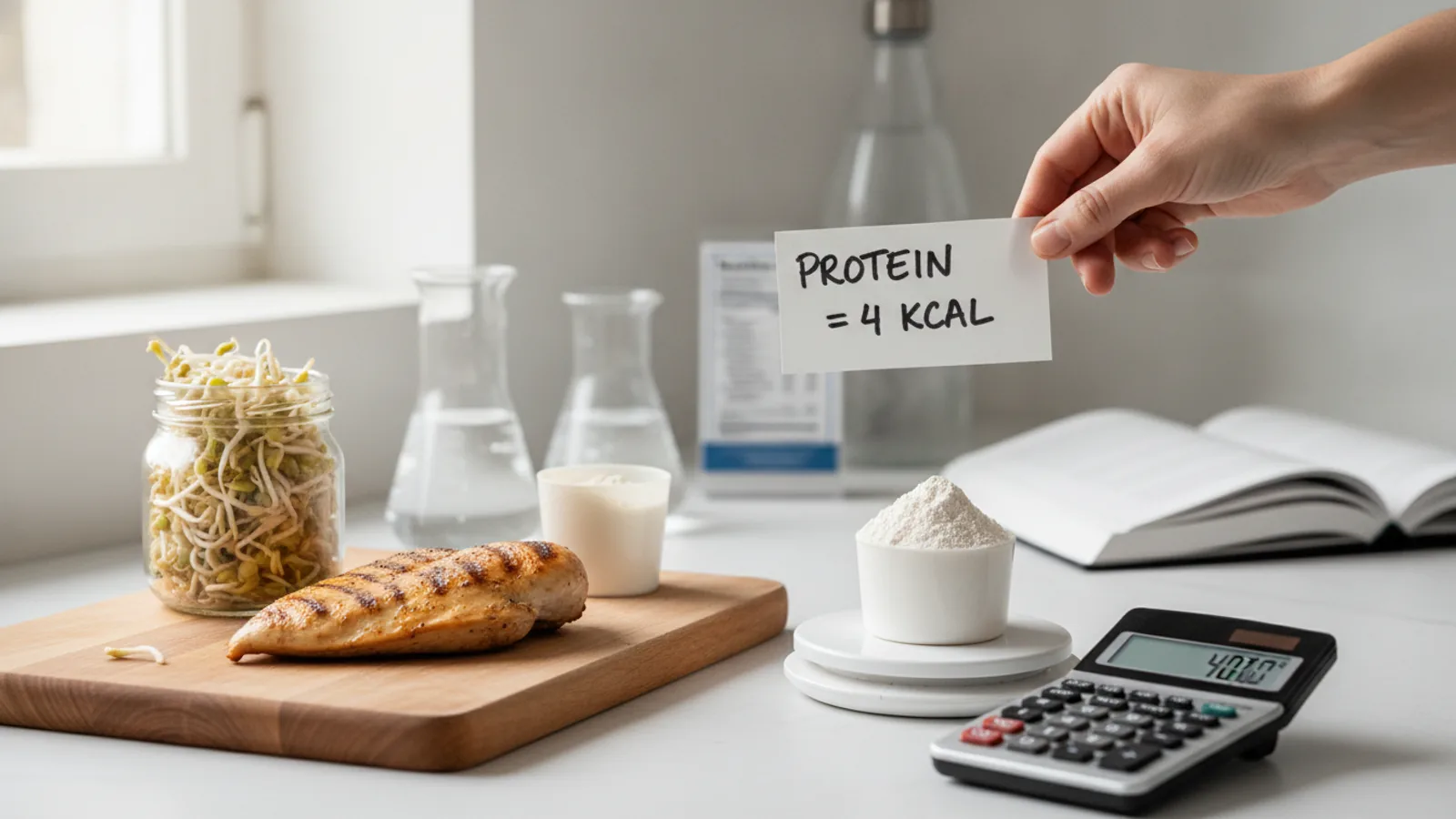
How Many Kilocalories In A Gram Of Protein
Understanding the energy content of your food is a fundamental step towards managing your diet and health. This guide provides a clear answer to how many kilocalories are in a gram of protein and, more importantly, teaches you how to use that information. You will learn to read food labels accurately, calculate the protein-based energy in your meals, and apply this knowledge to make more informed nutritional choices. This is for anyone looking to move beyond just counting calories to understanding where those calories come from.
Fast Answer
- Kilocalories per gram of protein: 4 kcal
Before You Start
- A food product with a nutrition label: Grab a yoghurt pot, a tin of beans, or a cereal box to use as a real-world example.
- A calculator: Your smartphone's calculator app is perfect for this.
- Basic understanding of macronutrients: Knowing that protein, carbohydrates, and fats are the main energy sources in food is helpful.
Step-by-Step Instructions
Step 1: Understand the Basic Energy Unit: The Kilocalorie
First, let's clarify the terminology. When we talk about the energy in food, the correct scientific term is kilocalorie, often abbreviated as kcal. One kilocalorie is the amount of energy required to heat one kilogram of water by one degree Celsius.
However, in everyday language, especially on food packaging and in diet plans, people often say "calories." It's important to know that these two terms are used interchangeably in a nutritional context. So, when a food label says 100 Calories (often with a capital 'C'), it means 100 kilocalories (100 kcal). For the rest of this guide, we will use the more precise term, kilocalorie or kcal.
Step 2: Learn the Standard Values for All Macronutrients
Protein is just one of the three main macronutrients that provide energy. To put its energy value in context, it's useful to know the standard values for all of them. These figures, known as the Atwater General Factor System, are used globally by food agencies to calculate the energy content of food.
- Protein: 4 kcal per gram
- Carbohydrates: 4 kcal per gram
- Fat: 9 kcal per gram
As you can see, fat is more than twice as energy-dense as protein or carbohydrates. This is why high-fat foods have a much higher kilocalorie count for the same weight. There's also a fourth substance that provides energy: alcohol, which contains 7 kcal per gram.
Step 3: Locate the Protein Content on a Food Label
Now, grab your food item. Look for the nutritional information table, which is mandatory on most pre-packaged foods in the UK. This table is usually on the back or side of the packaging.
You will see values listed "per 100g" (or 100ml) and often "per serving." The "per 100g" column is excellent for comparing different products, while the "per serving" column is what you need for calculating the energy in the portion you're about to eat. Find the row labelled "Protein" and note the number of grams (g) listed in your chosen column.
Step 4: Calculate the Kilocalories from Protein
This is where your knowledge and calculator come into play. The calculation is simple multiplication. You will multiply the grams of protein by the standard energy value we learned in Step 2.
The formula is: Grams of Protein × 4 = Kilocalories from Protein.
Let's use an example. Imagine a pot of Greek yoghurt. You look at the "per serving" column on the label, and it says:
- Serving size: 150g
- Protein: 15g
Using our formula:
15g of protein × 4 kcal/g = 60 kcal
So, in that single serving of Greek yoghurt, 60 kilocalories come directly from its protein content. It's that straightforward.
Step 5: Determine the Percentage of Calories from Protein
Taking this one step further helps you understand a food's overall composition. Is it a high-protein food or does it just contain some protein? To figure this out, you can calculate what percentage of the total kilocalories comes from protein.
First, find the total energy value on the label for your serving. Let's say our yoghurt pot has 135 kcal per serving. Now, use this formula:
(Kilocalories from Protein / Total Kilocalories) × 100 = Percentage of Calories from Protein
Using our yoghurt example:
(60 kcal from protein / 135 total kcal) × 100 = 44.4%
This tells you that nearly half the energy in this yoghurt comes from protein, making it a genuinely high-protein food. This skill is incredibly useful for comparing products that market themselves as "high-protein" to see if they truly are.
Step 6: Apply the Calculation to Your Daily Diet
You can expand this method from a single food item to an entire meal or even a full day of eating. By keeping a simple food diary or using a nutrition tracking app, you can log the protein content of everything you eat.
At the end of the day, total up all the grams of protein you consumed. For instance, if you ate 80 grams of protein throughout the day, you can quickly calculate your total protein calorie intake:
80g of protein × 4 kcal/g = 320 kcal
This knowledge empowers you to see how your macronutrient intake contributes to your total daily energy consumption, allowing you to adjust your food choices to better meet your personal health and fitness goals.
Common Problems and Solutions
Why don't the macros always add up perfectly to the total calories?
You might perform the 4-4-9 calculation (protein g x 4, carb g x 4, fat g x 9) and find your total is slightly different from the kcal value printed on the label. This is normal and usually happens for two reasons:
- Rounding: Food labelling laws allow manufacturers to round values to the nearest whole number. Across several macronutrients, these small rounding differences can add up.
- Fibre: In the UK and EU, the energy value of dietary fibre is legally calculated at 2 kcal per gram, not the 4 kcal of other carbohydrates. If a food is high in fibre, this will affect the total calculation. The "Carbohydrate" value on the label often excludes fibre, which is listed separately.
Confusing the weight of a food with its protein content
A common mistake is to assume a 100g chicken breast contains 100g of protein. This is incorrect. Whole foods are complex mixtures of protein, fat, water, vitamins, and minerals. That 100g raw chicken breast, for example, contains roughly 75g of water, 23g of protein, and a small amount of fat. Always refer to reliable nutritional data or the food label, not the total weight of the food.
Using raw vs. cooked nutritional information
Cooking changes the weight and composition of food. When you grill a steak, it loses water and fat, becoming lighter and more nutrient-dense per gram. Conversely, when you boil pasta or rice, it absorbs water and becomes heavier. Most nutritional labels on packaged goods refer to the product as sold (e.g., raw meat, dry pasta). When calculating calories for home-cooked meals, it's most accurate to weigh your ingredients raw and use the corresponding nutritional information.
Advanced Tips
Factor in the Thermic Effect of Food (TEF)
While protein provides 4 kcal of energy per gram on paper, your body has to expend energy to digest and metabolise it. This is known as the Thermic Effect of Food (TEF). Protein has the highest TEF of all macronutrients, with your body using 20-30% of the protein's own calories just to process it. For carbohydrates, it's 5-10%, and for fats, it's 0-3%.
This means the "net" energy your body gains from protein is slightly less than 4 kcal per gram. While you don't need to calculate this for daily tracking, it's a key reason why high-protein diets can be effective for weight management—your body burns more calories simply by breaking the food down.
Understand Protein Quality and Completeness
Not all proteins are created equal in terms of their amino acid profile. A "complete protein" contains all nine essential amino acids that your body cannot produce on its own. Animal sources like meat, dairy, and eggs are complete proteins. Most plant-based proteins (like beans and lentils) are "incomplete," meaning they are low in one or more essential amino acids.
While this doesn't change the 4 kcal/g value, it's important for overall health, especially for those on vegetarian or vegan diets. The solution is simple: eat a variety of plant-based protein sources throughout the day (e.g., rice and beans) to ensure you get a complete amino acid profile.
Quick Reference
| Situation | Use This | Why |
|---|---|---|
| Comparing two different brands of yoghurt | The "Typical values per 100g" column | This provides a standardised, like-for-like comparison of nutrient density, regardless of the manufacturer's suggested serving size. |
| Calculating the energy in your lunch | The "per serving" information | This is the most relevant data for the actual amount of food you are consuming in one sitting. Always check if your portion matches the serving size. |
| Tracking your diet over a week | A digital app or a physical food diary | Manually calculating every item is tedious. Using a tool automates the process and provides clear totals and averages over time. |
| Estimating calories in a home-cooked meal | Weigh ingredients raw | This is the most accurate method as nutritional data is most reliable for uncooked ingredients before water and fat content is altered by cooking. |
How Many Kilocalories In A Gram Of Protein FAQ
Does the type of protein (e.g., whey vs. soy) change the kilocalorie count?
No, not in any significant way for practical food tracking. The 4 kcal per gram value is an established average that applies across all types of dietary protein you'll encounter, from animal sources like whey and casein to plant sources like soy and pea protein. While minor variations exist at a precise biochemical level, the 4 kcal/g figure is the universally accepted standard for nutritional labelling and calculation.
How much protein do I actually need each day?
For the average sedentary adult in the UK, the reference intake is around 0.75 grams of protein per kilogram of body weight per day. For a 70kg adult, this would be about 52.5g of protein. However, needs can vary significantly based on age, activity level, muscle mass, and health goals. Individuals looking to build muscle or older adults may require more. It is highly recommended to consult a registered dietitian or use the NHS BMI calculator for personalised guidance.
Are all calories created equal?
From a pure physics standpoint, a calorie is a calorie—it's a unit of energy. However, from a nutritional and biological standpoint, they are not equal. 100 kcal from a lean chicken breast (providing protein, vitamins, and minerals) will have a vastly different effect on your body's health, satiety, and metabolism than 100 kcal from a sugary drink (providing sugar and little else). The source of your calories is just as important, if not more so, than the total number.
Final Checklist for Protein Calorie Calculation
- Remember the key number: There are 4 kilocalories in every gram of protein.
- Use the correct formula: Multiply the grams of protein in a serving by 4 to find the total kcal from protein.
- Read the label carefully: Pay attention to the "per 100g" vs. "per serving" columns to ensure your calculations are relevant.
- Account for cooking changes: For the most accurate tracking of home-cooked meals, always weigh your ingredients in their raw state.
- Look beyond the numbers: Remember that protein quality and the overall nutrient density of a food are more important for health than its calorie count alone.
- Seek professional advice: Use this knowledge for general guidance, but always consult a healthcare professional for personalised dietary plans and health advice.