Why Calf Muscle Stretching Matters in 2026
Calf Muscle Anatomy and Common Tightness Causes
The calf is made of two main muscles: the gastrocnemius and the soleus. These muscles help us walk, run, jump, and stand. Tight calves are common. Sitting for long hours, wearing high heels, sports without stretching, or fast growth spurts can make your calves tight and painful.
Benefits of Calf Stretching for Everyday Life and Athletes
Stretching calf muscles helps boost movement, prevent injuries, and relieve soreness. Flexible calves make walking and sports easier. They can reduce leg cramps, ankle sprains, and help you jump and run better.
How to Stretch Calf Muscles Safely and Effectively
Essential Tips Before You Begin Calf Stretching
- Always warm up for five minutes with light jogging or marching in place.
- Wear comfortable clothes and shoes or stretch barefoot on a mat.
- Never stretch a cold muscle. If you feel pain, stop right away.
- Breathe slowly during stretches, and do not hold your breath.
Dynamic vs. Static Calf Stretches Explained
Dynamic stretches mean you move as you stretch—like walking on your toes. Static stretches mean you hold one position for 20-30 seconds. Both types are important. Dynamic stretching prepares your muscles to move, while static stretching improves flexibility.
Step-by-Step Guide: The Best Calf Stretches
Standing Calf Stretch (Gastrocnemius Focus)
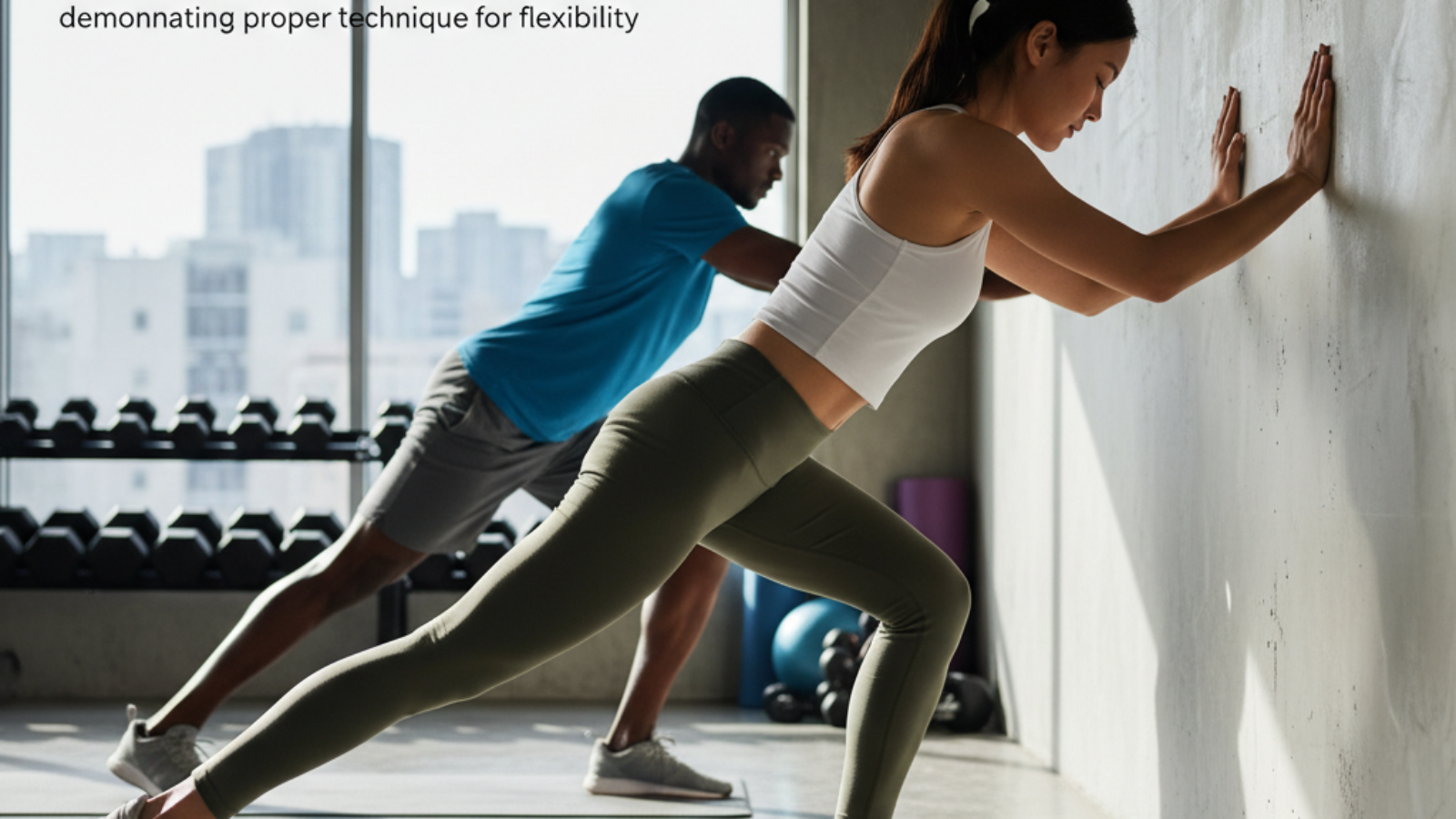
- Stand facing a wall with your hands on it for support.
- Step one leg back, keeping both feet flat on the floor.
- Keep your back knee straight and front knee slightly bent.
- Lean forward until you feel a stretch in the back leg’s calf.
- Hold for 20-30 seconds. Switch legs and repeat 2-3 times.
Bent Knee Calf Stretch (Soleus Isolation)
- Stand in the same position as above.
- Bend your back knee a little while keeping your heel down.
- You will feel the stretch lower, near your Achilles tendon.
- Hold for 20-30 seconds per side. Repeat 2-3 times.
Seated Calf Stretch With a Band or Towel
- Sit on the ground with your legs straight out.
- Wrap a towel or stretch band around the ball of one foot.
- Hold the ends and gently pull your toes toward you.
- Keep your knee straight. Feel the stretch in your calf.
- Hold for 20-30 seconds and repeat with the other leg.
Downward Dog Calf Stretch
- Start on your hands and knees, then lift your hips up and back.
- Straighten your legs and press your heels toward the floor.
- Alternate bending one knee while pressing the other heel down.
- Hold each stretch for a few seconds and repeat for 30-60 seconds.
Wall-Assisted Calf Stretch
- Stand facing a wall, about arm’s length away.
- Place your toes up against the wall, heel on the floor.
- Lean forward gently to stretch your calf.
- Hold for 20-30 seconds per leg.
Advanced Variations: Eccentric Heel Drop and Loaded Stretches
- Stand on a step with only the balls of your feet on it, heels hanging off.
- Hold onto a railing for balance.
- Slowly lower your heels below the step to stretch the calves.
- Raise back up to start. Repeat 8-12 times.
- You can add weight, like a backpack, as you get stronger.
Integrating Calf Stretches Into Strength and Mobility Routines
Calf Strengthening Exercises for Flexibility Balance
- Calf Raises: Stand up, rise onto your tiptoes, hold for a second, then lower. Repeat 10-15 times.
- Toe Walking: Walk on your toes for 30-60 seconds to build strength and stretch at the same time.
Foam Rolling and Self-Myofascial Release for Calves
- Sit on the floor with legs out, placing a foam roller under your calves.
- Lift your hips and roll gently back and forth from your ankles to knees.
- If you find a tight spot, pause for a few seconds.
- Do this for 1-2 minutes per leg.
Sample Calf Stretch and Strength Routine
| Exercise | Reps/Sets | Instructions |
|---|---|---|
| Dynamic Toe Walks | 3 x 30 seconds | Warm up calves by walking on your toes. |
| Standing Calf Stretch | 2 x 30 seconds/leg | Hold stretch for each leg. |
| Calf Raises | 3 x 12 | Rise on tiptoes, lower heels slowly. |
| Foam Rolling | 1-2 min/leg | Roll calf muscles post-workout. |
Sport-Specific Calf Stretching Adaptations
How to Stretch Calf Muscles for Runners and Walkers
- Warm up with light jogging and dynamic stretching.
- Try the standing calf stretch after each run or walk.
- Runners should do both gastrocnemius and soleus stretches daily.
Calf Stretch Modifications for Dancers, Cyclists, and Basketball Players
- Dancers: Use wall stretches and add gentle bouncing for tendon flexibility.
- Cyclists: Focus on the bent knee stretch to target tight soles from cycling.
- Basketball players: Do loaded heel drops to handle high-impact jumps.
Age-Appropriate Calf Stretching Tips for Teens, Adults, and Seniors
- Teens: Stretch after sports and during growth spurts.
- Adults: Add stretches to daily routines and after workouts.
- Seniors: Stretch gently, holding onto support to prevent falls.
Common Mistakes to Avoid When Stretching Calf Muscles
Overstretching and Improper Technique
Do not force your body beyond limits. A mild pull is enough. If you feel sharp pain, stop.
Ignoring Warm-Ups or Skipping Cool-Downs
Stretching cold muscles may cause injuries. Always warm up and finish workouts with easy stretching and foam rolling.
Failing to Balance Stretching With Strengthening
Stretching only without strengthening can make your calves weak. Use both for the best results.
How Often Should You Stretch Your Calf Muscles?
Frequency Recommendations Based on Activity Level and Goals
- General health: 3-5 times a week, both legs.
- Active sports: Daily, and before/after games or runs.
- If recovering: Stretch twice a day, but do not push through pain.
When to Avoid or Modify Calf Stretches (Contraindications)
- Skip stretching if muscles are injured or torn.
- If you have recent surgery or severe pain, talk to a doctor first.
- Always listen to your body and adjust if you have cramps or spasms.
Expert Tips and Myths About Calf Stretching in 2026
Physical Therapist and Trainer Insights
- Stretch slowly and hold, breathe deep and relax.
- Change up your stretches so all parts of the calf muscle get attention.
Busted Myths: “No Pain, No Gain” and Other Misconceptions
- Pain is not a sign of a good stretch. Aim for gentle tension, never pain.
- Stretching does not make muscles longer, but it does improve how well they move and feel.
- You do not need fancy equipment—simple tools like towels work well.
FAQ: Your Top Questions About How to Stretch Calf Muscles Answered
- Q: How long should I stretch my calf muscles?
A: Hold each stretch for 20-30 seconds. Repeat each stretch 2-3 times. - Q: Can I stretch my calves every day?
A: Yes, as long as you feel no pain. Daily stretching helps flexibility. - Q: What if I feel pain during calf stretches?
A: Stop right away and check your form. Never force a stretch. - Q: Do I need equipment for calf stretches?
A: No, but bands, towels, and foam rollers can make stretches more effective. - Q: Will calf stretching help me run faster?
A: Flexible calves can improve your stride and reduce injuries, helping you run better. - Q: What if my calves are still tight?
A: Try different stretches, strengthen your calves, and consider foam rolling. If tightness lasts, talk to a healthcare professional.
In summary, learning how to stretch calf muscles is important for everyone, from students to athletes. Start with simple exercises, follow the steps, and stretch safely and often. This helps you move better and lowers injury risk. Make calf stretching a habit to reach new levels of strength and flexibility by 2026!