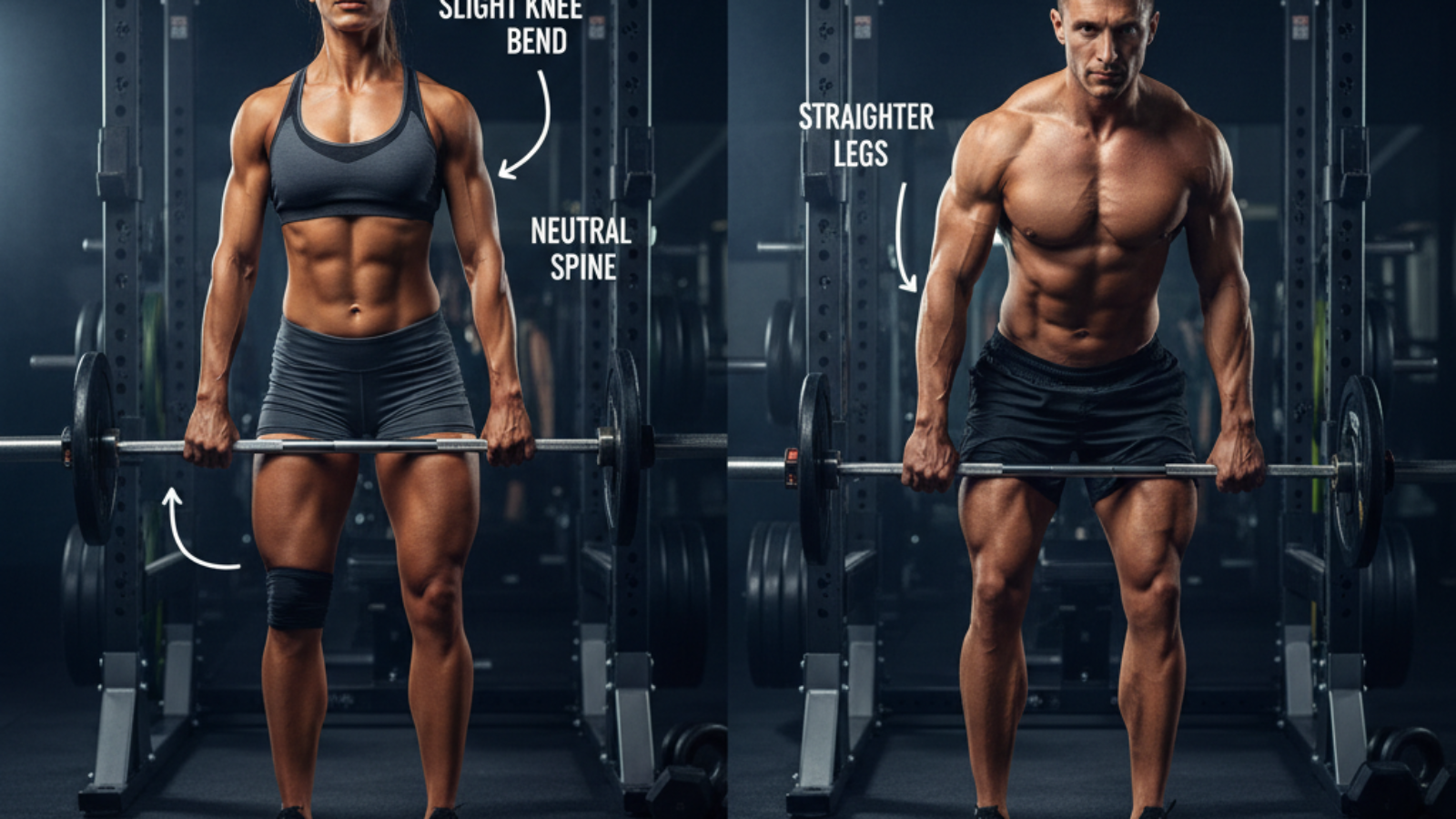
RDL vs Stiff Leg Deadlift: Quick Overview
What Are RDLs and Stiff Leg Deadlifts?
The Romanian Deadlift (RDL) and Stiff Leg Deadlift are two popular hip hinge exercises. Both target the posterior chain but differ in technique and muscle focus. RDLs emphasize slight knee bend and hip hinge, keeping the barbell close. Stiff leg deadlifts use less knee flexion, creating more stretch through hamstrings.
Why This Debate Matters in 2026 Fitness
In 2026, evidence-based training is crucial. Choosing between RDL and stiff leg deadlift affects muscle gains, injury prevention, and performance. As more athletes and lifters pursue targeted posterior chain strength, understanding these differences supports smarter training.
RDL vs Stiff Leg Deadlift: Form, Technique & Biomechanics
Setup and Execution: Step-by-Step for Each Lift
- RDL: Stand tall, slight knee bend, hips back, bar close to legs. Lower with flat back until hamstrings stretch, then return up.
- Stiff Leg Deadlift: Knees nearly straight, hips hinge, minimal bend. Lower bar down front of legs with maximum hamstring stretch, keep back flat.
Biomechanical Differences Explained (with Infographic)
RDLs use more hip flexion, load the glutes and hamstrings evenly. Stiff leg deadlifts increase hamstring tension, with less glute drive and greater lumbar activation. Stiff leg variation increases range of motion, while RDLs protect joints with controlled knee bend.
Common Mistakes and How to Avoid Them
- Rounding the back—keep spine neutral in both lifts.
- Letting the bar drift forward—keep it close to the body.
- Excessive knee bend in stiff leg version reduces effectiveness.
- Locking knees fully—may increase injury risk.
Muscles Worked: RDL vs Stiff Leg Deadlift
Primary Muscles Targeted
| Exercise | Hamstrings | Glutes | Lower Back |
|---|---|---|---|
| RDL | High | High | Moderate |
| Stiff Leg Deadlift | Very High | Moderate | High |
Secondary Muscular Engagement and Stability
- RDL: Adductors, erector spinae, forearms.
- Stiff Leg Deadlift: Core stabilizers, spinal erectors, calves.
Safety & Injury Risk: What You Need to Know in 2026
For General Lifters
RDLs are generally safer for most due to built-in knee softness and controlled load. They are suitable for all levels, including beginners.
Considerations for Injury Prevention and Rehabilitation
- Stiff leg deadlifts carry a higher risk for those with lower back issues due to increased lumbar load.
- RDLs allow for greater control and are recommended for rehab protocols (when approved by a physio).
RDL vs Stiff Leg Deadlift for Different Training Goals
Strength and Powerlifting Applications
RDLs are common in powerlifting for lockout strength and technique. Stiff leg deadlifts, while heavy, are less prevalent due to injury risk.
Muscle Growth (Hypertrophy) Strategies
- Both lifts promote hamstring growth. Studies show up to 20% higher hamstring activation in stiff leg versions, but at higher strain risk.
- RDLs provide balanced hypertrophy with safer progressive overload.
Flexibility, Mobility, and Athletic Performance
Stiff leg deadlifts offer more stretch, helping flexibility. RDLs improve functional hip strength and mobility, beneficial for athletes.
Programming Tips for Beginners, Advanced, and Rehab
- Beginners: Start with RDLs, lighter loads.
- Advanced: Alternate both for complete development.
- Rehab: Prioritize RDLs, consult clinician for progressions.
RDL vs Stiff Leg Deadlift: Which Should You Choose?
Decision-Making Checklist
- Want max hamstring lengthening? Choose stiff leg deadlift.
- Need joint safety and versatility? Choose RDL.
- Rehabbing or prone to back pain? Use RDL with supervision.
Tailoring to Body Type and Mobility
Tall, long-limbed lifters often benefit from RDL mechanics. Hypermobile users should avoid locking out stiff leg, and those with limited mobility excel with RDL’s safer range.
Visual Guide: RDL vs Stiff Leg Deadlift Comparison Chart
| Feature | RDL | Stiff Leg Deadlift |
|---|---|---|
| Knee Bend | Slight | Minimal |
| Primary Load | Glutes, Hamstrings | Hamstrings |
| Risk Level | Lower | Higher |
| Mobility Required | Moderate | High |
| Best For | All levels | Advanced, flexibility |
Evidence-Based Insights and 2026 Trends
Latest Research on Hamstring & Posterior Chain Training
2026 studies highlight that RDLs activate both hamstring and glute fibers efficiently, while stiff leg deadlifts drive isolated hamstring hypertrophy. EMG data reveals 8–20% higher peak load on hamstrings in stiff leg lifts, but with increased mechanical stress.
Evolving Best Practices in Deadlift Variation Programming
Hybrid protocols alternating RDL and stiff leg lifts maximize muscle growth and reduce adaptation plateaus. New programming trends emphasize starting phases with RDL to build resilience, progressing athletes to stiff leg deadlift cycles for maximal development.
RDL vs Stiff Leg Deadlift FAQs
Can Both Exercises Be Included in the Same Program?
Yes. Cycle them on different days or blocks for comprehensive posterior chain stimulation.
Are Either of These Lifts Suitable for Rehab?
RDLs are safer, especially with physical therapist oversight. Stiff leg deadlifts should be avoided in early rehab unless prescribed.
How Do I Know If I’m Doing Them Correctly?
Maintain a neutral spine, use controlled motion, and stop if you feel pain. Film yourself or use a mirror to check form. Seek feedback from certified coaches.
Further Resources & Video Tutorials for Perfecting Your Form
For in-depth instruction and step-by-step coaching on RDLs and stiff leg deadlifts, watch expert-led tutorials. Ready to enhance your training? Consider investing in premium barbells, weight plates, and lifting straps for improved grip and safety: Buy top-rated barbells. Stay updated with more resources via respected fitness educators—your path to a stronger posterior chain starts here!