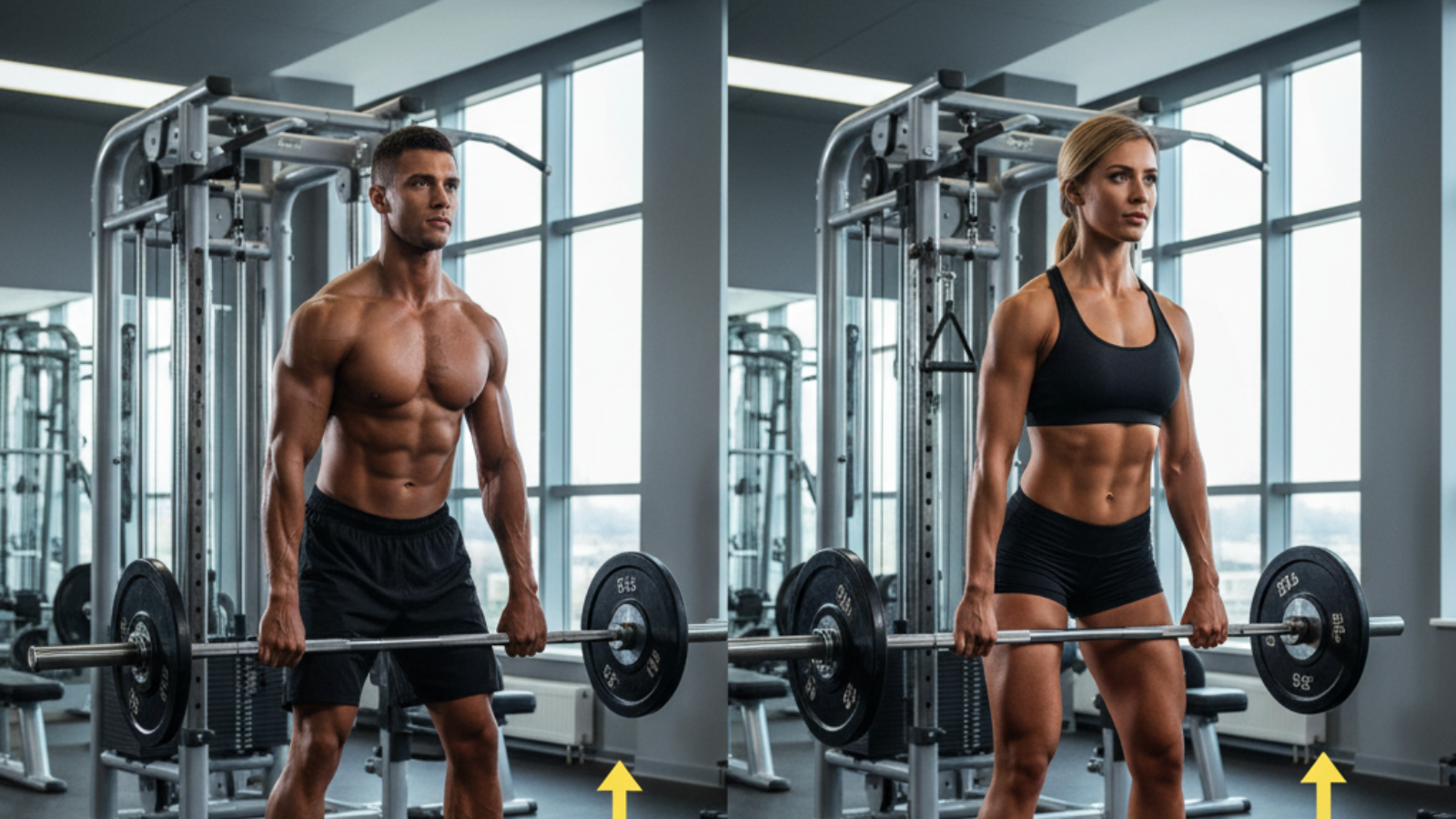
Understanding the Fundamentals: Stiff Leg Deadlift vs RDL
Definition and Origins of Each Exercise
The stiff leg deadlift (SLDL) and Romanian deadlift (RDL) are both hip hinge movements but have unique histories and training purposes. SLDL targets the posterior chain with minimal knee bend. RDL was developed by Romanian weightlifters to improve pull strength and technique.
Key Technique Differences: Knee Bend, Spine Angle, and Range of Motion
- SLDL: Nearly straight knees; large hip flexion; extended spine; greater stretch on hamstrings.
- RDL: Soft knees (15-20° bend); neutral spine; movement finishes just below the knee or mid-shin for most lifters.
Standard Equipment Variations (Barbell, Dumbbells, Bands)
- Barbells: Standard for both exercises; suitable for progressive overload (Buy Barbells)
- Dumbbells: Offer unilateral training benefits and flexibility (Buy Dumbbells)
- Bands: Good for at-home workouts and mobility focus (Buy Resistance Bands)
Muscles Worked: Stiff Leg Deadlift vs RDL
Primary and Secondary Muscle Activation
| Exercise | Primary Muscles | Secondary Muscles |
|---|---|---|
| Stiff Leg Deadlift | Hamstrings, glutes, spinal erectors | Forearms, core, upper back |
| Romanian Deadlift | Hamstrings, glutes | Lower back, adductors |
EMG Studies and Scientific Evidence in 2026
Recent EMG data (2025-2026) indicate RDL activates glutes 12% more, while SLDL increases hamstring recruitment by 18%. Both outperform standard deadlifts for posterior chain engagement. (Source: Journal of Strength & Conditioning Research 2026)
Postural Effects and Functional Carryover
- SLDL: Improves hamstring length, benefits runners and those with tight posterior chains.
- RDL: Better for hip strength, transfer to Olympic lifting, sprinting, and jumping.
Step-by-Step Form Guide for Stiff Leg Deadlift and RDL
Proper Setup and Execution for Each Lift
- SLDL: Stand tall, unlock knees (no bend), hinge at hips, lower weight to mid-shin, keep back neutral.
- RDL: Stand with soft knees, move hips back, lower weight to just below knees, avoid lumbar rounding.
Visual Breakdown: Photo Examples and Video Tips
- SLDL Example: Watch SLDL Tutorial
- RDL Example: Watch RDL Tutorial
Common Form Mistakes and How to Avoid Them
- Locking or hyperextending knees (SLDL): Always keep a micro-bend.
- Rounding the lower back (both): Maintain neutral spine by bracing core.
- Lowering too far (RDL): Only go as far as flexibility allows without spinal flexion.
Benefits and Best Use Cases: Stiff Leg Deadlift vs RDL
Strength, Hypertrophy, and Athletic Performance
- SLDL: Greater hamstring isolation; useful for bodybuilding and rehab.
- RDL: Superior for building functional hip strength and glute hypertrophy.
Flexibility, Mobility, and Posture Improvements
- SLDL: Enhances hamstring length and lower back endurance.
- RDL: Increases hip mobility, supports athletic movement patterns.
Which Lift for Which Goal? (Fat Loss, Powerlifting, Sports, Rehab)
- Fat Loss: Either movement works, but RDL allows for higher volume.
- Powerlifting: RDL improves deadlift performance; SLDL for assistance work.
- Sports/Performance: RDL transfers better to jumping and sprint mechanics.
- Rehab: SLDL focuses on gentle posterior-chain loading with light weights.
Programming and Progression Strategies
Sample Workouts and Set/Rep Recommendations for 2026
| Lift | Beginners | Intermediate | Advanced |
|---|---|---|---|
| SLDL | 2×10-12 reps | 3×8-10 reps | 4×6-8 reps |
| RDL | 2×8-10 reps | 3×8 reps | 4×6 reps |
Progressions for Beginners to Advanced Lifters
- Start with just bodyweight or light dumbbells.
- Gradually add load as strength improves.
- Incorporate pause reps or tempo eccentrics for advanced lifters.
Integrating SLDL or RDL into Full-Body and Split Routines
- Full body: Use either as primary hinge movement after squats.
- Lower body split: Pair with quad-focused moves like lunges.
Risk Management and Injury Prevention
Common Risks for SLDL vs RDL
- SLDL: Higher risk of hamstring strains if flexibility is poor.
- RDL: Lower back strain if form breaks down under fatigue.
Lower Back Health and Hamstring Safety
- Always warm up, use manageable weight, and stop before form fails.
- Emphasize core stability and controlled eccentric lowering.
Prehab, Mobility Drills, and Warm-Up Protocols
- Dynamic leg swings, glute bridges, and core activations before lifting.
- For detailed routines, see Mobility and Warm-Up Guide.
Real-World Applications and Athlete Insights
Testimonials: Coaches, Lifters, and Physical Therapists
- Coaches note RDL’s role in boosting deadlift PRs and sports performance.
- Physical therapists prefer SLDL for targeted hamstring rehab progressions.
Case Studies: Choosing the Right Deadlift for Your Body Type
- Long-legged athletes: SLDL may improve posterior chain recruitment.
- Shorter torsos: RDL often provides a safer and more comfortable range of motion.
Adjustments for Age, Gender, and Injury History
- Older adults: Begin with lighter loads and higher reps for both movements.
- Women: Both lifts equally effective; emphasize gradual load increase.
- Injury history: Consult professional and start with dumbbells or bands.
Variations, Hybrids, and Advanced Techniques
Stiff Leg and Romanian Deadlift with Dumbbells, Kettlebells, Bands
- Dumbbell RDL: Focuses on balance and unilateral development.
- Kettlebell SLDL: Increases core activation and grip strength.
- Band-resisted RDL: Adds constant tension—great for home workouts.
Hybrid Movements and Sport-Specific Modifications
- Single-leg RDLs increase stability and athletic carryover.
- Snatch-grip or deficit SLDL variations challenge flexibility further.
Progressive Overload and Accessory Exercises
- Progress overload with small weight increases each week.
- Add accessory lifts: Hamstring curls, back extensions, hip thrusts.
Stiff Leg Deadlift vs RDL: Frequently Asked Questions (2026)
- Which is better for beginners? Usually RDL, as it is safer for the back.
- Can I do both in one program? Yes, alternate across training cycles.
- Is one safer? RDL has a lower risk of hamstring and back strain.
- How often should I train them? 1-2 times per week, with good recovery.
Further Resources and References for Lifters
- Journal of Strength & Conditioning Research
- Exercise Prescription Database
- Shop Quality Barbells
- Get Adjustable Dumbbells
- Grab Resistance Bands
Ready to maximize your results? Choose the best deadlift variation for your needs, track your progress, and keep your form sharp. Explore the links above for recommended training tools and resources.