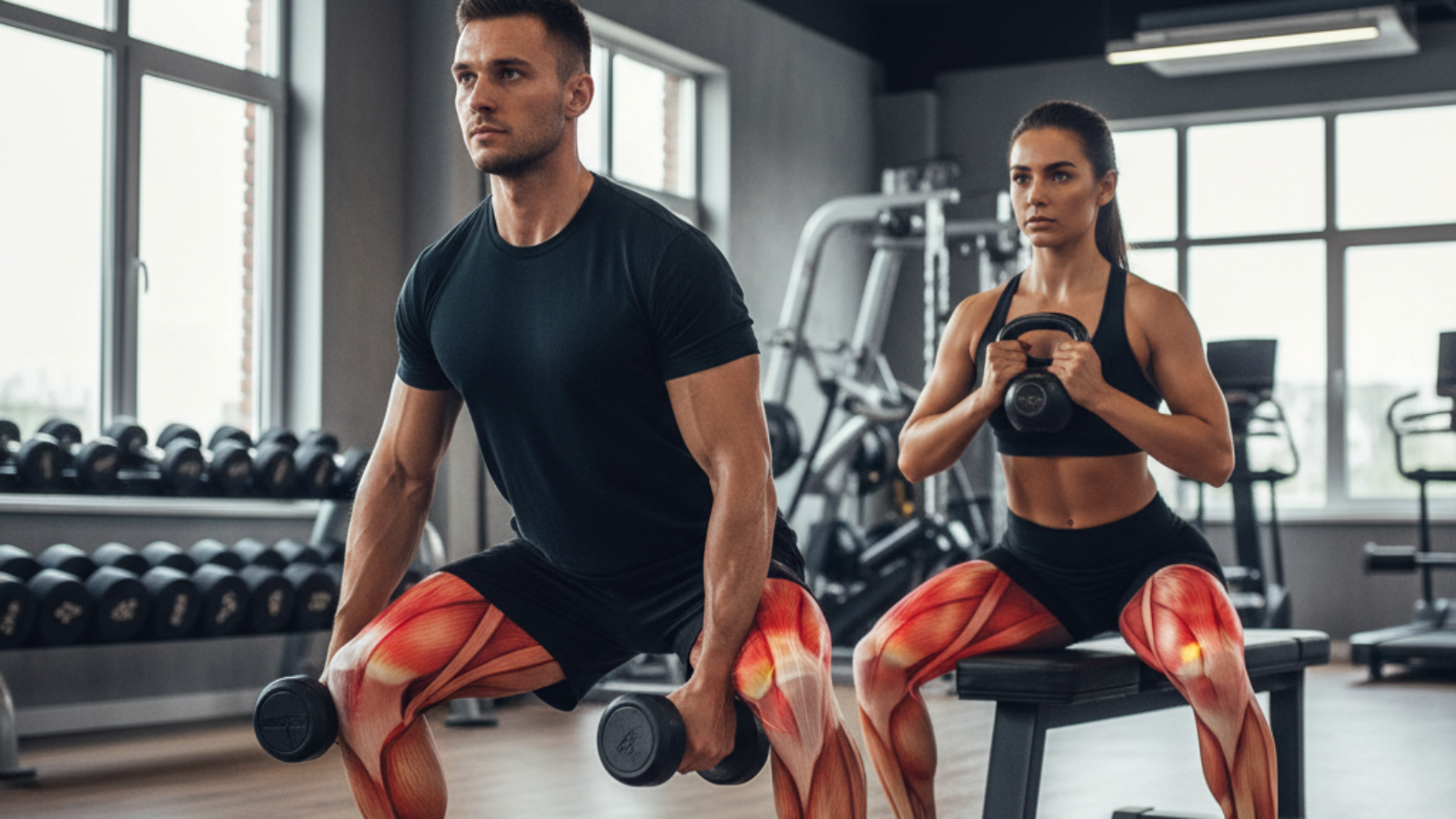
Bulgarian Split Squat Overview: What This Exercise Works
What Are Bulgarian Split Squats?
Bulgarian split squats are a lower body exercise. You do them by standing with one foot behind you on a bench and lowering your body into a squat. The front leg does most of the work. This exercise is popular because it builds strength, balance, and stability using just your bodyweight or with added weights such as dumbbells.
Why Bulgarian Split Squats Are Popular in Fitness
Bulgarian split squats are popular because they work many muscles at once, help correct muscle imbalances, and do not need much equipment. Many athletes and fitness experts love this exercise for building strong legs and improving balance. It is also easy to adjust for beginners or advanced users.
Muscles Worked by Bulgarian Split Squats: Detailed Anatomy
Primary Muscles Targeted (Quads, Glutes, Hamstrings)
This exercise focuses mainly on three muscle groups in your legs:
- Quads: The front of your thigh. They help you extend or straighten your knee.
- Glutes: Your butt muscles. They help raise you from a squat and control your hips.
- Hamstrings: The back of your thigh. They help control the movement and stabilize your knee and hips.
Secondary Muscles Engaged (Calves, Core, Hip Stabilizers)
While the main muscles do most of the work, other muscles also help:
- Calves: The lower part of your leg. They help support your body.
- Core: Your abs and lower back, which keep you stable and balanced.
- Hip Stabilizers: Small muscles around your hips, keeping your body steady while you move.
Visual Muscle Map: Where You’ll Feel It Most
During Bulgarian split squats, expect to feel the burn mainly in your front thigh and glutes of the leading leg. Your back leg will stretch a bit, and you’ll notice your core working to help you balance.
Benefits of Bulgarian Split Squats for Strength and Balance
Unilateral Power and Muscle Imbalance Correction
Bulgarian split squats work one leg at a time (unilateral). This helps fix muscle imbalances since both sides of your body work equally. It can make you stronger and more balanced.
Spinal and Knee Joint Safety Advantages
This exercise puts less pressure on your back than traditional squats. With good form, it is easier on your knees and spine, making it a safer choice for many people.
Athletic Performance and Everyday Functional Strength
Split squats train your balance and coordination. This translates into better athletic performance and stronger, more stable muscles for everyday activities like walking, climbing stairs, or playing sports.
How to Do Bulgarian Split Squats With Perfect Form
Step-by-Step Bulgarian Split Squat Instructions
- Stand about two feet in front of a bench or sturdy chair.
- Rest the top of your back foot on the bench behind you.
- Keep your front foot flat, toes pointing forward.
- Keep your chest up and core tight.
- Bend your front knee to lower your body, keeping your knee above your ankle.
- Lower until your front thigh is parallel to the ground or as far as comfortable.
- Push through your front heel to stand back up.
- Repeat for reps, then switch legs.
Key Muscle Activation Cues (How to Actually Feel the Target Muscles)
- Focus on pressing the front heel into the ground as you rise.
- Squeeze your glute at the top of the movement.
- Keep your core engaged to avoid leaning forward.
Video: Demonstrating Correct Technique
Search “Bulgarian Split Squat Correct Form” on YouTube for a clear demonstration. Always review a video before you try, to check your posture.
Common Mistakes and How to Fix Them
Typical Errors (Knee Tracking, Back Arch, Balance Issues)
- Knee Tracking: Letting your knee go too far over your toes or fall inward. Keep it above your ankle and straight ahead.
- Back Arch: Overarching your lower back. Keep your spine neutral and chest up.
- Balance Issues: Wobbling or tipping over. Move slower and focus on a spot in front of you to help balance.
Troubleshooting Guide for Proper Muscle Engagement
- If you only feel your front thigh and not your glutes, try leaning your upper body slightly forward and pushing through your heel.
- If your back hurts, check your back foot position and keep your upper body straight.
- For shaky knees or ankles, slow down and use a wall for support if needed.
Injury Prevention Tips
- Always warm up before starting.
- Don’t rush the movement; go slow and controlled.
- If you feel sharp pain, stop and check your form.
Bulgarian Split Squat Variations for Every Level
Beginner Progressions (Bodyweight, Support Options)
- Start with just bodyweight. Hold a wall or chair for balance.
- Do half-reps if full depth is hard at first.
- Reduce the height of the bench for less stretch in the back leg.
Advanced Variations (Weights, Tempo, Plyometrics)
- Hold dumbbells or a barbell to increase difficulty.
- Slow down the lowering (eccentric) part.
- Try jump split squats for extra power and balance.
How to Shift Emphasis: Quad vs. Glute Focus
- For More Quad: Keep your torso upright and your front foot a little closer to the bench.
- For More Glute: Lean your upper body forward slightly and place your front foot farther from the bench.
Programming Bulgarian Split Squats Into Your Routine
Recommended Sets, Reps & Frequencies Based on Goals
| Goal | Sets | Reps | Days/Week |
|---|---|---|---|
| Strength | 3-5 | 5-8 | 2-3 |
| Muscle Growth | 3-4 | 8-12 | 2 |
| Endurance/Balanced Fitness | 2-3 | 12-15 | 1-2 |
Split Squats for Muscle Growth vs. Athletic Performance
For bigger muscles, use higher reps and moderate weight. For athletic performance, add explosive movements or focus on perfect control and balance.
Sample Workouts for Different Training Types
- Beginner: 3 sets of 10 reps per leg, rest 1 minute between sets.
- Strength: 4 sets of 6 reps per leg, use weights, rest 2 minutes.
- Athlete: 3 sets of 10 reps with a jump after each rep, rest 90 seconds.
Pro Tips: Mobility, Warm-Ups & Recovery for Bulgarian Split Squats
Pre-Lift Mobility Drills for Optimal Range
- Leg swings (forward and side)
- Hip circles
- Dynamic lunges
- Quad and hamstring stretches
Active Recovery and Stretching Protocols
- Gentle walking after training helps the legs recover.
- Foam roll your quads, glutes, and hamstrings.
- Hold static stretches for 30 seconds on each leg post-workout.
FAQ: What Do Bulgarian Split Squats Work? (2024 Updates)
- Q: Can I do Bulgarian split squats if I have knee pain?
A: Yes, but start slow, keep good form, and stop if pain increases. Lower the depth or use extra support to make it easier. - Q: How high should the bench be?
A: About knee-height or slightly lower is best for most people. - Q: Should both legs feel sore?
A: You will mostly feel the front leg working but some stretch in the back leg is normal. - Q: What’s the difference compared to regular squats?
A: Split squats target each leg separately and need more balance, while regular squats work both legs together. - Q: How do I know I’m doing it correctly?
A: Your front knee stays over your ankle, your back stays straight, and you feel your thigh and glute working on the front leg.