
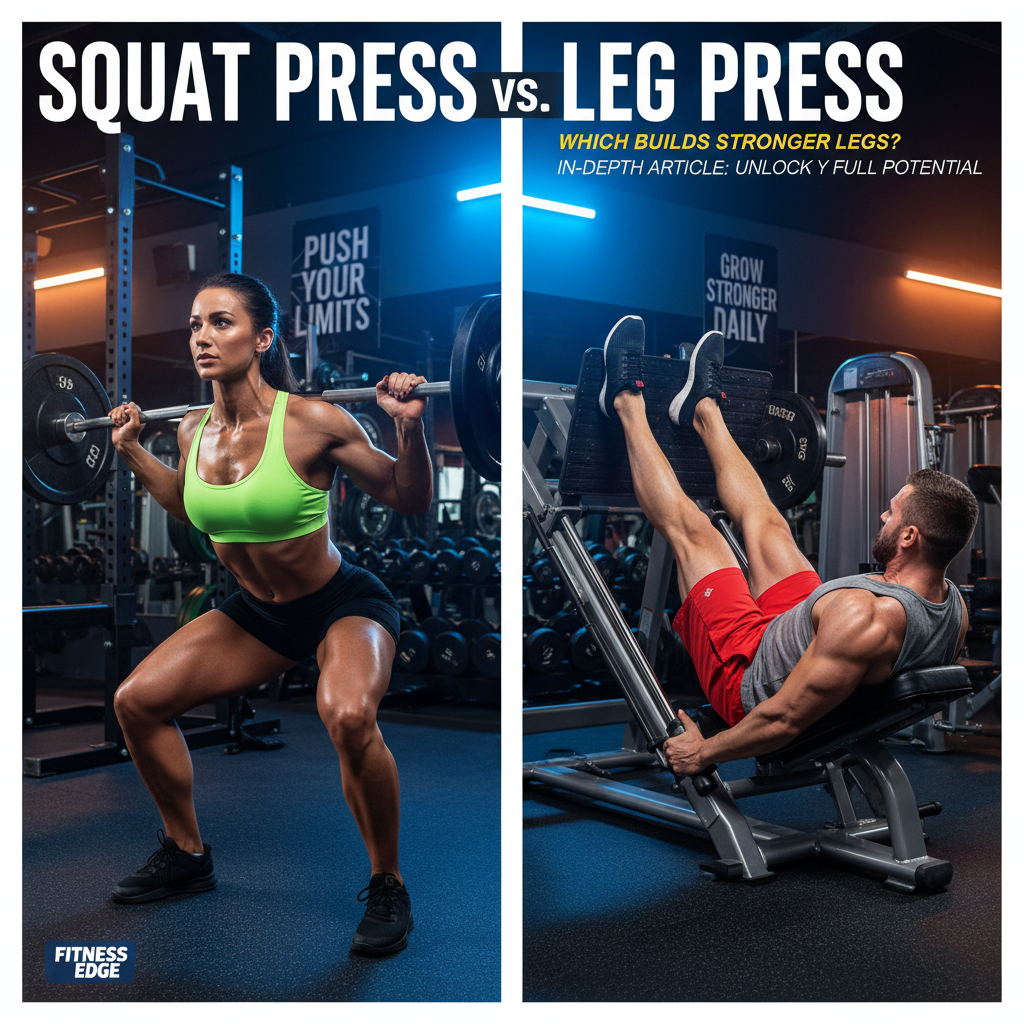
Squat Press vs Leg Press – Quick Comparison Table for 2026
Key Differences at a Glance
| Factor | Squat Press | Leg Press |
|---|---|---|
| Movement Type | Compound, Free-weight based | Compound, Machine-based |
| Primary Muscles | Quads, Glutes, Hamstrings, Core | Quads, Glutes, Hamstrings |
| Equipment Needed | Squat rack, Barbell | Leg press machine |
| Stabilizer Activation | High | Low |
| Typical Load | Moderate to Heavy | Heavy |
| Spinal Loading | Yes | No (for horizontal/45°) |
| Skill Requirement | Intermediate | Beginner |
| Injury Risk | Higher (form dependent) | Lower (controlled path) |
Which Is Best for Your Training Goals?
If you aim for overall strength, core stability, and athleticism, the squat press offers more benefits. The leg press is ideal for targeting lower body muscles with lower skill and risk, making it suitable for beginners and those focusing on muscle isolation.
Understanding the Fundamentals
What Is a Squat Press? Execution, Equipment, and Variations
The squat press, often called the barbell squat, is a standing lower body exercise. You unrack a loaded barbell onto your upper back, squat down, and press up to standing. Major variations include high-bar, low-bar, and front squats. Required gear: squat rack and barbell. See top-rated squat rack here.
What Is a Leg Press? Machine Fundamentals & Popular Types
The leg press is a machine-based lower body exercise. You sit or lie on a seat, place your feet on a platform, and push it away. Common styles include 45-degree, horizontal, and vertical leg presses, each providing a stable, controlled movement. Recommended machines can be found here.
Biomechanics Unveiled – How Each Move Works Your Body
Muscle Activation and Full-Chain Engagement
Squat press activates not only the quads and glutes but also the core and stabilizers. EMG studies show up to 70% more core activation during squats compared to leg presses. Leg press isolates the legs with minimal upper body involvement.
Joint Mechanics and Spinal Loading
Squat press requires spinal load, increasing core demand but also compression risk. Leg press reduces spinal stress but can increase knee shear forces if performed incorrectly. Both exercises involve hip, knee, and ankle joints.
Range of Motion and Flexibility Considerations
Squat press generally allows a greater range of motion, influenced by ankle and hip flexibility. Leg press allows depth customization by seat or platform adjustment, suitable for those with mobility limitations.
Squat Press vs Leg Press – Pros, Cons, and Practical Differences
Safety, Risk, and Injury Profiles
- Squat press: Higher risk for lower back and knee injuries if form breaks, but excellent for learning movement control.
- Leg press: Lower injury risk, due to fixed path. However, improper foot placement may strain knees.
Strength and Hypertrophy Potential for Each Exercise
- Squat press: Strong carryover to real-life activities; comparable hypertrophy for quads, glutes, and hamstrings.
- Leg press: Superior for safely lifting heavy loads; studies show similar hypertrophy gains as squats when volume matched.
Functional Carryover: Sports, Daily Life, and Longevity
- Squat press: Excellent for athletic power, balance, and daily movement patterns like lifting and jumping.
- Leg press: Great for focused muscle building, less transfer to balance or athletic skills.
Individualized Recommendations: Which Is Better for You?
Beginners, Intermediates, and Advanced Lifters
- Beginner: Leg press is a safe start to build strength and muscle confidence.
- Intermediate/Advanced: Squat press should be prioritized for total body development.
Considerations for Older Adults and Joint Health
Older adults or those with spine or knee issues may prefer the leg press for its stability and lower back protection. Controlled range and adjustable seats add safety.
Special Populations: Athletes, Rehabilitation, Bodybuilding
- Athletes: Squat press for performance enhancement and injury prevention.
- Rehabilitation: Leg press for precise, progressive loading.
- Bodybuilding: Both exercises, depending on volume and fatigue management.
Real-World Insights
Expert Opinions: Coaches and Physical Therapists Weigh In
Coaches recommend squats for full-body athletic development, but therapists support leg press during rehab or for clients with posture or balance challenges.
Case Studies: How Different People Achieved Their Goals
Case A: After an ACL surgery, a 38-year-old transitioned from leg press to squats over 12 months, regaining full function. Case B: A bodybuilder rotated both for balanced quad and glute growth.
Programming Squat Press and Leg Press in Your Routine
When to Prioritize Each Exercise
- Squat press: Early in sessions, twice weekly for strength.
- Leg press: Supplementary or after squats, higher rep ranges for hypertrophy.
Sample Weekly Workouts for Various Goals
- General strength: Squat press 3×8, Leg press 3×10 weekly
- Muscle growth: Squat press 4×6, Leg press 4×12, alternating focus days
- Rehab: Leg press 2×15, progressing with load weekly
Visual Guide: Execution, Cues, and Common Mistakes
Step-By-Step Photo Series for Each Move
For a detailed step-by-step guide to the squat press and leg press with visual cues, visit this resource.
Tips for Optimal Results and Injury Prevention
- Squat press: Maintain neutral spine, knees tracking toes, full foot contact.
- Leg press: Avoid locking out knees, control the lowering phase, choose appropriate foot width.
Frequently Asked Questions: Squat Press vs Leg Press in 2026
- Which is safer? Leg press for most.
- Which builds more strength? Squat press, due to global involvement.
- Can both be used together? Yes, for maximum benefit.
Final Thoughts – Making the Right Choice for Your Fitness Journey
Squat press and leg press both offer unique advantages for strength and muscle growth. Choose based on your goals, experience level, and any physical limitations. For balanced results, incorporate both. Looking to purchase? Find top squat racks here and leg press machines here. Start building your lower body strength today!
