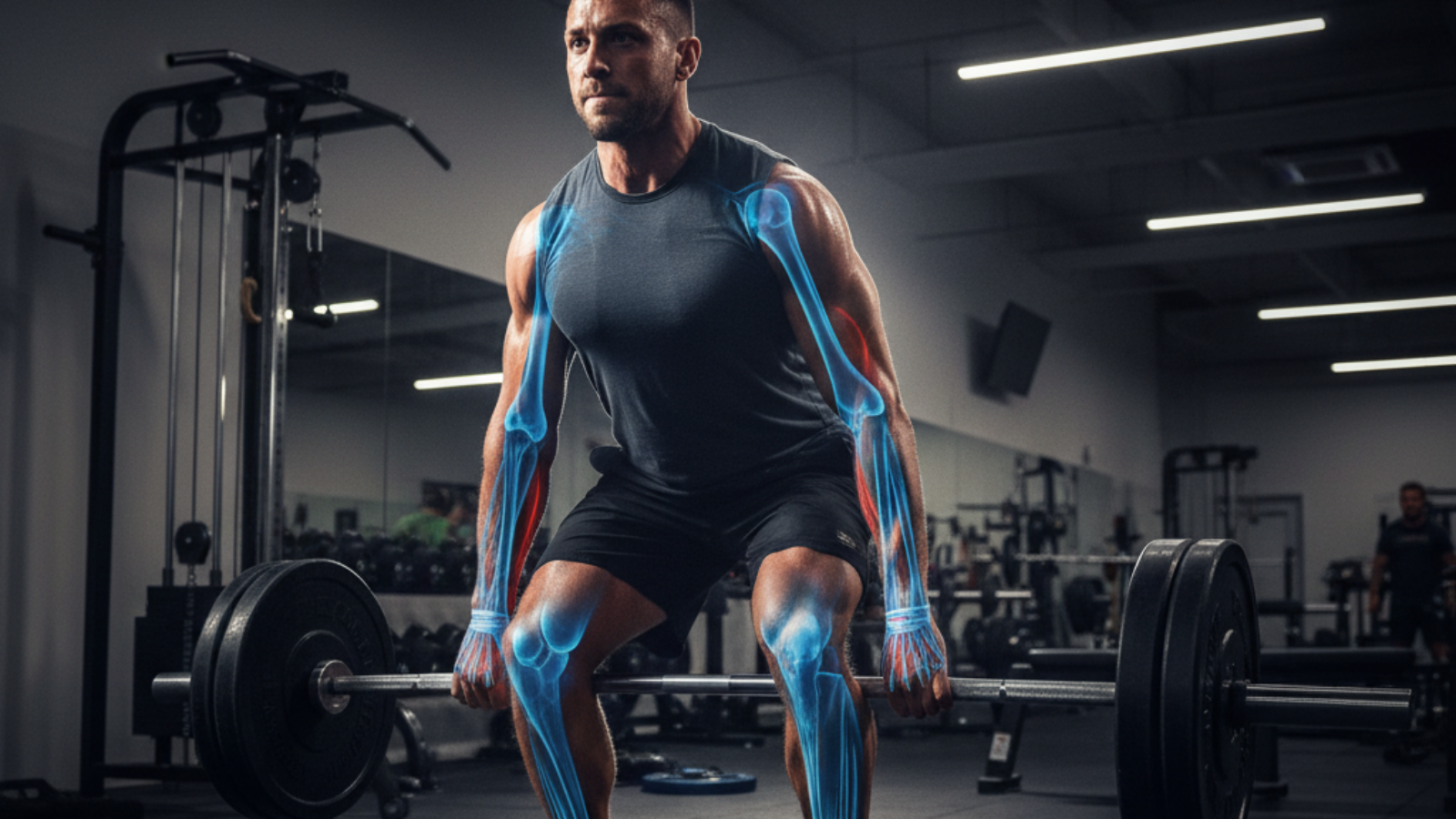
The deadlift is one of the most effective full-body exercises in fitness. If you want to get stronger, build muscle, or improve your athletic performance, understanding what the deadlift works is essential. In this guide, you’ll learn exactly which muscles deadlifts train, how to perform them safely, how to avoid common mistakes, and how to get the best results. Whether you’re a beginner, an athlete, or want to improve your workouts, this article covers all you need to know about deadlifts.
Deadlift Muscles Worked – Full List and Functional Breakdown
Primary Movers: Glutes and Hamstrings
The main muscles that deadlifts work are your glutes (butt muscles) and hamstrings (back of the thighs). These muscles help you stand up and straighten your hips when you lift the bar. Strong glutes and hamstrings make you faster and more powerful in many sports.
Erector Spinae and Lower Back Stabilization
Your erector spinae are the muscles along your lower back. Deadlifts work these muscles hard to keep your spine straight. A strong lower back protects you from injuries and helps you lift heavier safely.
Core Engagement: Abs and Obliques
The deadlift forces your core muscles (your abs and obliques) to work. They help stabilize your body so you don’t fall forward or backward. Good core strength keeps your back safe and improves your posture.
Latissimus Dorsi and Grip Strength
Your lats, the big muscles on your back, work during the deadlift to hold the bar close to your body. Your grip strength also gets challenged, as you have to hold on tight to the heavy bar throughout the exercise.
Supporting Muscles: Traps, Forearms, and Calves
The deadlift works many smaller muscles for support. Your traps (upper back), forearms, and calves all help to lift and stabilize the bar. These muscles improve as you get better at the deadlift.
Additional Muscles Activated with Deadlift Variations
Different types of deadlifts target different muscles. For example, Romanian deadlifts put more work on your hamstrings. Sumo deadlifts use your inner thighs more. Each variation helps you grow stronger in new ways.
How to Perform a Proper Deadlift: Step-by-Step Technique
Proper Deadlift Setup and Hip Hinge Mechanics (Step 1)
- Stand with your feet hip-width apart. The bar should be over the middle of your feet.
- Bend at your hips and knees. Grip the bar with both hands, just outside your knees.
- Keep your chest up, back flat, and eyes looking forward. Your hips should be higher than your knees but lower than your shoulders.
Key Form Cues for Safety and Efficiency (Step 2)
- Pull your shoulders back and down to use your lats.
- Squeeze the bar hard with your hands for a strong grip.
- Push your feet into the floor as if you are standing up quickly.
- Keep the bar as close to your body as possible during the lift.
Deadlift Breathing and Bracing for Spinal Protection (Step 3)
- Take a deep breath before you lift.
- Tighten your core, as if someone is about to punch your stomach.
- Hold your breath while lifting, then breathe out slowly after you finish the rep.
Common Deadlift Mistakes and How to Fix Them
Rounding the Back and Spinal Alignment Errors
Do not round your back while lifting, as this can cause injury. Keep your chest up and your back flat. Practice deadlifting with light weights until you have perfect form.
Over-Gripping and Inefficient Pull Mechanics
Using only your arms or gripping too tightly wastes energy. Focus on pushing with your legs and keeping your arms straight.
Bar Path, Positioning, and Foot Placement Issues
If the bar drifts away from your body or your feet are too wide or narrow, you may lose balance. Check your setup before each lift to avoid these mistakes.
Solutions and Pro Tips for Beginners
- Film your set from the side to check your form.
- Ask for feedback from a coach or experienced lifter.
- Start light and add weight slowly as your form improves.
Deadlift Variations and the Muscles They Target
Conventional Deadlift vs. Sumo Deadlift
The conventional deadlift works the lower back and hamstrings more. The sumo deadlift works your inner thighs and is easier on the lower back. Try both and see which one feels better for you.
Romanian and Stiff-Leg Deadlifts
Romanian and stiff-leg deadlifts focus more on your hamstrings and glutes. You keep your legs straighter and bring the bar down to mid-shin. These variations help with flexibility and hamstring strength.
Trap Bar and Deficit Deadlifts
The trap bar deadlift puts less stress on your lower back and is easier on your grip. Deficit deadlifts use a small platform, making you start lower and increasing work on your glutes and hamstrings.
Sport-Specific Deadlift Applications
Athletes use deadlift variations to get sport-specific benefits. For example, sprinters use Romanian deadlifts for speed, and football players use trap bar deadlifts for power.
Programming Deadlifts for Your Goals
Deadlifts for Muscle Growth (Hypertrophy)
To build muscle, use moderate weights for 6-12 reps. Focus on slow, controlled movements. Rest 1-2 minutes between sets.
Deadlifts for Strength and Performance
To get stronger, lift heavier weights for 3-5 reps. Rest 3-5 minutes between sets. Always use good technique to avoid injury.
Deadlifts for Fat Loss and Conditioning
For fat loss or conditioning, use lighter weights with higher reps (10-15). Try supersets or circuits to keep your heart rate up.
How Often Should You Deadlift? Practical Guidelines
- Beginners: 1-2 times per week
- Intermediate: 2-3 times per week, with variation
- Advanced: Adjust based on recovery and training goals
Who Should (and Shouldn’t) Do Deadlifts?
Scaling Deadlifts for Beginners and Taller Lifters
Beginners should use lighter weights and focus on form. Taller lifters can try sumo or trap bar deadlifts to make the movement easier and safer.
Mobility, Flexibility, and Common Injury Considerations
If you have tight hamstrings or hips, spend extra time warming up. Always stretch after your workout to prevent injuries. Never deadlift with lower back pain.
Alternatives for Back or Mobility Issues
If deadlifts cause pain or you have limited mobility, try exercises like rack pulls, kettlebell swings, or Romanian deadlifts. These work similar muscles with less risk.
Deadlift Myths and Frequently Asked Questions (2026 Edition)
“Are Deadlifts Bad for Your Back?” Evidence-Based Answers
When done with good form, deadlifts are safe for your back and help make it stronger. Most injuries come from poor technique or lifting too much weight.
“Do Deadlifts Really Work the Abs?”
Yes. Deadlifts work the abs and many core muscles as you brace your body. Include deadlifts in your routine to build overall core strength.
“Can You Build Muscle with Just Deadlifts?”
Deadlifts work many major muscles, but for best results, use them with other exercises like squats, presses, and rows.
Latest Science and Studies on Deadlift Benefits
Research from 2024-2026 shows that deadlifts improve strength, bone health, athletic ability, and even help with posture if done correctly.
Resources and Visual Guides to Master the Deadlift
Anatomy Diagrams and Video Tutorials
- Search for “deadlift anatomy diagram” images to see what muscles are used.
- Watch YouTube tutorials by certified strength coaches for step-by-step guides.
2026 Recommended Apps, Books, and Expert Channels
- Apps: StrongLifts 5×5, Fitbod, Starting Strength
- Books: “Starting Strength” by Mark Rippetoe, “Strength Training Anatomy” by Frederic Delavier
- Channels: Athlean-X, Jeff Nippard, Squat University
Summary and Next Steps: The deadlift works almost every major muscle group, making it one of the best exercises for fitness. Always start with a light weight, focus on perfect form, and learn how to fix mistakes. As you improve, try different deadlift styles to target new muscles. Use the resources above to study and master the deadlift. Soon, you’ll see real results in your strength and health!