
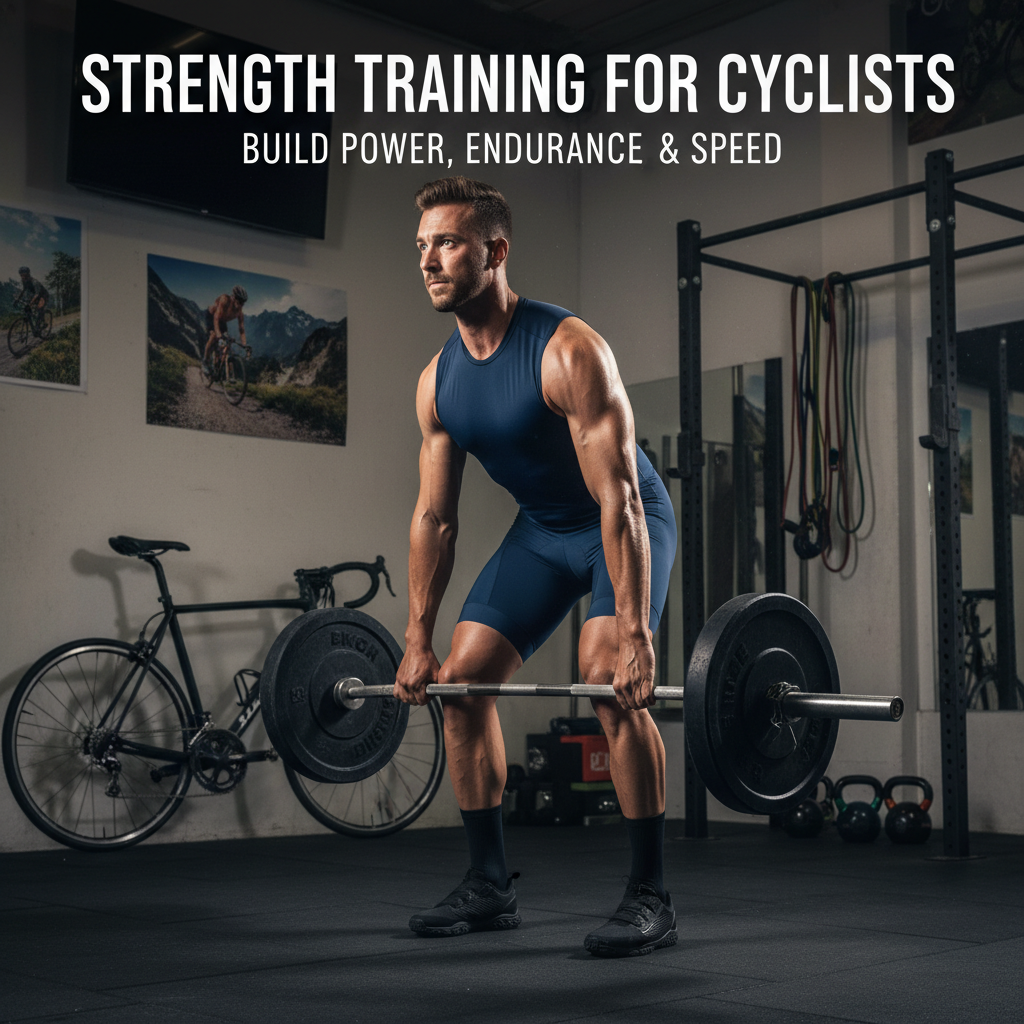
alt_text: Cyclist in gym gear lifting weights, bike nearby, blending strength training with cycling focus.

Strength Training for Cyclists: Best 2026 Guide for Maximum Results

Why Strength Training Matters for Cyclists in 2026

Benefits for Power, Endurance, and Recovery

Strength training helps cyclists ride faster and longer. It improves muscle power, which means you can sprint better and tackle hills more easily. Stronger muscles recover faster after hard rides, reducing tiredness. Endurance, which is how long you can keep riding, also increases with regular strength exercises.

Injury Prevention and Longevity Insights

Many cycling injuries come from muscle imbalances or weak spots. Strength training fixes these problems so you stay healthy and can ride for years. It helps protect joints, lowers the risk of overuse problems like knee pain, and keeps your bones strong.

Modern Trends: Wearables, AI-Personalized Routines, and App Integration

Cyclists in 2026 use smart wearables and cycling apps to track strength training. AI can suggest personalized routines and help you follow the best plan. Apps connect to your bike computer so all your workout data is in one place.

Building Your Strength Training Plan: Cyclist-Specific Principles

Understanding Cycling Demands and Body Imbalances

Cyclists use their legs a lot but may forget about their upper body and core. Over time, this causes imbalances. Strength training corrects these by working all muscle groups, not just legs.

Periodization Explained—Off-Season, Pre-Season, and In-Season Approaches

Periodization means breaking the year into training blocks. In the off-season, focus on building overall strength. Pre-season, shift to bike-specific exercises. In-season, maintain your gains with fewer but effective sessions, so you stay strong without getting too tired for rides.

Tailoring Workouts for Road, Gravel, Mountain, and Urban Cyclists

Road cyclists need lower body endurance and core stability. Gravel and mountain bikers benefit from explosive power and balance. Urban cyclists do best with exercises for agility and quick reactions. Customize your plan based on your riding style.

Essential Strength Exercises for Every Cyclist

Lower Body Power Moves: Squats, Deadlifts, Lunges, and Variations

  • Squats: Build strong thighs and hips. Try bodyweight squats or add weights.
  • Deadlifts: Strengthen your back, glutes, and hamstrings. Start light to learn good form.
  • Lunges: Improve balance and single-leg strength. Switch legs and add a dumbbell for more challenge.

Core Work for Stability and Efficiency in the Saddle

  • Planks: Hold your body in a straight line to build strong abs and back muscles.
  • Bicycle crunches: Mimic the cycling motion while working your core.
  • Russian twists: Sit, lean back a bit, and twist with or without weight. This targets side abs.

Upper Body Strength: Supporting Posture on Long Rides

  • Push-Ups: Strengthen your chest, shoulders, and arms.
  • Rows: Use dumbbells or resistance bands for a strong back.
  • Shoulder presses: Lift weights overhead to help upper body strength for better posture.

Balance, Mobility, and Injury Prevention Drills

  • Single-leg balance: Stand on one foot to build ankle and hip stability.
  • Hip bridges: Strengthen hips and lower back to prevent pain.
  • Dynamic stretches: Move your arms and legs in circles to improve joint movement before rides.

Practical How-To: Stepwise Weekly Strength Programs

At-Home Versus Gym-Based Options With and Without Equipment

You can do strength training at home or in a gym. At home, use your own body weight, resistance bands, or simple weights like filled water bottles. In a gym, you can use machines and heavier weights for more challenge.

Sample 4-Week Beginner Progression

  1. Week 1: 2 sessions per week. Focus on bodyweight squats, push-ups, and planks. Try 2 sets of 10-12 reps for each exercise.
  2. Week 2: Add lunges and rows. Increase to 3 sets per exercise.
  3. Week 3: Use light dumbbells if you have them. Include deadlifts and Russian twists.
  4. Week 4: Increase weight or difficulty. Aim for 12-15 reps per set and add single-leg balance drills.

Advanced Routines and Adaptations for Experienced Cyclists

  • Add power moves like jump squats or kettlebell swings.
  • Try supersets: Combine two exercises with no rest, like squats plus push-ups.
  • Include plyometric work: Box jumps or quick step-ups for explosive strength.

Modifying Strength Training for Older Cyclists and Female Riders

  • Older cyclists: Focus on joint-friendly exercises, use lighter weights, and extend warm-ups.
  • Female riders: Emphasize total-body workouts for balanced strength. Include bone-building moves like squats and deadlifts.
  • Adjust intensity and rest as needed—listen to your body.

Integrating Strength With Cycling: Scheduling, Tools, and Recovery

How Often? Aligning Sessions With Your Riding Calendar

Most cyclists benefit from 2-3 strength sessions per week. Avoid hard strength workouts right before big rides. Fit strength training on easy ride days or on days off from cycling.

Using Wearables and Cycling Apps for Performance Tracking in 2026

  • Wearables track your workouts, recovery, and progress.
  • Apps suggest workouts, monitor fatigue, and send reminders.
  • Sync your strength and cycling data for a complete view of your fitness.

Recovery, Rest, and Nutrition Tips for Maximum Gains

  • Always rest muscles for at least one day before repeating the same workout.
  • Eat protein after strength sessions to help muscles recover.
  • Drink enough water and get plenty of sleep for best results.

Troubleshooting & Safety: Avoiding Common Mistakes

Proper Form, Warm-Up, and Cool-Down Routines

  • Start with a warm-up: Jog lightly or cycle slowly for 5-10 minutes.
  • Learn the correct form for every exercise to avoid injury. Watch videos if needed.
  • Cool down with stretches to relax your muscles and improve flexibility.

Recognizing Signs of Overtraining or Injury

  • Signs of overtraining include soreness that doesn’t go away, trouble sleeping, or no improvement in performance.
  • If you feel sharp pain, stop immediately. Rest and see a doctor if pain continues.

Adapting Workouts for Injury History or Specific Mobility Needs

  • Change or skip exercises that hurt old injuries.
  • Use alternative moves, like step-ups instead of lunges.
  • Focus more on flexibility and balance if you have joint issues.

FAQ: Strength Training for Cyclists in 2026

  • How many times a week should I do strength training?
    2-3 times a week is best for most cyclists.
  • Can strength training make me bulky?
    No, the workouts help you get stronger, not bigger, especially with cycling.
  • How do I fit strength with my ride schedule?
    Plan hard strength days away from big rides. Do easy sessions on cycling off-days.
  • Do I need a gym membership?
    No, many exercises can be done at home with minimal equipment.

Resources: Videos, Apps, and Expert Communities for Ongoing Growth

  • Search for video guides on strength exercises for cyclists on YouTube.
  • Try apps like TrainerRoad, Zwift, and MyFitnessPal to track progress.
  • Join online forums or local cycling clubs for advice and motivation.
  • Follow certified trainers and cycling experts for fresh tips.

Summary: Key Points and Next Steps

  • Strength training is vital for cyclists in 2026 to boost power, prevent injuries, and ride longer.
  • Mix basic moves like squats, core work, and upper body exercises into your weekly routine.
  • Use apps and wearables to track progress, stay motivated, and avoid overtraining.
  • Keep your form perfect, rest well, and adjust workouts for your needs and goals.
  • Start today, follow the step-by-step plan, and see real improvement in your cycling performance.
Tags: No tags

Add a Comment

Your email address will not be published. Required fields are marked *