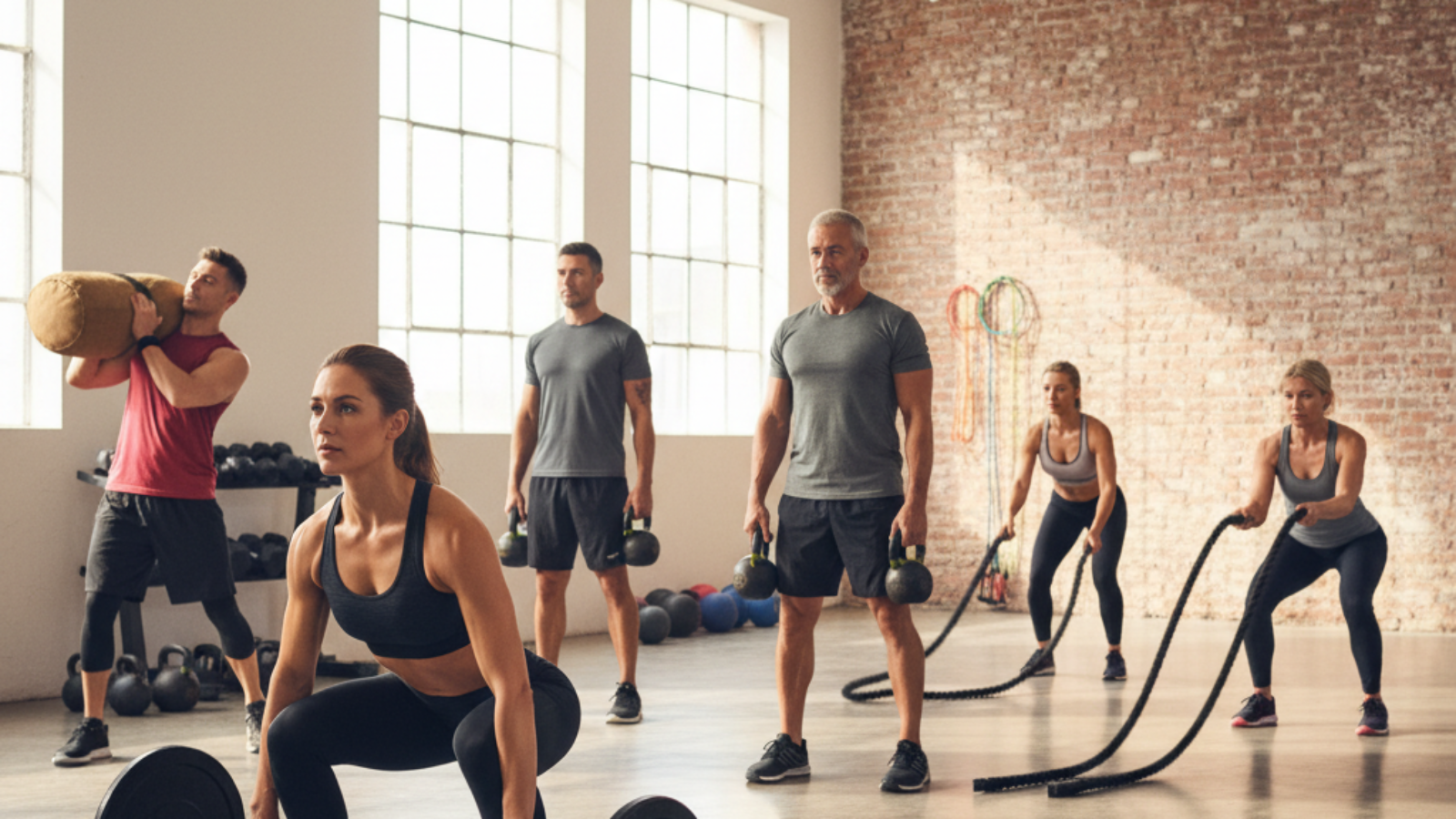
Understanding Functional Strength Training
What Makes Strength Training “Functional”?
Functional strength training means doing exercises that help you with real-life movements. These moves often use several muscles together—just like daily tasks. Instead of focusing on just one muscle, you train your body to work as a unit.
Key Differences: Functional vs. Traditional Strength Training
- Traditional strength training often uses gym machines for one muscle at a time.
- Functional training uses bodyweight or simple tools to copy real-life actions.
- Functional moves include pushing, pulling, squatting, or twisting—things you do every day.
Why Functional Strength Training Matters in 2026
In 2026, people want to move well, avoid injuries, and stay fit for daily life. Functional strength training is more important than ever because it fits modern, fast-paced lifestyles. It helps you play sports better, work safer, and feel stronger every day.
Core Principles of Functional Strength Training
Movement Patterns Explained (Push, Pull, Squat, Lunge, Hinge, Rotate)
- Push: Like doing a push-up or opening a door.
- Pull: Like pulling a heavy backpack or doing a row.
- Squat: Sitting down and standing up from a chair.
- Lunge: Taking a big step forward or getting up off the ground.
- Hinge: Bending at your hips, like picking up a bag.
- Rotate: Twisting your body, like reaching for something behind you.
Engaging the Core and Stabilizing Muscles
Functional strength training always uses your core—your stomach, lower back, and hips. These muscles keep you balanced and help prevent injuries. You also train stabilizing muscles around every major joint.
The Role of Balance, Coordination, and Mobility
Functional training improves your balance so you don’t fall, your coordination so you move smoothly, and your mobility so you move easily. These skills are important for sports and daily life.
Benefits of Functional Strength Training Over Other Methods
Improving Everyday Performance & Injury Prevention
These exercises make it easier to do things like carry groceries or play outside. They protect you from getting hurt by strengthening important muscles and teaching your body how to move safely.
Enhanced Athletic and Daily Life Capabilities
- Better sports performance: jump, run, twist, and turn with control.
- Easier daily tasks: bend, lift, carry, and reach with less effort.
- More confidence: physical tasks feel safer and simpler.
Time-Efficiency & Holistic Fitness in Modern Lifestyles
Functional exercises train several muscles at once, saving time. One short session gives you strength, endurance, balance, and flexibility all at once.
How to Start Functional Strength Training – Step-by-Step
Assessing Your Baseline: Mobility, Stability, and Goals
- Check how easily you can move joints (like shoulders and hips).
- Test simple moves: squat, reach, twist, or stand on one leg.
- Write down your goals: sports, everyday strength, or injury recovery.
Essential Equipment & Home vs. Gym Setup
- Minimum equipment: exercise mat, water bottle, and a sturdy chair.
- Optional: resistance bands, dumbbells, kettlebells, medicine ball.
- Home and gym both work—choose what fits your space and needs.
Warming Up for Functional Movement
- Start with 3–5 minutes of light cardio (march or jog in place).
- Do dynamic stretches: arm circles, hip circles, leg swings.
- Try easy bodyweight squats and lunges to activate muscle groups.
Step-by-Step Beginner Routine (With Weekly Progression)
- Week 1: Basic Movements
- Bodyweight squats – 2 sets of 10 reps
- Push-ups (knees or regular) – 2 sets of 8 reps
- Standing rows (using resistance band or backpack) – 2 sets of 10 reps
- Reverse lunges – 2 sets of 8 reps per leg
- Plank hold – 2 sets of 20 seconds
- Weeks 2-3: Add Variety
- Add side lunges and step-ups
- Increase reps by 2-4 each set
- Try plank with shoulder taps
- Week 4: Combine Moves
- Circuit style: do one set of each move, then repeat the circuit 2–3 times
- Track your progress and adjust as needed
Progressing: How to Safely Level Up Your Workouts
- Increase repetition or add weight, but only if your form is good.
- Add new patterns like single-leg squats or rotation moves.
- Ask for feedback from a coach or use a mirror to check your form.
Real-Life Applications and Success Stories
Functional Strength in Sports: 2026 Athlete Examples
Top athletes use functional training to move powerfully and avoid injury. Soccer players, basketball stars, and runners all use these moves in 2026 to boost performance and stay at their best.
Functional Training for Busy Professionals
Office workers do short sessions at home or in the gym to ease back pain, improve focus, and stay healthy—without needing long workouts.
Everyday Benefits: Bending, Lifting, Carrying, and More
- Carry heavy bags with less strain.
- Bend down and stand up easily.
- Keep up with friends, family, and hobbies.
Common Mistakes in Functional Strength Training (and How to Fix Them)
Technique Errors and Injury Risks
- Mistake: Moving too fast or using poor form.
- Fix: Slow down, use mirrors, or ask for feedback.
Neglecting Core/Stabilizer Work
- Mistake: Skipping core exercises.
- Fix: Always include planks and balancing moves.
Overcomplicating or Oversimplifying Routines
- Mistake: Using too many fancy moves or only doing the basics.
- Fix: Focus on safe, effective patterns and build slowly.
Functional Strength Training Best Practices in 2026
Integrating Tech and Wearables for Better Results
Use smart watches and fitness apps to track your movement, monitor your form, and stay motivated.
Trends: Group Functional Workouts & Remote Coaching
Join group classes—in person or online. Coaches help you progress even if you train at home.
Gender, Age, and Customization Tips for All Levels
- Anyone can do functional strength training by adjusting weight and moves.
- Teens, adults, and seniors all benefit—start at your own level.
Your Functional Strength Training FAQ (2026)
How Often Should You Train Functionally?
Begin with 2–3 sessions per week. Rest between workouts so your muscles recover and get stronger.
Can Functional Training Replace Regular Strength Workouts?
Yes, for most people functional training covers all you need: strength, balance, and mobility. Athletes might add special exercises for extra power or size.
What Results Can You Expect and How Fast?
- After 2–4 weeks: feel stronger and more balanced.
- After 8–12 weeks: better posture, easier daily tasks, and more energy.
Sample 4-Week Functional Strength Beginner Program
Weekly Breakdown and Exercise List
| Week | Main Focus | Sample Exercises |
|---|---|---|
| 1 | Basics & Technique | Squats, Push-ups, Rows, Planks |
| 2 | Add Movement Patterns | Lunges, Step-ups, Side lunges |
| 3 | Combine Movements | Circuit of above moves, Core holds |
| 4 | Progression | More reps, harder moves, track results |
Progression Tips and Recovery Guidelines
- Increase reps or weight a little each week.
- Take at least one rest day between workouts.
- Stretch after each session to help muscles recover.
- Write down your progress and any challenges.
Printable Tracker and Digital Resources
- Use a simple chart to check off each workout day.
- Try phone apps or online videos for demonstrations.
- Ask teachers, coaches, or family for support and motivation.
Summary and Next Steps: Functional strength training helps you move better in sports, school, and daily life. Start with simple moves. Check your progress. Aim for steady improvement, not quick results. If you need help, use videos, apps, or ask a coach. Keep training, stay safe, and enjoy your new strength!